
Last updated November 15, 2026
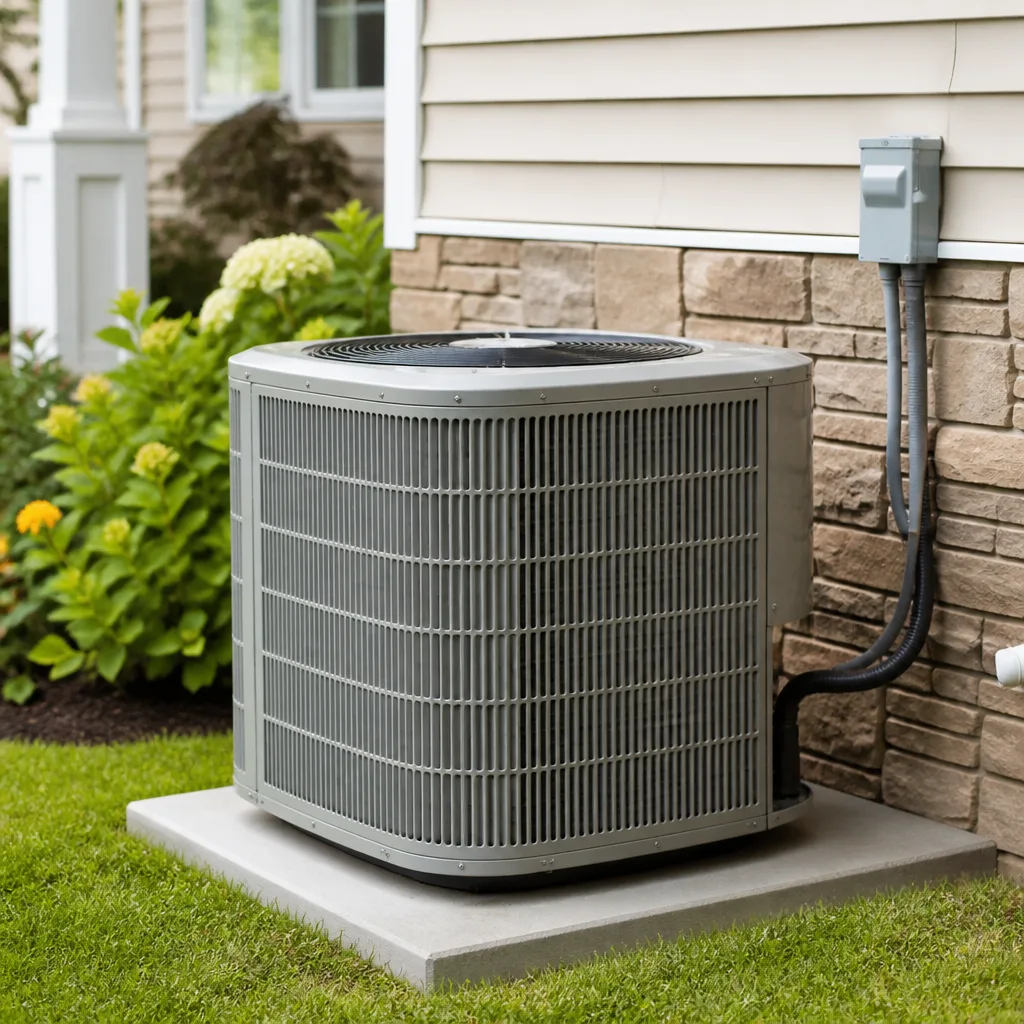 AC repair
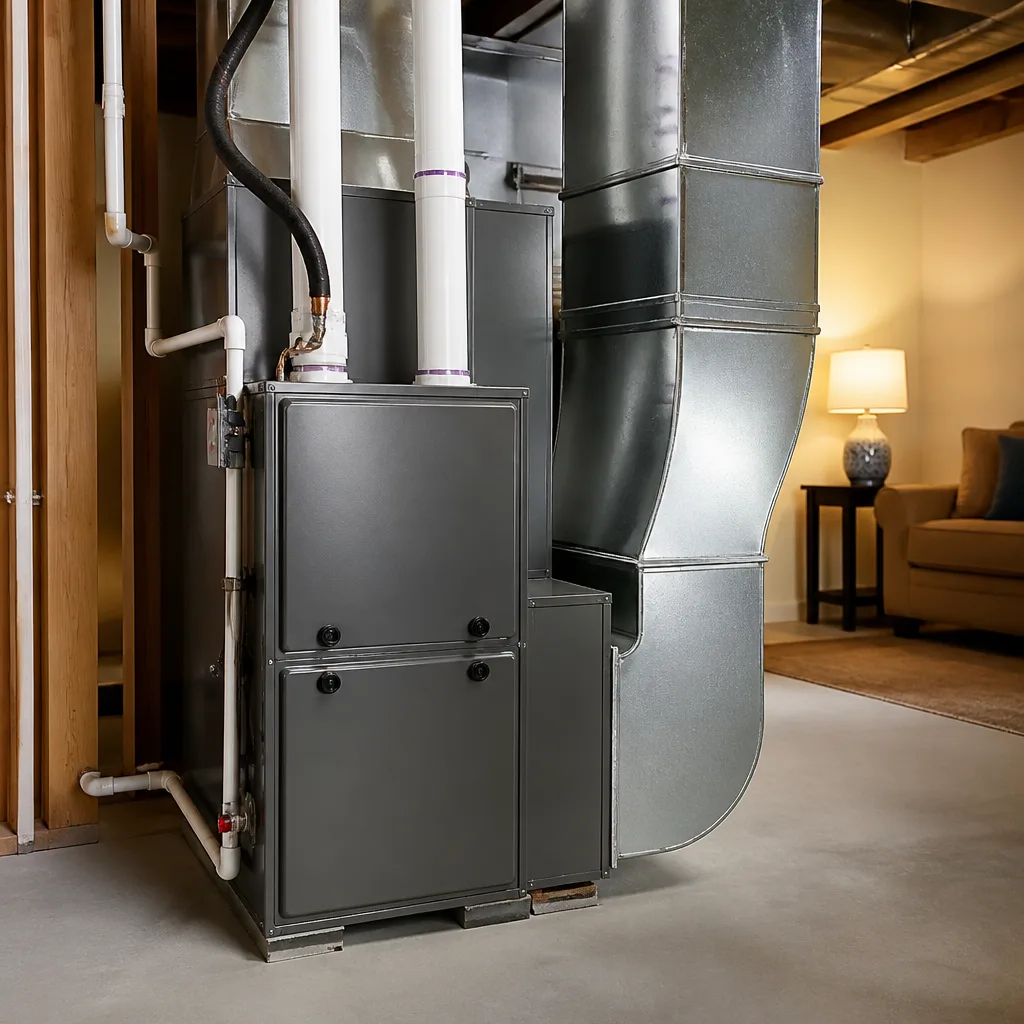 Furnace & heating
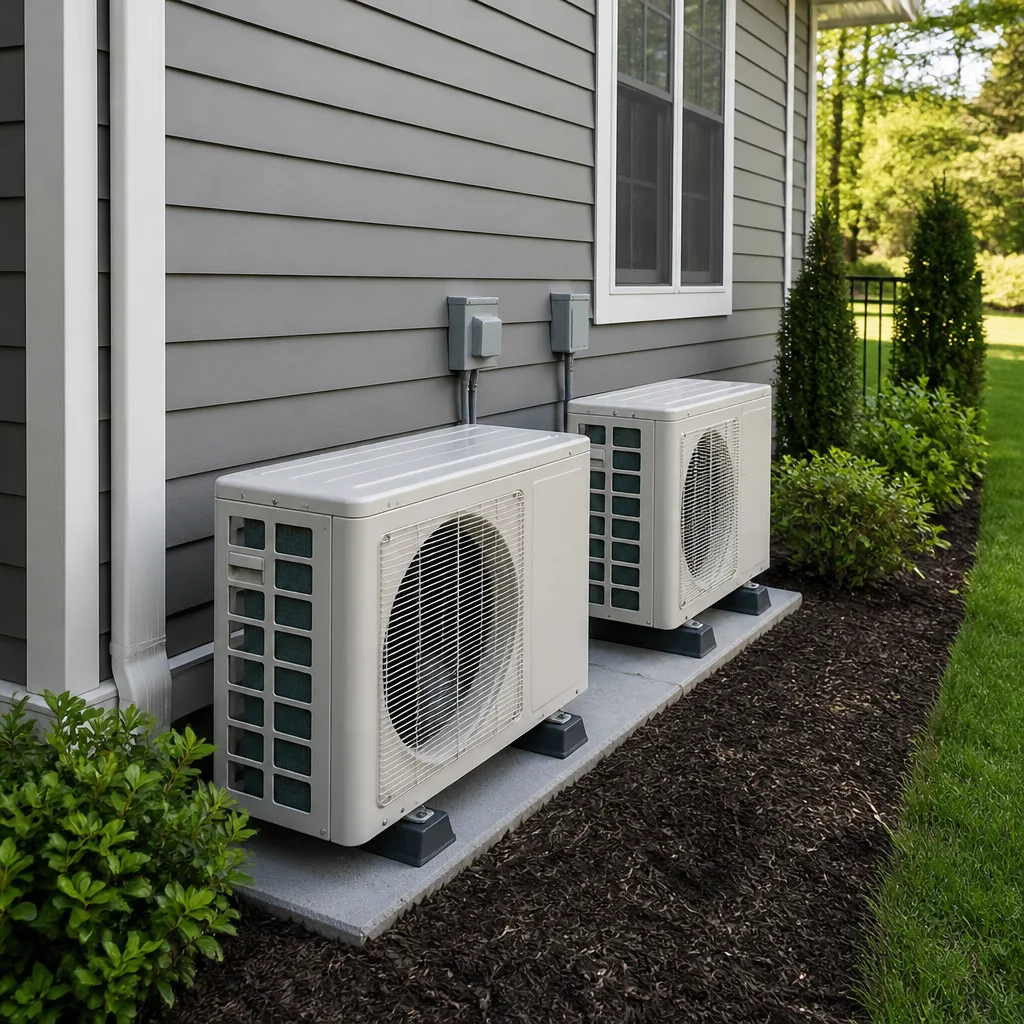 Heat pumps
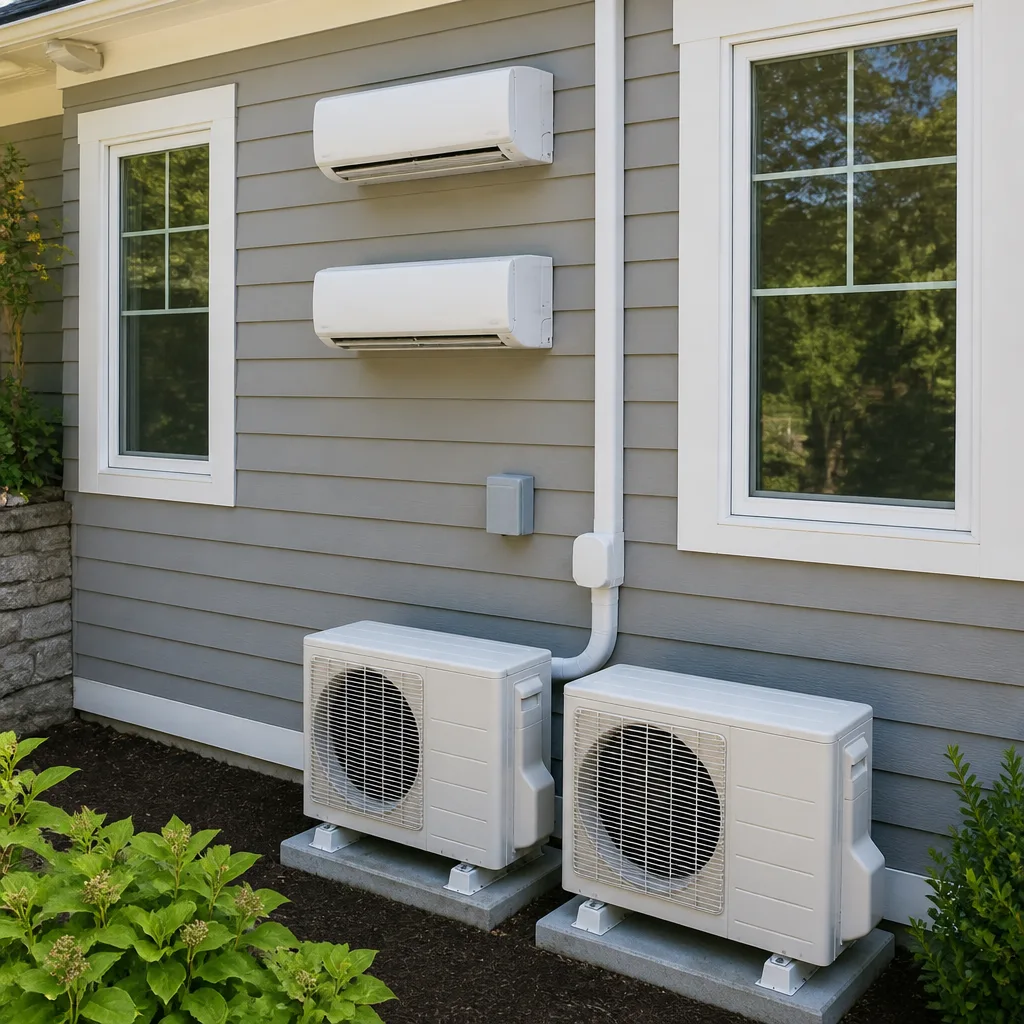 Ductless mini splits
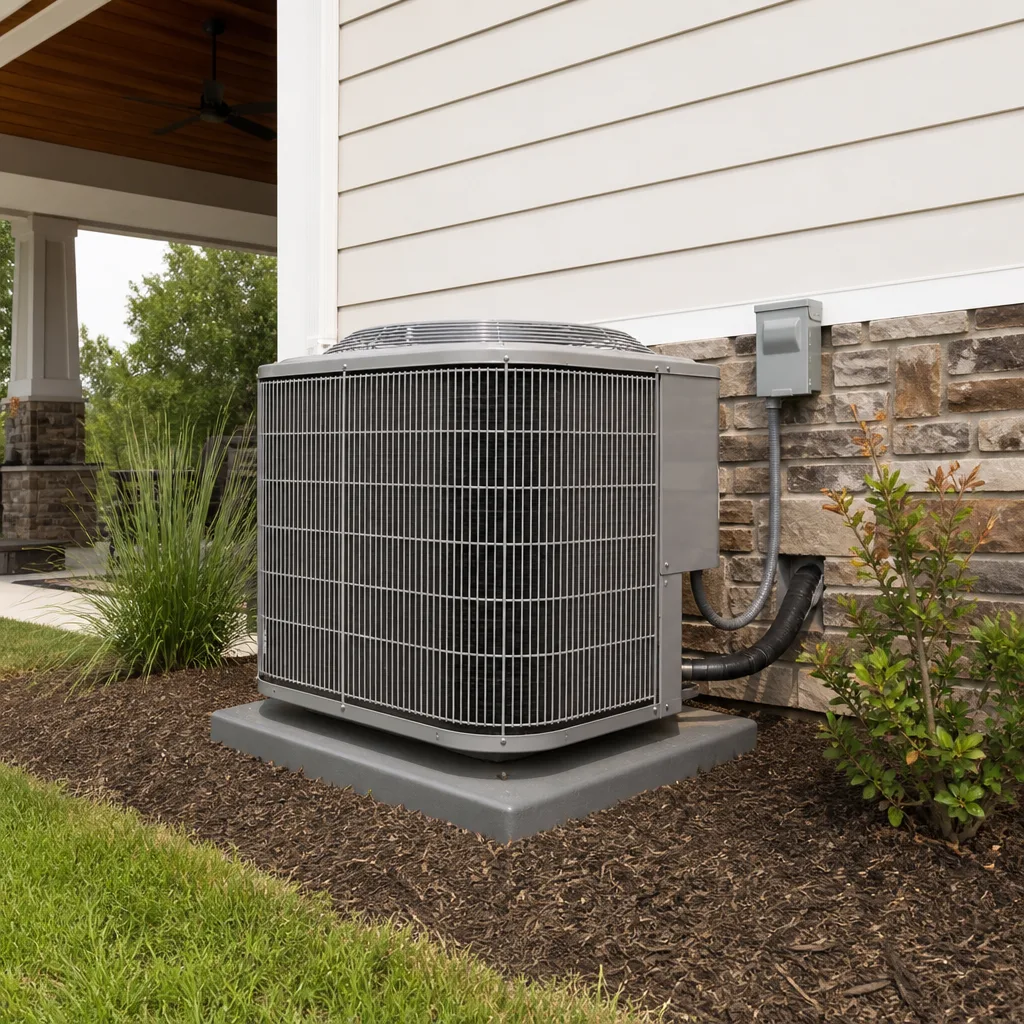 Carrier
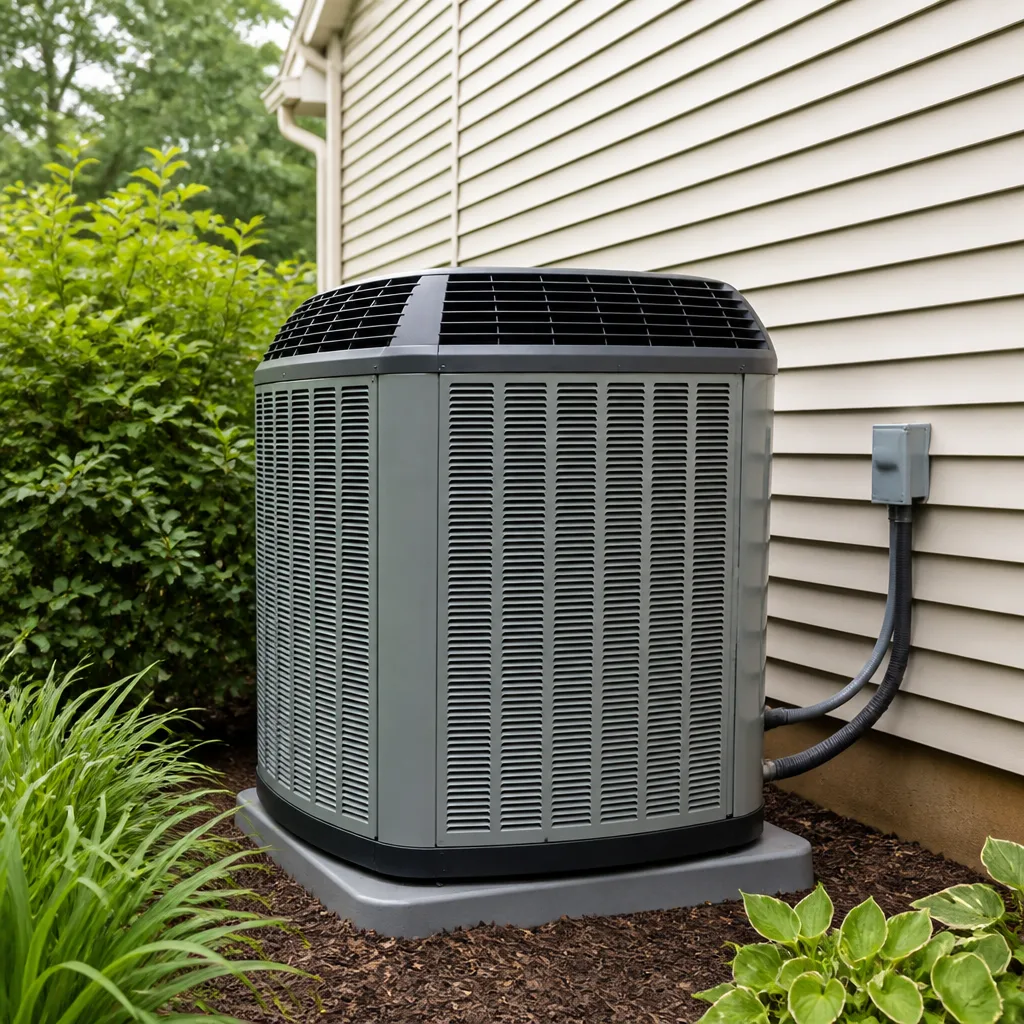 Trane
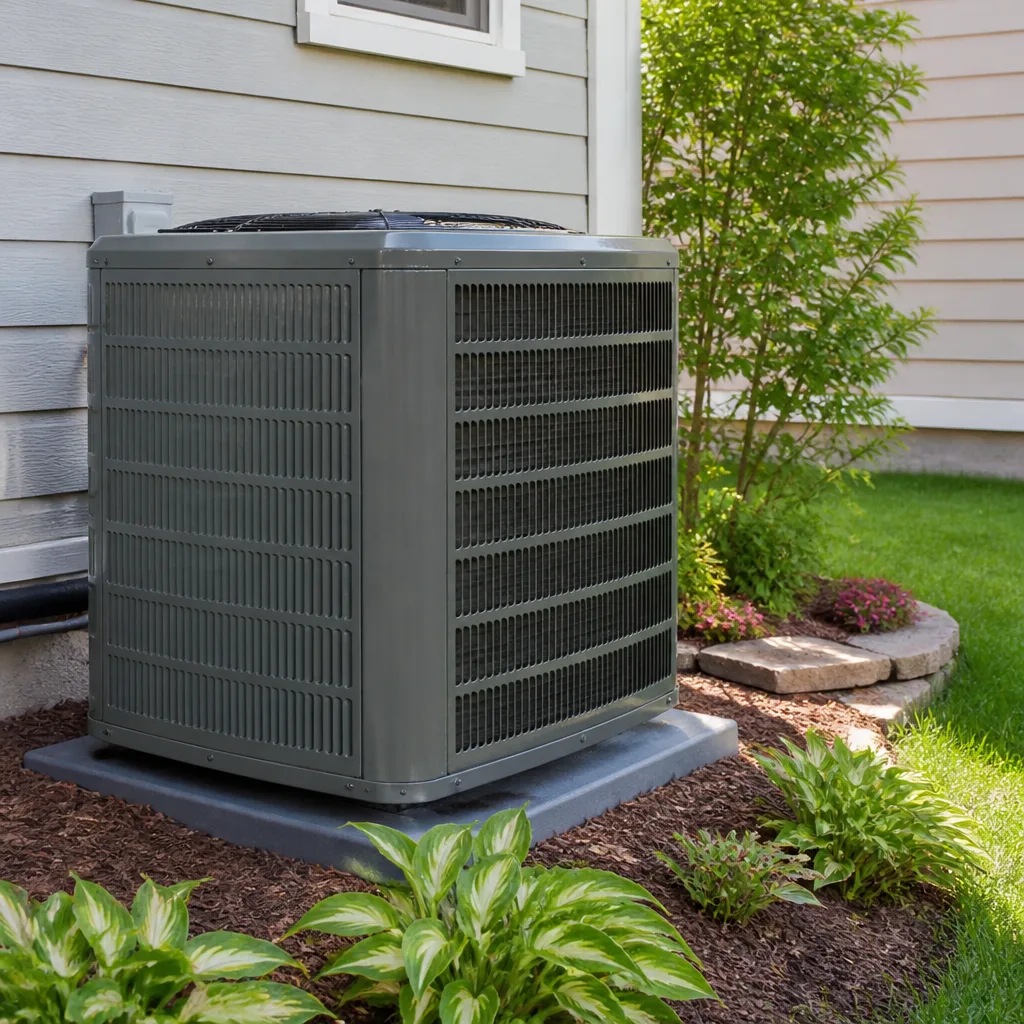 Goodman
Seasonal tune-up and full diagnostic on your Carrier, Trane, or Goodman system - readings shown to you before any repair is proposed
Diagnosis first, numbers second - you approve the repair price before a single part goes in.
Get your free estimateHVAC Warning Signs: A Carrollton Homeowner’s Reference Guide
Most HVAC warning sign lists tell you what a broken system looks like. That’s the easy part. A system that’s already dead announces itself. The signs that actually save Carrollton homeowners money are the quiet ones: a temperature split that’s drifted three degrees off where it should be, a compressor that’s running a little longer each cycle, a condensate line that’s starting to gurgle. These are the signals that show up weeks or months before a breakdown, and they’re the ones almost nobody notices because nothing has “failed” yet.
That matters more in Carrollton than in most places. Our summers push equipment hard, and a system losing efficiency in July compounds that loss every single day the compressor cycles. In this guide, we walk through how to read your thermostat’s runtime data, how to tell one compressor sound from another, how to check supply and return temperatures with a cheap thermometer, and what the visual clues inside and around your equipment are telling you. The goal is a homeowner who can describe a symptom accurately when they call. Accurate description cuts diagnostic time, and that cuts cost.
Quick Answer
The earliest HVAC warning signs in Carrollton are rarely total failures. They’re subtle: cycle times that run longer than normal, a supply-to-return temperature split that’s drifted under 16°F, refrigerant hiss at the outdoor unit, a musty smell near the air handler, or a drain line that’s slow and gurgling. Catching any of these early usually means a repair rather than a replacement, especially in the middle of a Carrollton summer when the system can’t afford to run inefficient. If more than one of these signs shows up at the same time, it’s time to have the system looked at before a failure pushes the decision for you.
Styles & brands we work with
- AC repair
- Furnace & heating
- Heat pumps
- Ductless mini splits
- Carrier
- Trane
- Goodman
Table of Contents
- Reading Your Thermostat’s Runtime Data
- Checking the Supply and Return Temperature Split
- Sound-Based Diagnostics: What Each Noise Means
- What to Look For Inside the Air Handler and at the Condenser
- Why Carrollton’s Hard Water Shows Up in Your Drain Line First
- Short-Cycling, Long Cycling, and What Each Pattern Tells You
- Furnace-Specific Warning Signs Before Cold Weather
- Why Brand Familiarity Shortens a Diagnostic Visit
Reading Your Thermostat’s Runtime Data
Your thermostat is the cheapest diagnostic tool in the house, and almost nobody uses it that way. Modern digital thermostats, and even many older programmable ones, log how long the system runs between cycles. Some display it directly. Others report it through a companion app. If yours has no data readout at all, the fix is simple: note the time when the system kicks on, and the time it shuts off. Do that for a week of normal hot-weather operation and you have a baseline.
Here’s what normal looks like in a Carrollton summer. On a well-sized, healthy system, most cooling cycles run in the range of 15 to 20 minutes, followed by an off period roughly equal in length. The house holds temperature within a degree or two and nobody notices. What you’re watching for is a shift away from that baseline, not an exact number, because the number varies with house size, insulation, and thermostat setting.
Three patterns tell you something is off:
- Continuous running. The system cools, but it never stops. On a hot day this can mean the compressor is working harder than it should, refrigerant charge is low, or the outdoor coil is clogged. Left alone, this wears out the compressor fastest.
- Short cycling. Cycles of two to five minutes, followed by a pause, then another short cycle. This often means the system is oversized, or the thermostat is in a spot that reads warm air that isn’t representative of the house. Either way, the compressor suffers from stop-start wear.
- Growing cycle length over the season. The most telling sign of all. If the system ran 15-minute cycles in May and 22-minute cycles in August at the same thermostat setpoint, something has degraded. It might be a dirty outdoor coil, a slow refrigerant leak, or a failing capacitor. The shift is your early warning.
Writing these numbers down once a week through summer is the easiest habit a Carrollton homeowner can build. It costs nothing and gives a technician a concrete history to work from.
Checking the Supply and Return Temperature Split
The temperature split, sometimes called the delta-T, is the gap between the temperature of the air going into your return and the air coming out of a supply register. A properly charged system in normal conditions should show a split in the range of 16°F to 22°F. That’s the number the manufacturer sized the system for. A 3°F difference from that range is not “probably nothing” in a Carrollton July, because the heat load here is high and every degree of lost efficiency adds up across a full cooling season.
You don’t need a technician’s manifold gauge to check it. Here’s how to measure it yourself:
- Set the thermostat to cool and let the system run for at least 15 minutes so it reaches steady-state operation.
- Take a reading at the return grille, holding a digital thermometer’s probe in the airstream for a full minute.
- Take a second reading at a supply register, ideally the one nearest the air handler, using the same hold.
- Subtract the supply reading from the return reading. That’s your split.
A split below 16°F usually means the system is undercharged, the evaporator coil is dirty, or airflow is restricted by a clogged filter or blocked duct. A split above 22°F usually points to low airflow, which is its own problem because a system starved of air can ice up. Either direction is worth a professional look, but a low split is the more common sign in Carrollton, because our outdoor coils take a beating from dust and pollen and lose heat-rejection capacity first.
Digital probe thermometers that read to a tenth of a degree run well under twenty dollars at any hardware store. That’s the whole investment. For a full tune-up or a more thorough check, Carrollton AC Repair handles the diagnostics with proper gauges and can compare your actual charge against the manufacturer’s spec.
Sound-Based Diagnostics: What Each Noise Means
Equipment doesn’t fail quietly. But not all sounds mean the same thing, and telling them apart is the difference between a homeowner who panics and a homeowner who calls with useful information. We’ve walked up to a lot of noisy systems across Carrollton, and the same handful of sound signatures come up again and again. Here’s how to sort them.
- Refrigerant hiss. A steady, high-pitched hiss or a bubbling, gurgling sound at the outdoor unit usually means refrigerant is moving through a small leak. It’s not the loudest noise, and it’s often worst at startup. Left alone, low refrigerant is the surest road to a burned-out compressor, so it’s worth a call even if the system still cools.
- Bearing noise. A low, grinding or whirring hum from the outdoor unit’s fan motor or the indoor blower. It gets louder when the fan spins up and quiets when it coasts. That’s the bearing in the motor going out, and it typically gets worse within weeks.
- Expansion and contraction. Sharp ticking or clicking from the ductwork or the air handler cabinet, especially when the system starts or shuts off. This is normal. Metal expands with heat and contracts when it cools, and Carrollton’s heat makes that expansion more pronounced than in milder climates. Ignore it if it’s a short tick at startup.
- Rattling at the condenser. Loose panel screws, a failing fan blade, or debris lodged in the cabinet. Check the screws and clear any leaves or branches. If the rattle continues, the fan blade may be off balance.
- A rise in steady hum. A compressor that used to hum at one pitch and now hums a little louder or a little deeper can mean a mechanical issue building inside. It’s not a sound most people notice until it’s gone from hum to thud, but it’s worth catching early.
The one sound that means call immediately: a loud, hard thud or metallic clang from the outdoor unit at startup. That’s usually a compressor or fan problem that gets expensive fast. During cooling season, if you hear it, shut the system off at the thermostat and call. For heating-side sounds, the same library applies, and our furnace repair technicians can identify most furnace noises in a single visit.
What to Look For Inside the Air Handler and at the Condenser
You don’t need tools for the most useful visual checks in the whole house. What you need is a flashlight and five minutes. Here’s what to walk up to and look at.
Inside the air handler cabinet (or the closet where it lives), three things matter most:
- Moisture on the cabinet exterior. Condensation dripping from the outside of an air handler means something inside is too cold, usually a low-refrigerant or airflow problem. Ignore it and you’re looking at a rusted cabinet and a failed motor.
- Rust streaks on the cabinet or a puddle under it. Rust streaks on the bottom edge of the cabinet typically mean a leaking drain pan or a backed-up condensate line. A puddle on the floor under the air handler is the same problem further along.
- The condition of the air filter. A filter loaded with dust is the most common culprit behind a low temperature split. Pull it and hold it up to a light. If you can’t see through it, the system can’t breathe through it either. In Carrollton’s pollen-heavy spring and dusty summer, filters need changing more often than the manufacturer’s general recommendation.
Outside at the condenser, walk around the unit and look for these signs:
- Dirty fins. The vertical fins on the sides should be clean and straight. If they’re packed with cottonwood seed, grass clippings, or dust, heat rejection drops and the compressor runs hotter.
- Debris stacked against the cabinet. Vegetation, mulch, or a storage box within a couple feet of the unit chokes the airflow. Clear it back.
- Oil staining. A dark, greasy stain on the refrigerant lines or the base pan is the visual match to the hissing sound above. That’s a leak.
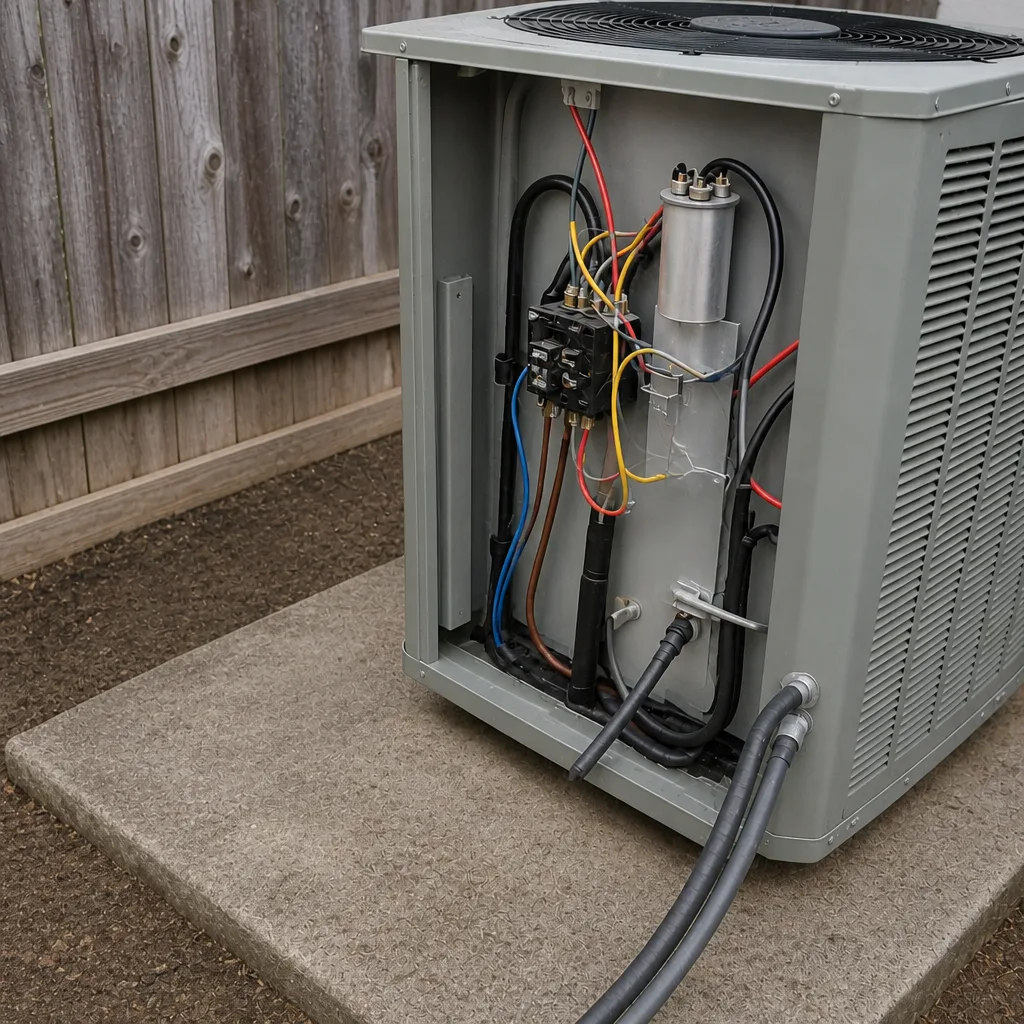
- The disconnect switch and breaker. Tripped breakers happen, but a breaker that trips repeatedly is telling you something in the system is pulling too much current. Don’t just reset it and forget it.
- Ice on the lines or cabinet. Any ice on the refrigerant lines or the outdoor unit during cooling means the system is running under capacity. Shut it off and have it looked at. Running a frozen system makes things worse.
The electrical side of this checklist is where caution matters most. If you see scorched wiring, a burning smell near a disconnect box or breaker panel, or a breaker that smells hot, stop there and get a trained professional involved rather than opening any panel yourself. For everything else on the list, a visual scan is safe and useful.
Why Carrollton’s Hard Water Shows Up in Your Drain Line First
Carrollton’s water is on the hard side, and while that mostly gets discussed in the context of showerheads and water heaters, it has a direct and often-overlooked effect on HVAC equipment. Specifically, it affects the condensate drain line, the pvc pipe that carries moisture removed from your indoor air out of the house.
Here’s how the mechanism works. During cooling, the evaporator coil removes humidity from the air, and the condensate drips into a shallow pan beneath the coil and out through the drain. That water carries minerals along with it, plus the occasional bit of dust and coil-cleaner residue. In Carrollton’s heat load, the coil puts out a lot of condensate, so the drain line runs constantly through summer. Minerals deposit along the inside of the pipe and in the trap, and over time the effective diameter shrinks. Once it gets small enough, the flow can’t keep up, and the pan overflows.
Two signs tell you it’s happening before the overflow:
- A musty or sour smell near the air handler or the indoor closet. The standing water in a slow drain trap grows a biofilm, and its smell escapes through the air handler before any water shows up on the floor.
- A gurgling sound from the drain when the system starts. That’s air pulling through a partial block. It’s normal to hear a little water movement, but steady gurgling through the whole cycle is a sign the line is narrowing.
If you have a float switch in the drain pan (many systems do), a backed-up drain will trip it and shut the AC off before the pan overflows. If you don’t have one, water ends up on the floor, and depending on where the air handler sits, that can mean ceiling damage below it. If you can reach the end of the drain line outside, checking that it’s dripping freely during a cooling cycle is a thirty-second check worth doing once a month through summer.
Video inspection of the condensate line is part of the diagnostic routine we run on standard tune-ups. If you’re already thinking about a full system refresh, the same visit can include a conversation about what AC installation entails so you’re comparing apples to apples instead of getting a repair estimate with no replacement baseline.
Short-Cycling, Long Cycling, and What Each Pattern Tells You
Cycle length is the leading indicator nobody checks until something fails. A system that cycles steadily and holds temperature is almost certainly in reasonable health. A system whose cycles have changed pattern is telling you it’s working harder than it should, and that pattern is visible weeks or months before a breakdown.
Here’s what each cycle pattern tends to mean:
- Short cycles of 2 to 5 minutes. The system cools, then shuts off, then comes back on quickly. On a single-stage system, this usually points to an oversized unit, a thermostat problem, or a compressor that’s limping. Oversizing is common in Carrollton homes where additions have been added without a load calculation update, so it’s worth flagging when you call.
- Long cycles of 30 minutes or more. The system runs and runs, cools slowly, and shuts off only when the thermostat finally hits setpoint. This points to undercharge, a dirty outdoor coil, a failing compressor, or an airflow restriction. Long cycles are also the single biggest contributor to utility bills climbing during a Carrollton summer, because the compressor is running well past the point where efficiency starts to fall.
- Continuous run with no off cycle. The system never stops. Either the heat load has exceeded capacity, or the system has lost substantially all of its cooling ability. Get it looked at today, because a compressor running at full load continuously is a compressor on borrowed time.
- Frequent restarts after achieving setpoint. The system cools, hits setpoint, shuts off, and within a few minutes it’s running again. Often a thermostat placement issue, though it can also mean the system is mistaking a cold room for a warm house.
Watch the cycle length at the same thermostat setting across several weeks and note any change. That data is worth more to a technician than anything you can say about “it seems louder than usual.” If the system is cycling in any of the patterns above and it’s a York, Daikin, Bryant, or American Standard system, we’re already fluent in how each manufacturer’s controls and compressor protection logic behaves, which trims diagnostic time.
Furnace-Specific Warning Signs Before Cold Weather
Heating season in Carrollton is shorter than most of the country, but the first cold snap catches plenty of homes with a furnace that needed attention in September. Most furnace warning signs are easy to spot if you know what to look at before you need the heat. Here are the ones that reveal themselves during a routine pre-season check.
- Rust or corrosion on the flue or heat exchanger cover. Rust streaks on the metal panel that covers the heat exchanger usually mean venting moisture is finding its way back inside. That’s worth a professional look, and a technician should check the heat exchanger itself before the system runs again.
- Yellow or orange burner flames. A healthy gas flame is blue with a slight tip of yellow. A mostly yellow or orange flame indicates incomplete combustion, which is a safety issue not a maintenance one. Don’t run the system; call for service.
- A musty or dusty smell on first startup each fall. A little dust burnoff on the first cool morning is normal. If the smell persists past the first cycle, it’s time to look at the burners, the flue, and the blower.
- The ignitor clicking but no ignition. Often a dirty flame sensor or a failed ignitor. Both are typically straightforward repairs, but each cycle that runs without ignition emits unburned gas, so don’t keep trying to start it.
- Blower noise changes. A furnace blower that starts with a rattle or runs with a grinding tone has a bearing or wheel issue. On a Carrier or Lennox system, our technicians can identify blower assembly problems quickly and identify the source.
Gas line work and heat exchanger inspection are both jobs to leave to a trained professional. A propane or natural gas leak is dangerous, and a cracked heat exchanger can put carbon monoxide into the living space. If you smell gas, leave the house and call your gas utility first, then a technician. For the rest of the pre-season list, working with a team familiar with your brand helps preserve the system’s specific operating parameters. Our furnace repair team handles both the diagnostic side and the replacement conversation if the furnace has reached the point where repair stops making sense.
Why Brand Familiarity Shortens a Diagnostic Visit
The subtle signs in this guide are useful on their own, but the diagnostic process that follows them is faster when the technician already knows the equipment. Each major manufacturer builds in slightly different control logic, compressor protection schemes, and fault codes. A technician who works across brands most weeks has already seen how a given manufacturer’s system reports a low-charge condition, a locked rotor, or a defrost fault. That familiarity saves a step or two on every diagnostic, and it’s the difference between a call that starts from scratch and a call that starts from a known baseline.
At Carrollton AC Repair, we’re factory-familiar with nine of the industry’s most-installed systems, including Carrier, Trane, Lennox, Goodman, Rheem, York, Daikin, Bryant, and American Standard. That covers most of what’s installed in Carrollton homes, and it means technicians arrive already fluent in the system being serviced. Our technicians have up to experience, and the brand list is a big part of what that experience includes.
The other half of the diagnostic speed equation is service scope. We focus exclusively on HVAC, which means the technicians aren’t splitting attention across plumbing, roofing, and electrical work on the same visit. Cooling and heating both come from the same team, so a system that shows warning signs on both sides gets one clear picture instead of two contractors talking past each other. Brand-agnostic repair advice is the final piece: recommendations come from what the system actually needs, not from which manufacturer offers a better dealer margin.
Common Mistakes to Avoid
- Resetting a tripped breaker without asking why it tripped. A breaker that trips once in a season is probably fine. A breaker that trips repeatedly is telling you there’s a short, a failing compressor, or a motor drawing too much current. Reset it and note the date, but if it trips again, it’s a call.
- Adding refrigerant without finding the leak. If you or a technician top off refrigerant and the pressure drops again a few weeks later, refrigerant isn’t being consumed. It’s escaping. Find the leak before the compressor pays for it.
- Running the system with ice on the lines. When the indoor coil ices up, running the system in cool mode makes it worse. It also risks liquid refrigerant getting back to the compressor, which is one of the fastest ways to end a compressor’s life. Shut it down and call.
- Trusting the thermostat display and ignoring the cycle length. The thermostat can read 75°F while the system runs 45-minute cycles, and homeowners take the display as the all-clear. Cycle length is the leading indicator, not the setpoint display.
- Letting the condensate drain go all summer without checking it. Carrollton’s hard water means the drain line narrows from the inside, and the first sign is often a puddle on the floor. Check the outdoor drain outlet once a month and listen for gurgling.
- Skipping the pre-season furnace check. Furnaces fail in the first week of cold weather precisely because they haven’t run since spring. A pre-season check catches most of the problems that would otherwise become a scramble.
- Assuming a slow-cooling house is a refrigerant problem. It might be. But a low temperature split can also come from a dirty filter, a restricted duct, a failing compressor valve, or a thermostat issue. Don’t jump to the most expensive fix first; measure the split and let the numbers point somewhere.
- Replacing a system based on one bad day. A system that fails on the hottest day of the year has one data point. A system that’s failed three times in a season and is showing a growing cycle length has a pattern. Repair-versus-replace decisions should be based on the pattern, not the last emergency.
See the difference
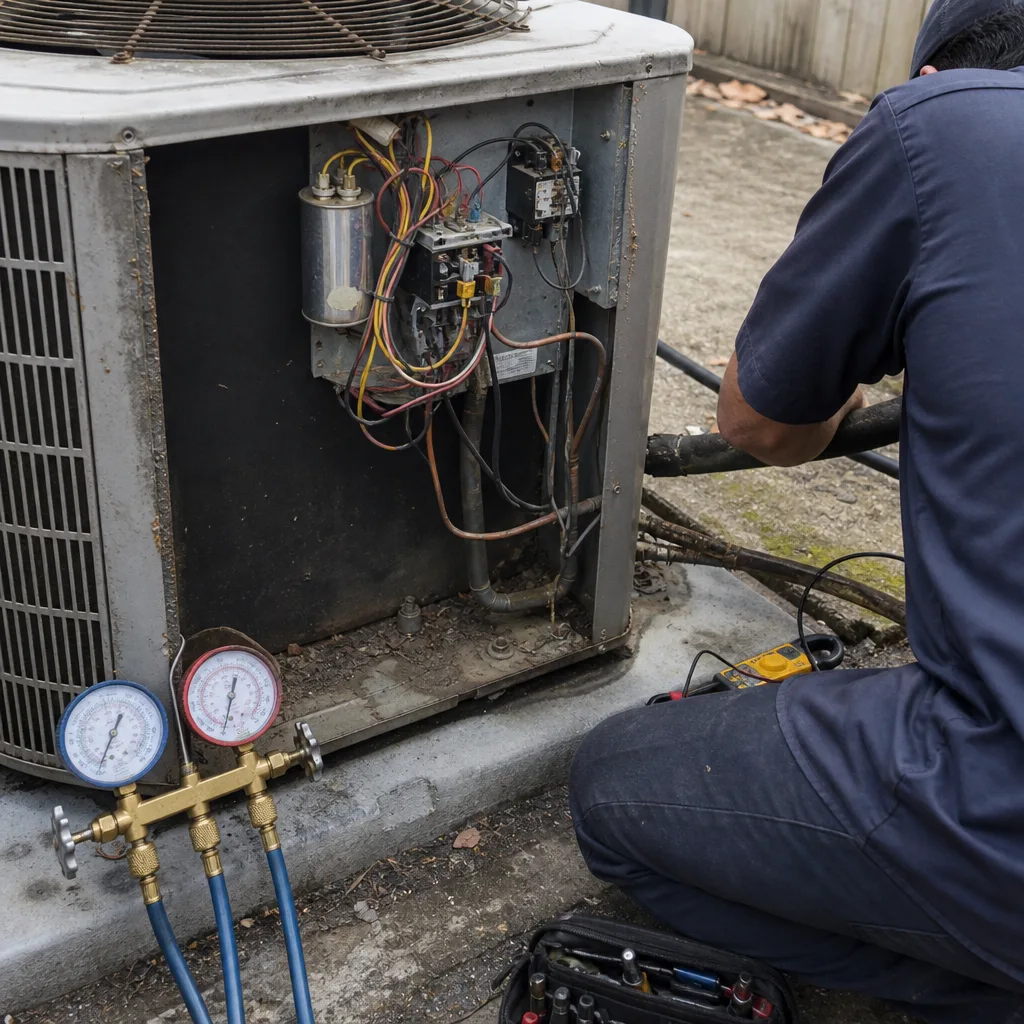 Before
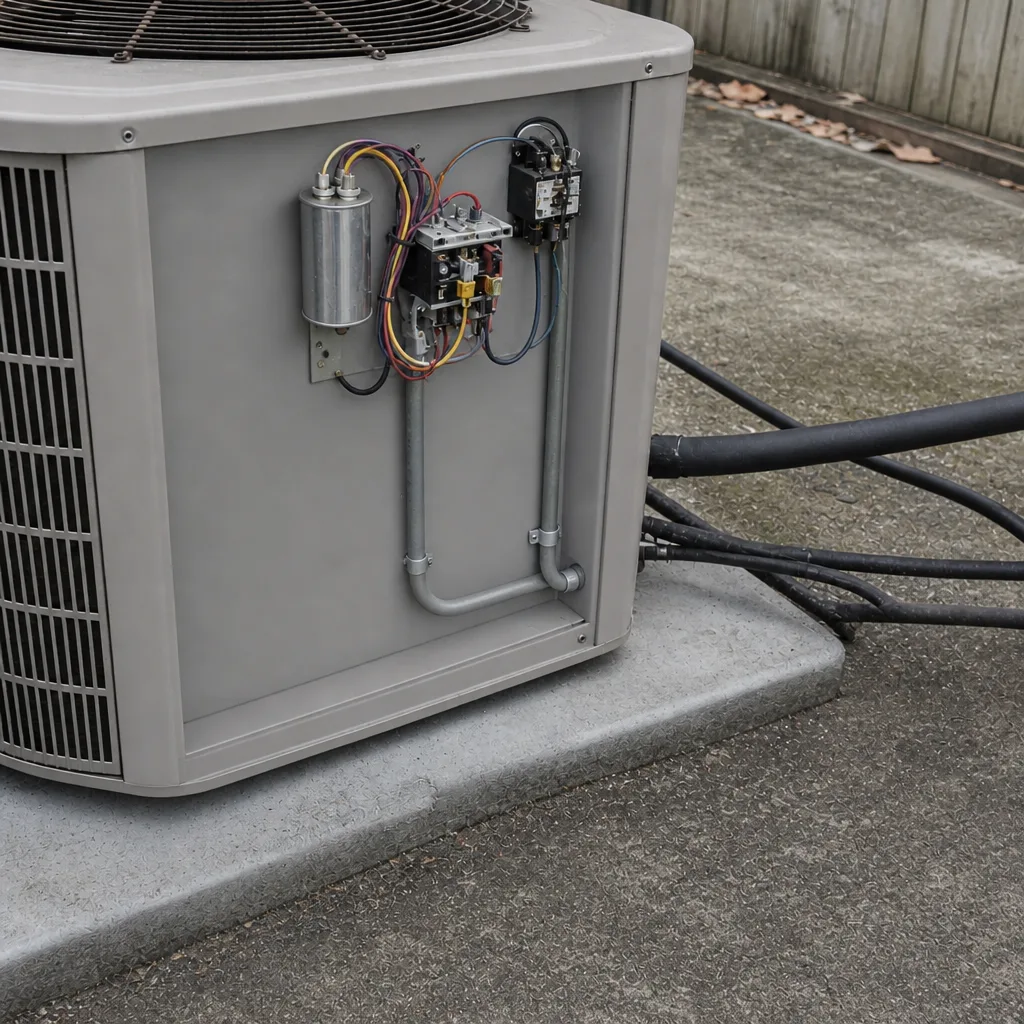 After
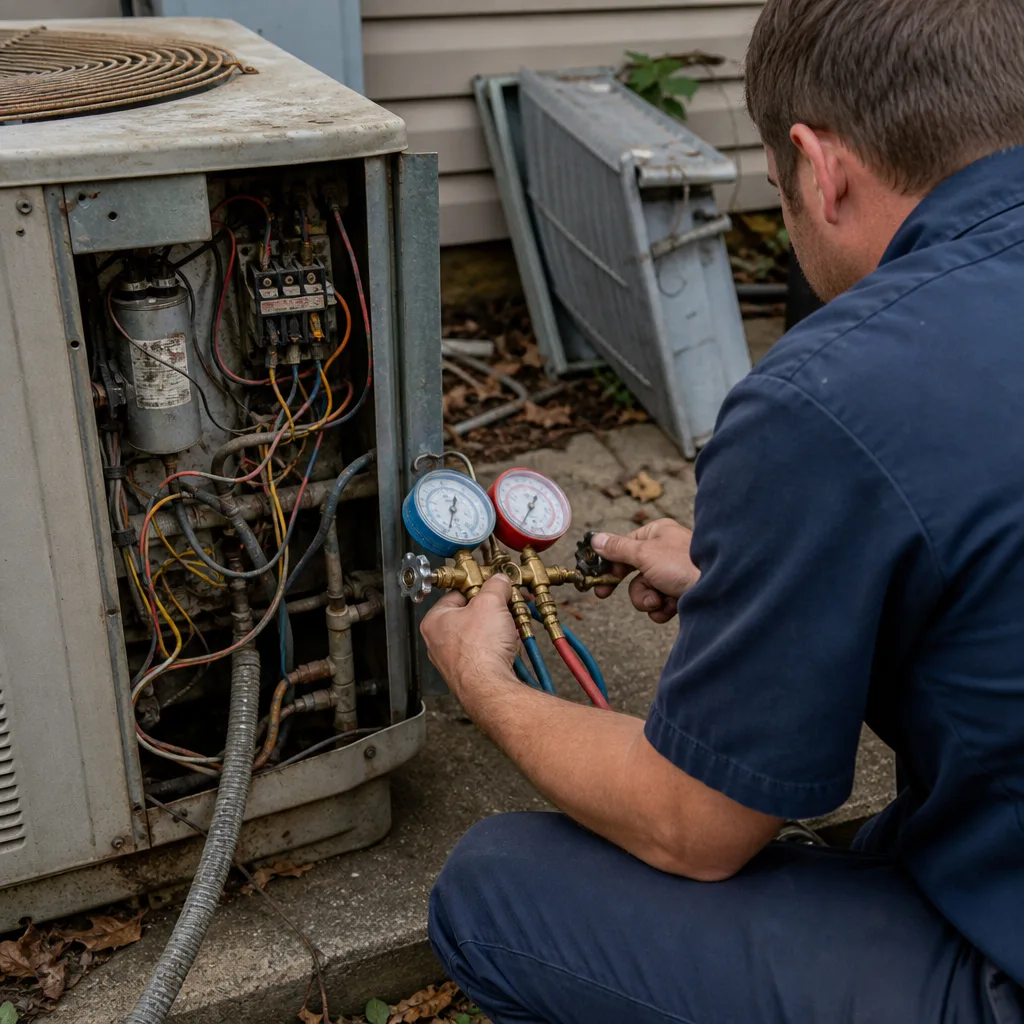 Before
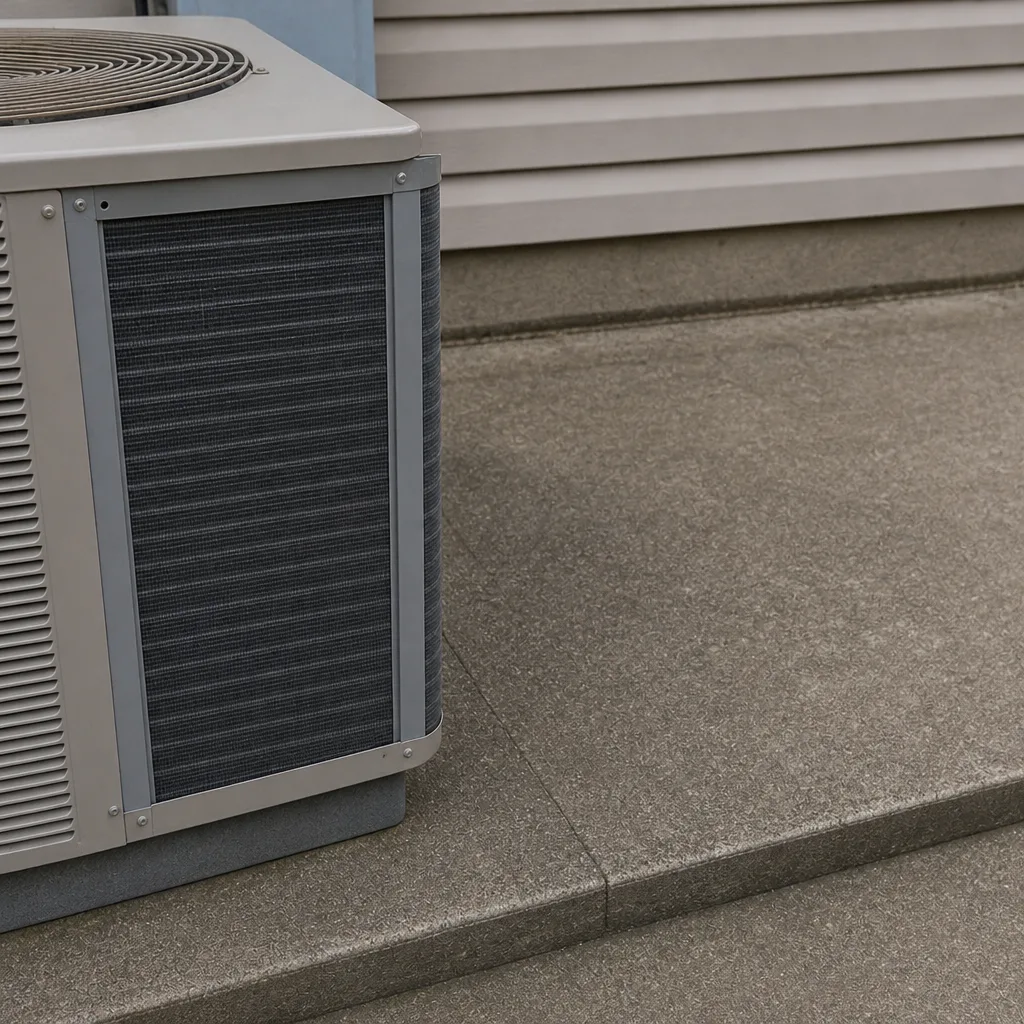 After
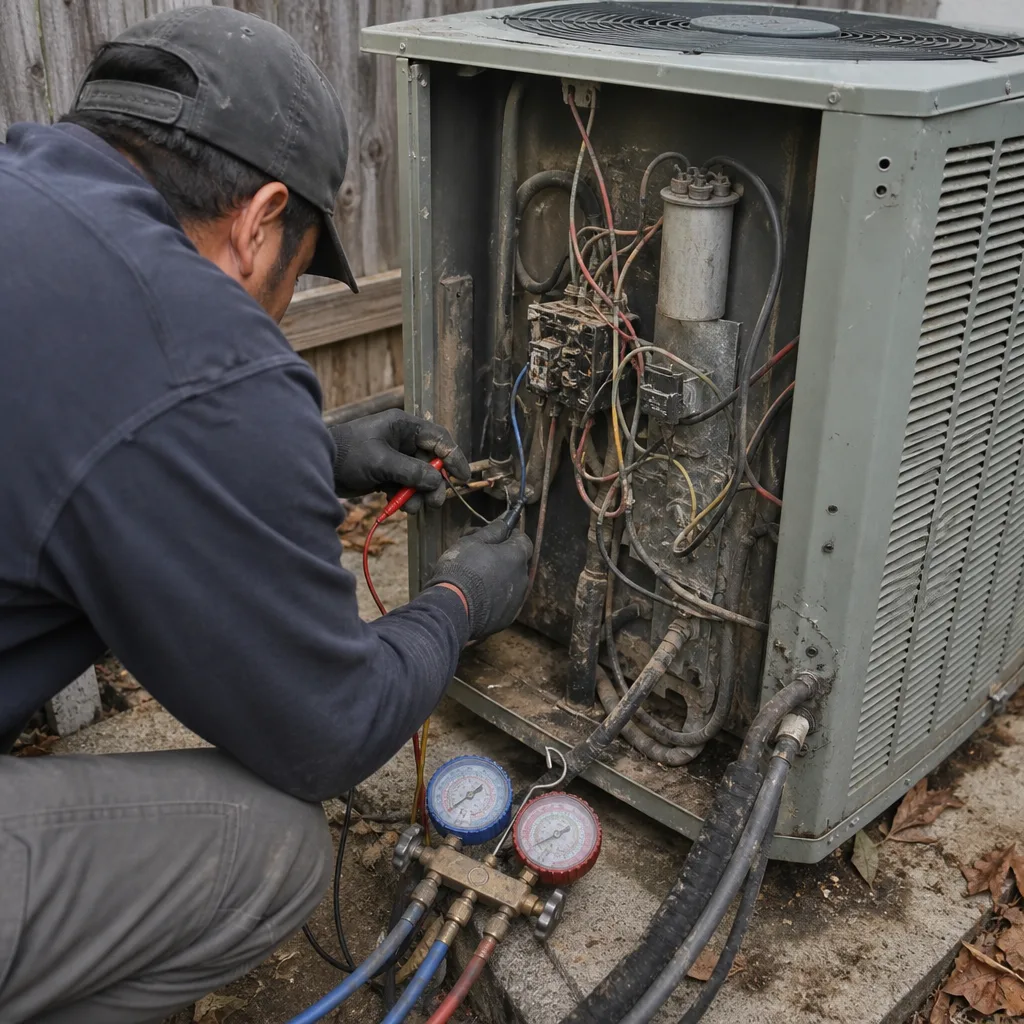 Before
 After
When to Call a Professional
Some warning signs you can coach yourself through a family discussion. Others need a call. The clearest call scenarios are: any sign of ice on the refrigerant lines or the outdoor unit; a temperature split that’s drifted more than three degrees from the 16°F to 22°F range; a burner flame that isn’t blue; a smell of gas near the furnace; a breaker that trips twice in a season; a compressor that runs continuously without bringing the house down to setpoint; or a condensate line that’s backed up and overflowing. In any of those, don’t keep cycling the system hoping it settles. Shut it down and get a technician on it. The diagnostic cost of a visit is smaller than the repair cost of a compressor or heat exchanger that fails because it kept running. Carrollton AC Repair offers free estimates in Carrollton, call (855) 759-1429. We answer 24/7. Fast dispatch from 7am to 7pm, Sunday through Friday.
Frequently Asked Questions
The earliest reliable sign is a change in cycle length at the same thermostat setting. If the system used to run 15-minute cycles in May and is running 22-minute cycles in August, something in the system has degraded even if the house still feels cool. The second most common early sign is a temperature split that’s drifted under 16°F. Call (855) 759-1429 for an exact quote. Estimates are free.
Short cycling means cycles of roughly two to five minutes, followed by an off period, then back on within a few minutes. Normal cycles on a healthy system run closer to 15 to 20 minutes in a Carrollton summer. Track it for three or four days to establish a pattern before assuming there’s a problem. If the pattern holds, call us for a diagnostic visit.
Yes, with a basic digital probe thermometer and a steady hand. Read the return grille and the nearest supply register during a steady cooling cycle, then subtract the supply from the return. A split between 16°F and 22°F is in the normal range. Outside that range is worth a call. Carrollton AC Repair offers free estimates, call (855) 759-1429.
A sour or musty smell from the air handler usually means the condensate drain trap has grown biofilm and is slowing down. Carrollton’s hard water makes mineral deposits along the inside of the line more likely, and both problems show up first as a smell, then as water on the floor. Have the line cleared before the pan overflows.
A steady hiss or bubbling sound at the condenser usually means refrigerant is escaping through a small leak. The system may still cool fine for now, but low refrigerant pushes the compressor to work harder and eventually burns it out. It’s worth a diagnostic visit soon. Call (855) 759-1429 to schedule one.
The pattern over a season matters more than any single failure. A system that’s failed repeatedly, is showing growing cycle length, and has lost efficiency across the season is a repair-versus-replace conversation. A first-time failure on an otherwise steady system is usually a repair. We work on nine of the most-installed brands, including Carrier, Trane, Lennox, Goodman, Rheem, York, Daikin, Bryant, and American Standard, so the recommendation comes from what your system actually needs. For a free estimate on either path, call (855) 759-1429.
Check for rust or corrosion around the heat exchanger cover, watch the burner flame color on first startup (blue is healthy, yellow or orange is not), and listen for any change in the blower tone. Any yellow flame or rusty flue vent is a call, not a wait. For everything else, a pre-season visit in early fall catches most of what would otherwise become an emergency in December.
Yes, and especially in a Carrollton summer where the system is running hard for months. A maintenance visit checks things you can’t see from the outside: refrigerant charge against the manufacturer spec, electrical connections under load, the coil condition on the indoor side, and the drain line flow rate. It’s also a chance to catch a low temperature split before it becomes a repair.
The Bottom Line
The most expensive HVAC repairs usually aren’t started by a single failure. They’re started by a small sign nobody acted on. The thermostat runtime data, the temperature split, the hiss at the condenser, the puddle you’ve been meaning to look at, the smell from the drain line, all of it adds up into a diagnostic story. Reading that story well is what saves a Carrollton homeowner from a mid-July scramble. If any of these signs is showing up in your house, shut the system down if it’s safe to do so and get a technician to look at it. Carrollton AC Repair connects Carrollton homeowners with independent local HVAC professionals who work across Carrier, Trane, Lennox, Goodman, Rheem, York, Daikin, Bryant, and American Standard. Call (855) 759-1429 for a free estimate. We answer 24/7. Fast dispatch from 7am to 7pm, Sunday through Friday. For more on what we handle across Carrollton, including heating-side service and full system replacement, see how we work.
Written by the team at Carrollton AC Repair.