
Last updated November 15, 2026
 AC repair
 Furnace & heating
 Heat pumps
 Ductless mini splits
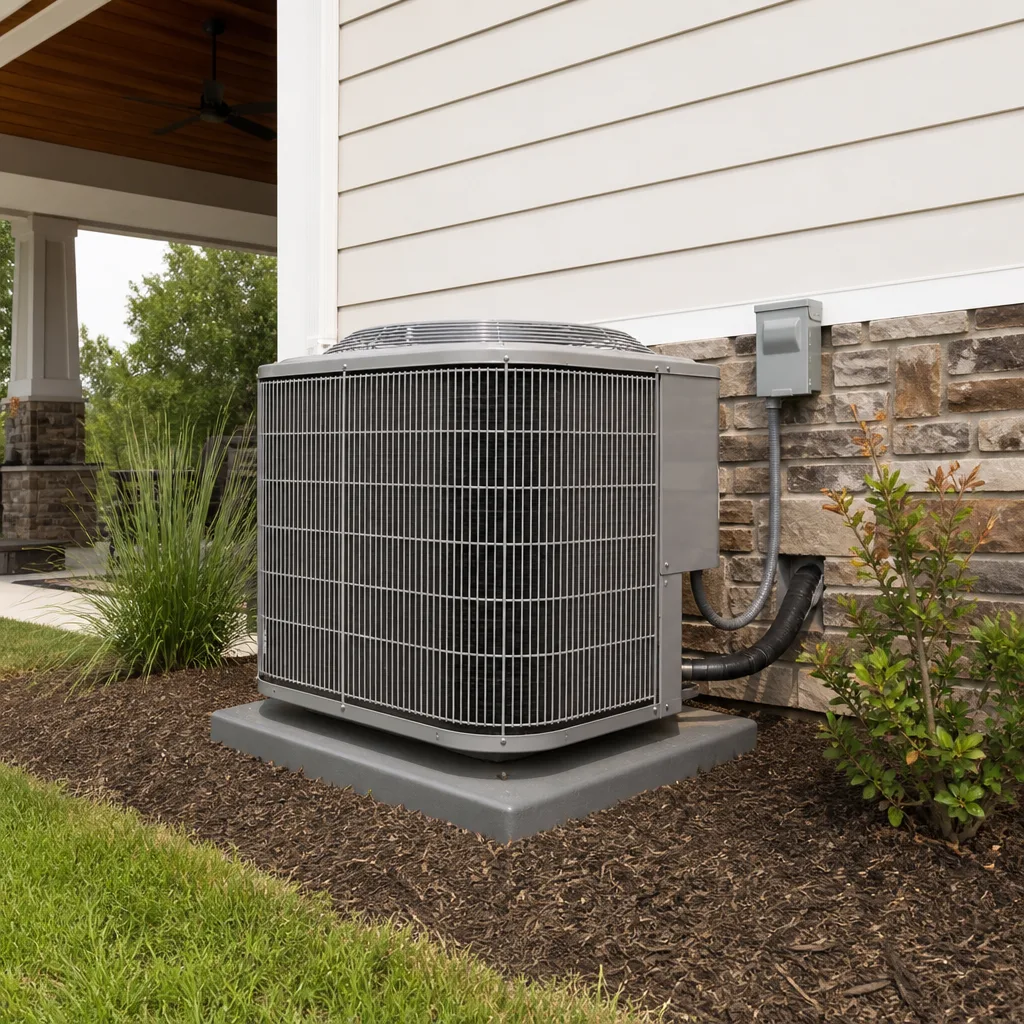 Carrier
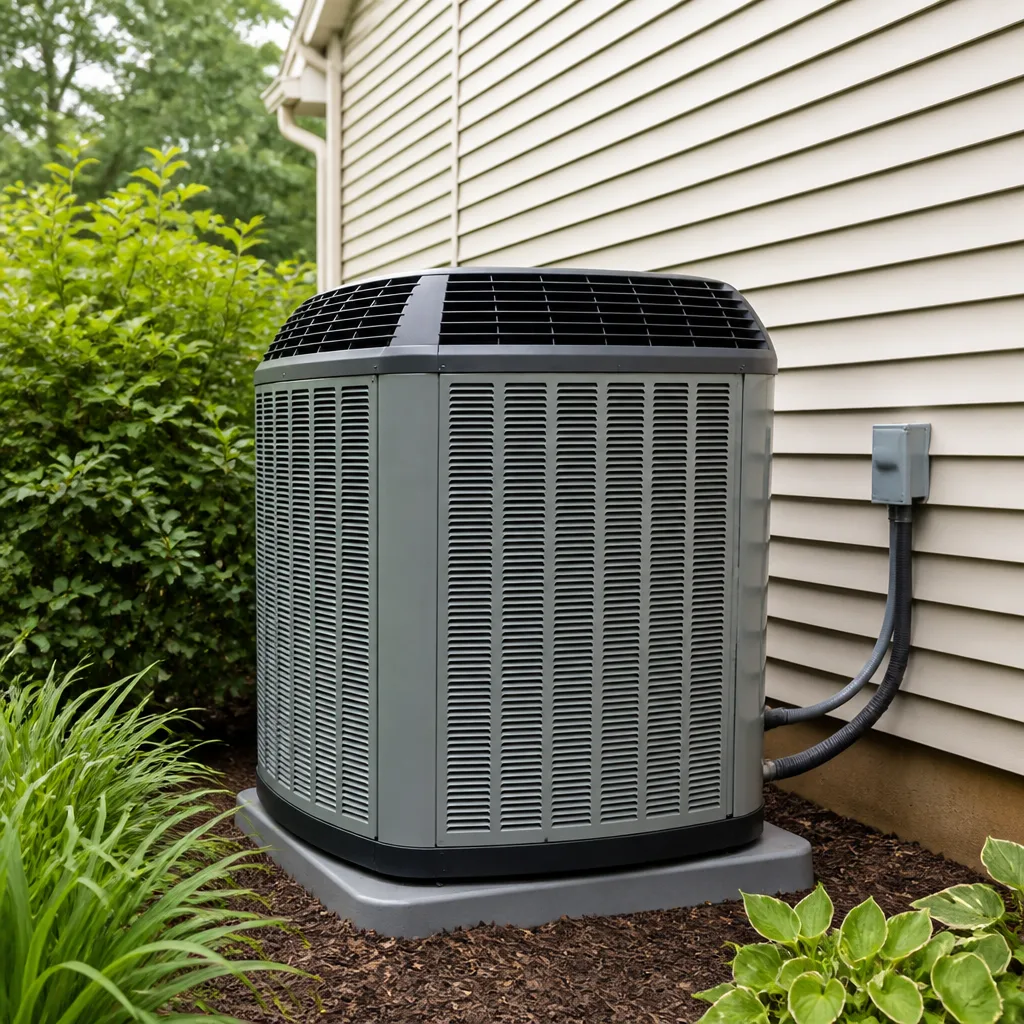 Trane
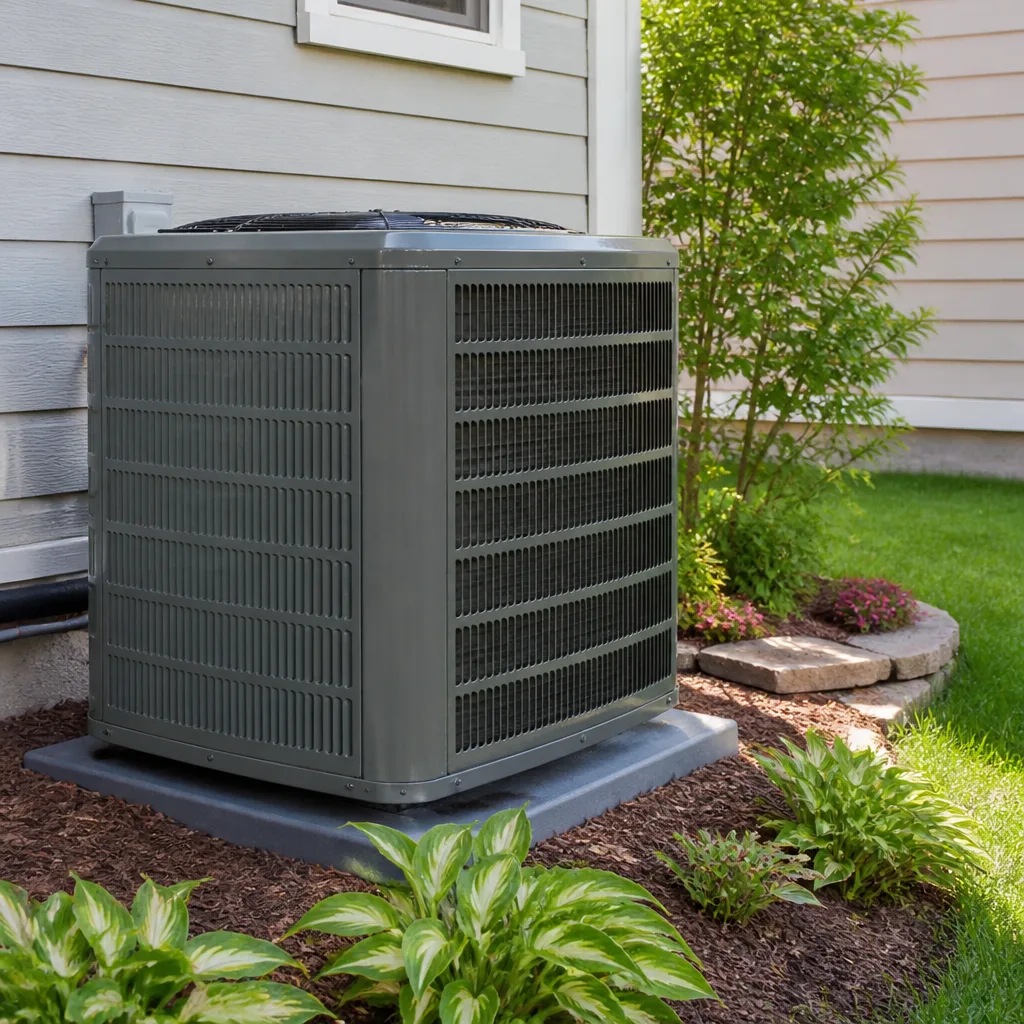 Goodman
Seasonal tune-up and full diagnostic on your Carrier, Trane, or Goodman system - readings shown to you before any repair is proposed
Diagnosis first, numbers second - you approve the repair price before a single part goes in.
Get your free estimateAC Installation Troubleshooting in Carrollton: Common Problems and How to Fix Them
A brand-new air conditioner that short-cycles, can’t hold temperature, or trips a breaker almost never has a broken compressor or a defective control board. It was installed wrong. That’s the part most homeowners get talked out of during the first callback: the conversation drifts toward replacement, refrigerant, or “your house is just hard to cool,” when the real cause is usually a sizing mistake, a bad braze joint, a pinched duct, or a wiring shortcut that never shows up until the system runs under load. In Carrollton, where long cooling seasons put a fresh install to work immediately, those mistakes surface fast. This guide walks through the symptoms, what each one points to, how to describe it to a technician, and how to push back if your installer isn’t answering.
Quick Answer
The most common problems after a new AC installation in Carrollton are short-cycling (usually oversizing, an overcharged system, or restricted airflow), warm rooms while the system runs (almost always a duct connection or balance problem, not the unit), freezing in the first week (improper refrigerant charge), and a tripping breaker (wiring or disconnect issues). Every one of these is an installation or commissioning fault, and the fix belongs to your installer under the labor warranty. Document the symptom, the date, and the conditions, request a callback in writing, and reference the equipment warranty through the manufacturer if the original installer stalls.
Styles & brands we work with
- AC repair
- Furnace & heating
- Heat pumps
- Ductless mini splits
- Carrier
- Trane
- Goodman
Table of Contents
- Why Does a New AC Short-Cycle in Carrollton?
- Why Are Some Rooms Still Warm After a New Installation?
- Why Does a New System Freeze Up in the First Week?
- Why Is the Breaker Tripping After a New Install?
- How Do You Document Problems and Escalate With the Installer?
- What Does the Warranty Actually Cover?
- Should You Replace the System or Call the Installer Back?
- Does Brand Matter When Troubleshooting a New Install?
Why Does a New AC Short-Cycle in Carrollton?
Short-cycling means the compressor starts and stops more often than it should. On a system that’s only weeks old, three causes account for nearly every case, and all three are the installer’s responsibility to diagnose at no charge.
- Oversizing. A unit with more cooling capacity than the house’s load calculation calls for reaches the thermostat setpoint in just a few minutes, shuts off, then restarts as humidity and temperature creep back. The original installer should be able to produce the load calculation. If a company sized the system by square footage alone, it skipped that step.
- Refrigerant overcharge. A system charged by pressure gauge alone, without weighing the charge against the nameplate, will run at abnormally high head pressure and cut out on a safety switch. The symptom is a compressor that stops before the house reaches setpoint, then restarts after a pause.
- Restricted airflow. An undersized return, a filter that’s too restrictive for the new cabinet, or a pinch in a transition duct forces the system to trip on a high-limit or low-temperature control. We see this most in homes where a duct system was reused without modification for a larger replacement unit.
Each of these looks similar from the thermostat, which is why the callback is worth making right away rather than waiting. Tell your technician which of these three patterns matches: cut-out before setpoint, cut-out with a pressure-related noise, or cut-out that follows a filter change. That description alone saves an hour of diagnostic time in a Carrollton attic when the sun is already baking the roof deck.
Why Are Some Rooms Still Warm After a New Installation?
If your new system runs continuously and one or two rooms stay 4 to 8 degrees warmer than the rest, the unit isn’t undersized. In our experience, that symptom points to one of four things, and three of them are duct-related.
- A disconnected or torn supply run. A boot that came loose at the ceiling during install, or a flex run that was pulled apart in the attic, dumps cold air into the attic instead of the room. It’s the single most common post-install complaint we resolve.
- Poor balance. A new unit with different static pressure can change how air splits across branches. Dampers that were never adjusted for the new blower can starve the far end of the house.
- Return path issues. A room with a supply register but no return path (a closed door, an undersized transfer grille) pressurizes and pushes cold air back out.
- Added insulation or window changes. A room that was drywalled or a sunroom that was added after the load calculation was drawn often needs a dedicated supply, not a bigger main unit.
Carrollton homes built in the 1970s through the 1990s, particularly around the older neighborhoods off Josey Lane and Belt Line Road, often carry original attic ductwork that was patched rather than replaced during a swap. Ask your installer whether the ducts were inspected and whether a static pressure test was part of the commissioning. For an install from scratch, the AC installation page covers what a proper commissioning checklist should include.
Why Does a New System Freeze Up in the First Week?
A frozen evaporator coil in a brand-new system is almost always a refrigerant charge issue, not a thermostat setting. Ice on the indoor coil or the larger copper line means the coil is running below the point where moisture condenses and freezes, and there are only two reasons that happens on a fresh install.
The first is undercharge. If the line set was cut short and not evacuated thoroughly, or if the installer didn’t add the correct length adjustment for a long line run, the system will run low. The second is restricted airflow across the coil. A filter that’s thicker than the original cabinet calls for, a blower that was left on a low speed tap, or a duct return that was crushed during the install all do the same thing: not enough warm air across the cold coil, and ice forms.
What you should not do is turn the thermostat down to cool the house faster. That makes the coil colder and the icing worse. Turn the system off at the thermostat, let the ice melt fully (which can take hours), and call your installer. A technician checking a fresh install should be weighing the refrigerant charge and verifying superheat and subcool against the nameplate, not just reading line pressure. Carrollton’s summer humidity puts real load on a coil, so a marginally low charge shows up as ice within the first week, not months later.
What to check before the technician arrives
- Replace the air filter with the correct size and MERV rating (usually MERV 8 to 11 for a residential system).
- Confirm every supply register in the house is open and unobstructed by furniture or rugs.
- Note whether the ice is only on the indoor unit’s larger copper line or covers the entire coil.
- Write down the thermostat setpoint and the outdoor temperature at the time the icing began.
Why Is the Breaker Tripping After a New Install?
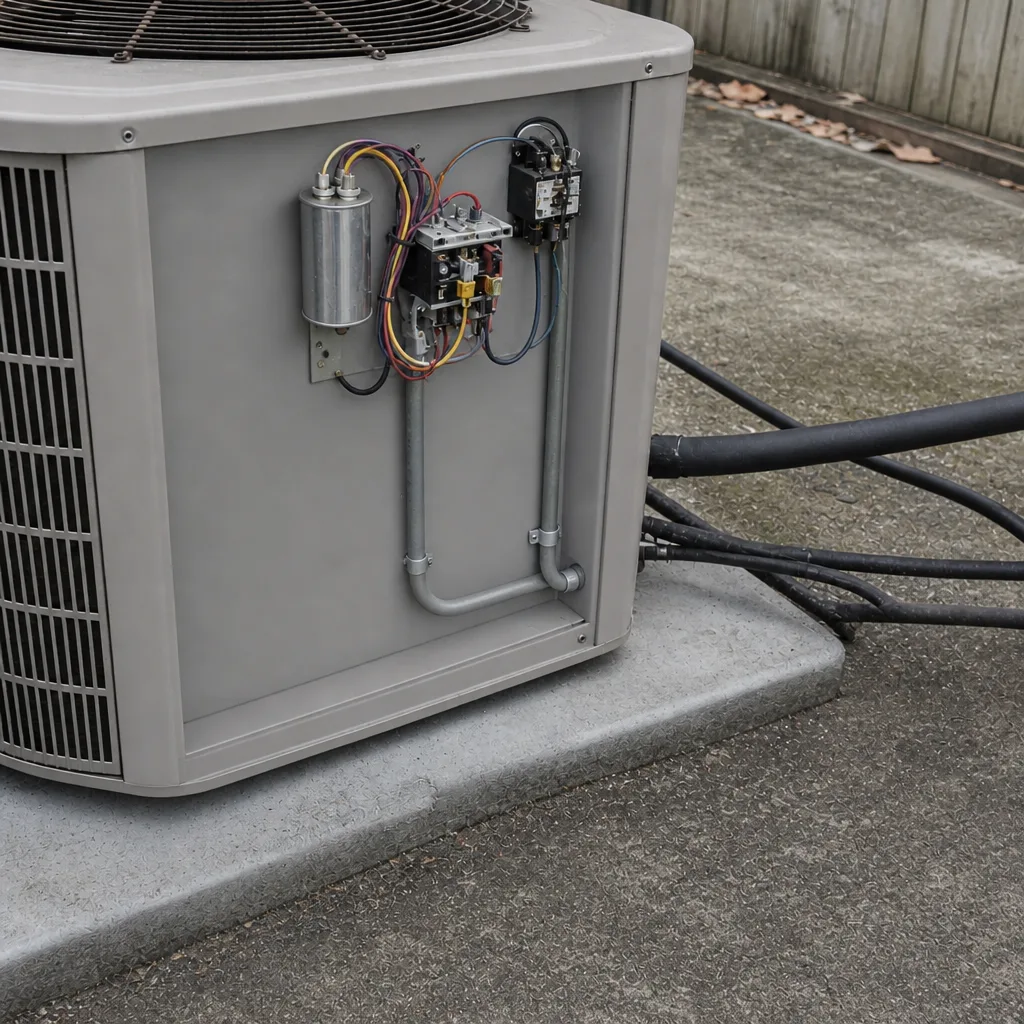
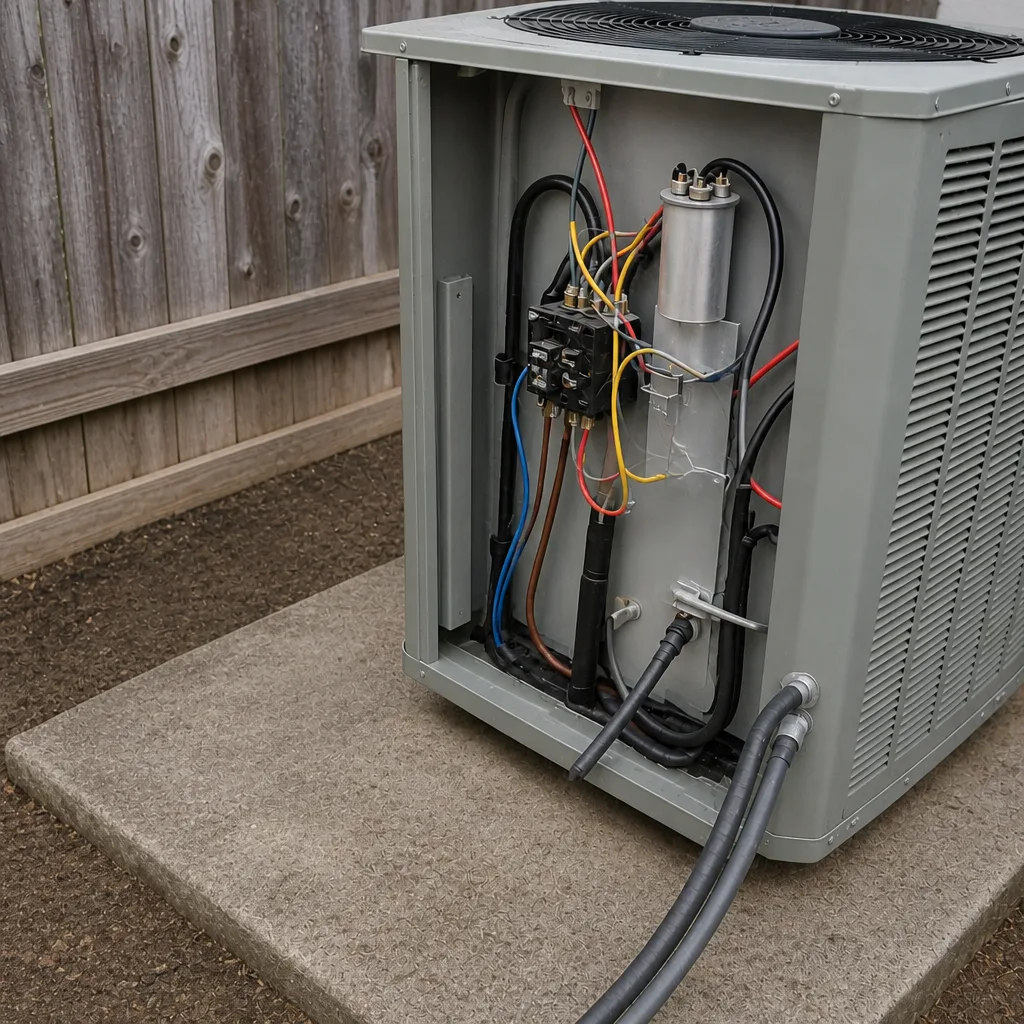
A breaker that trips on a brand-new system is an electrical problem, and on a fresh install it’s usually a mistake made in the disconnect or in the wiring at the outdoor unit. Before touching anything, know that the disconnect is a live electrical component and the capacitor in the outdoor unit holds a charge even after the breaker is off. This is not homeowner territory. A licensed technician should open the panel and the disconnect.
When it happens, look at the panel and note exactly which breaker tripped. Then check these three, in order, with the breaker off:
- Loose lugs or a missed torque spec. If the supply wire wasn’t torqued to the manufacturer’s specification at the disconnect, arcing under load causes an intermittent trip. This is the most common culprit.
- Incorrect wire gauge for the run length. A long line set run with a wire size that’s too small for the distance causes voltage drop and heat at the breaker.
- Compressor to ground fault. Rare on a new unit, but not impossible. A sequence of trips after a failed braze joint or a shipping-damaged compressor can show this pattern.
If the breaker trips the moment you turn the system on, stop and call. If it trips only after 10 to 20 minutes of running, note the run time and give it to the tech. That time signature alone usually tells them whether they’re chasing a wiring issue or a compressor fault.
How Do You Document Problems and Escalate With the Installer?
The window to force a fix is the labor warranty, and the fastest way to get the installer back is a written record with dates, symptoms, and photos. If your original installer isn’t answering, work through this sequence.
- Start a log the same day. Note the date, time, indoor and outdoor temperature, thermostat setpoint, the symptom, and what you did (filter change, breaker reset). A short log is persuasive in a way a phone call isn’t.
- Photograph the nameplate. Capture the model, serial, and installation date sticker on both the indoor coil and the outdoor unit. That’s what the manufacturer’s warranty department will ask for.
- Send a written request for callback. Email or text the installer with the symptom, the log, and a specific ask (“please schedule a diagnostic visit to verify refrigerant charge and static pressure”). Keep the message short and factual.
- Reference the labor warranty in writing. The installer’s own warranty document, and the manufacturer’s limited equipment warranty, both matter. The labor portion is what covers the fix. The equipment portion is what covers a failed part.
- Escalate to the manufacturer if there’s no response in a reasonable window. Most manufacturers have a consumer complaint line for installation disputes. A call from the manufacturer to a contract holder gets attention.
- Get an independent second opinion. A written diagnostic from a second licensed company is often the document that moves a stalled installer. We can provide one.
What Does the Warranty Actually Cover?
Most homeowners assume a warranty protects them completely. It doesn’t. There are two warranties in play after any installation, and knowing which is which changes how you escalate.
- The equipment warranty is issued by the manufacturer. It covers failed parts, usually the compressor and the evaporator coil. It’s registered in the homeowner’s name but requires proof of installation and often a registration window that starts at the install date. Verify that your installer registered it.
- The labor warranty is issued by the installer. It covers the work of diagnosis and repair, including refrigerant charge, duct connections, and electrical corrections. This is the warranty you’re leaning on for the issues in this guide.
What neither covers is a mistake that was never installed correctly in the first place. If a system is 40% oversized or charged wrong from day one, both warranties technically apply, but the fix depends on a technician identifying the root cause instead of recharging the unit every summer and calling it normal.
For Carrollton homeowners, the practical step is to read the labor warranty document that should have come with the invoice. Look for the length of the labor period and whether it transfers to a new owner. If the document is missing, ask for it in writing. If you’re still choosing an installer, ask the same question before the work begins.
Should You Replace the System or Call the Installer Back?
If the system is under a year old, the answer is almost always to call the installer back. A failed compressor or coil in the first twelve months is a warranty issue, and a manufacturer will cover the equipment through whichever company installed it. Replacing the whole system only makes sense when the original installation was so poorly done (wrong equipment, no load calculation, no permit) that the labor to correct it approaches the cost of a full redo.
Here’s the decision framework we use:
- Under 12 months, any symptom covered in this guide: callback. Not a replacement.
- 1 to 5 years, an equipment failure: manufacturer warranty, usually a parts swap, not a full replacement.
- 5 to 10 years, an equipment failure combined with confirmed oversizing or duct problems: weigh the cost of correction against the cost of a new correctly sized system. This is where an honest second opinion matters most.
- Over 12 years, a system failure: replacement usually wins on cost, and it’s also where our furnace repair capability matters, because the heating side is usually past its useful life at the same time.
Carrollton summers make the call easier than it looks. A home without working AC in August is unsafe, so the timeline for a decision is measured in days, not weeks. If you’re weighing a correction against a replacement, call us for a second estimate.
Does Brand Matter When Troubleshooting a New Install?
Brand matters a lot less than most homeowners expect, and at the troubleshooting stage it matters even less. The symptoms in this guide (short-cycling, warm rooms, ice on a coil, a tripping breaker) come from installation practice, not manufacturer design. A perfectly good Lennox, Goodman, Rheem, or York system will fail any of those tests if the sizing, the charge, or the ducts were done wrong.
What brand does change is the diagnostic path a technician takes, because each manufacturer publishes slightly different superheat and subcool targets, uses different control board fault codes, and calls out specific torque specs at the disconnect. That’s where brand fluency saves time. Our technicians are familiar with the equipment on this list: Carrier, Trane, Lennox, Goodman, Rheem, York, Daikin, Bryant, and American Standard. If you’re in Carrollton and a new install of one of these has gone wrong, a technician who already knows the fault codes and the charge charts will find the problem faster than one who has to look it up.
If you’re still choosing a system for a first install, the honest answer is that the better-installed Goodman will outperform the poorly installed premium unit every time. Start with a load calculation and a commissioning report, then pick from among the nine brands we work on. You can see how we approach the whole project on our Carrollton AC Repair page.
Common Mistakes to Avoid
- Accepting “it just needs a recharge” as a diagnosis. On a brand-new system, low refrigerant is a leak or an undercharge, and recharging without fixing the cause is a repeat visit every season. On a fresh install, the charge should have been weighed in at commissioning.
- Swapping out the thermostat first. The thermostat is rarely the culprit when a new system short-cycles or freezes. Replacing it delays the actual fix and may void parts of the labor warranty if you use a smart thermostat that wasn’t on the installer’s commissioning sheet.
- Letting the installer skip the load calculation. In Carrollton, a home built in the 1990s with a southern exposure can carry very different loads from a house two streets over. Sizing by square footage alone is the leading cause of oversized installs and short-cycling.
- Ignoring the permit. Most North Texas cities, Carrollton included, require a permit and an inspection for a full AC replacement. A permit is not just paperwork, it’s the record that supports the equipment warranty and the resale disclosure.
- Closing the breaker back in over and over. A repeated trip is telling you something. Reset once, then call. Never reset a breaker that trips immediately on a system this new.
- Hiring the original installer a second time for the callback without a written scope. Ask exactly what the technician will test on the visit: static pressure, superheat and subcool, refrigerant weight, and duct connections. If they can’t name them, they’re not troubleshooting, they’re guessing.
- Assuming a bigger unit will cool better. A bigger unit than the house needs is the most common cause of the warm-upstairs problem, because it cools the downstairs fast and then shuts off before the upstairs cools at all.
See the difference
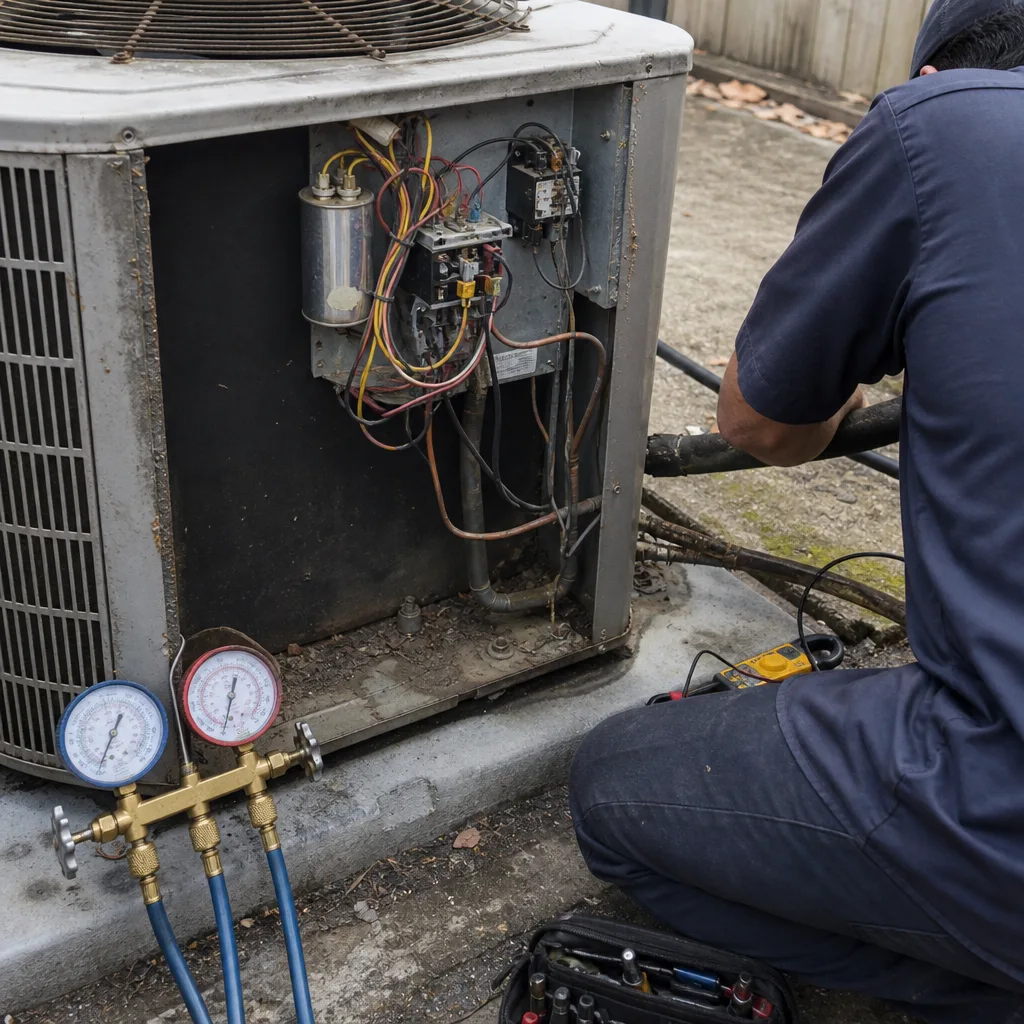 Before
 After
 Before
 After
 Before
 After
When to Call a Professional
Call a professional the moment you see any of these: a breaker that trips more than once on a system less than a year old, ice on the indoor coil that returns after melting, a compressor that cuts out before reaching setpoint, or a warm-room problem that doesn’t change after a filter change and a damper adjustment. All four are signs of an installation fault, and a licensed technician with proper gauges and a static pressure manometer is the only way to know which one you’re facing. If the original installer won’t come back, a written second opinion from a different licensed company carries weight with both the installer and the manufacturer. Carrollton AC Repair offers free estimates in Carrollton. Call (855) 759-1429. We answer 24/7. Fast dispatch from 7am to 7pm, Sunday through Friday.
Frequently Asked Questions
Yes, and it happens more than homeowners realize. A municipal inspection typically verifies the equipment is listed, the electrical disconnect is present and correct, and the install follows code minimums. It does not typically verify that the load calculation was done correctly, that the system was charged to the manufacturer’s spec by weight, or that the ducts were balanced for the new blower. Those are the parts of the job that affect how the house cools. A passing inspection is a starting point, not a comfort guarantee. Call (855) 759-1429 if you want an independent check of a recent install.
In most cases the system is oversized for the house, or the charge is off, or the airflow is restricted. Carrollton’s long cooling season with high humidity exposes all three quickly, because a system that reaches setpoint too fast never runs long enough to pull humidity out of the air. That’s why the house can feel clammy even at the set temperature. Describe the shutoff pattern to a technician (before setpoint, after a pause, or after a filter change) and get a real diagnostic. Call (855) 759-1429 to schedule one.
Put the request in writing first, give them a reasonable window to schedule (usually 3 to 5 business days), and then move on. The written request protects your labor warranty claim, and a second opinion from a different licensed company doesn’t cancel that warranty; it just documents the problem for the manufacturer and gives you a repair in the meantime. Don’t wait through a whole summer. In Carrollton, an uncooled house during a heat spell is a health risk, not an inconvenience. Call (855) 759-1429 for a second opinion.
Only at the margins. Fault codes, charge charts, and disconnect torque specs vary between manufacturers, so a technician who works on Carrier, Trane, Lennox, Goodman, Rheem, York, Daikin, Bryant, and American Standard every week will find the problem faster. But the symptoms in this guide come from installation practice, not brand design. A well-installed Goodman will out-cool a poorly installed premium unit every time. Call (855) 759-1429 if you’d like a diagnosis from a company that works on your specific system.
Yes. A manual J load calculation is the document that determines equipment size, and it should be included with the estimate for any replacement. If a company quotes a system based on square footage or on “what the last one was,” that’s the first red flag. Ask to see the sizing sheet. It’s a reasonable request and a well-run shop will provide it without pushback. If you want an estimate with the sizing included, call (855) 759-1429.
It depends on which warranty and which fix. The equipment warranty from the manufacturer covers failed parts, not the labor to diagnose them. The installer’s labor warranty covers the diagnosis and the correction of wiring mistakes, loose lugs, and similar installation faults. If your original installer is unresponsive, the manufacturer’s consumer line is the escalation path, and a written diagnostic from a second licensed company is the document that moves things forward. Call (855) 759-1429 if you need that second opinion in writing.
The Bottom Line
When a new AC system misbehaves in the first 30 days, the fix is a callback, not a replacement. Short-cycling points to oversizing, overcharge, or restricted airflow. Warm rooms point to duct connections and balance. A freeze in the first week means the charge is wrong. A tripping breaker points to the disconnect or the wiring. All four are installation faults, and all four are covered under the labor warranty from the installer. Document the symptom, put the callback request in writing, and if the original installer stalls, get an independent diagnosis. If you’re in Carrollton and you need that second opinion, we cover every major brand, handle cooling and heating with one team, and give honest repair-or-replace guidance. Call (855) 759-1429. We answer 24/7. Fast dispatch from 7am to 7pm, Sunday through Friday. Free estimates, upfront pricing, written fixed price before any work begins. You can also read more about our service in Carrollton or request an estimate for a free written quote.
Written by the team at Carrollton AC Repair.