
Last updated November 15, 2026
 AC repair
 Furnace & heating
 Heat pumps
 Ductless mini splits
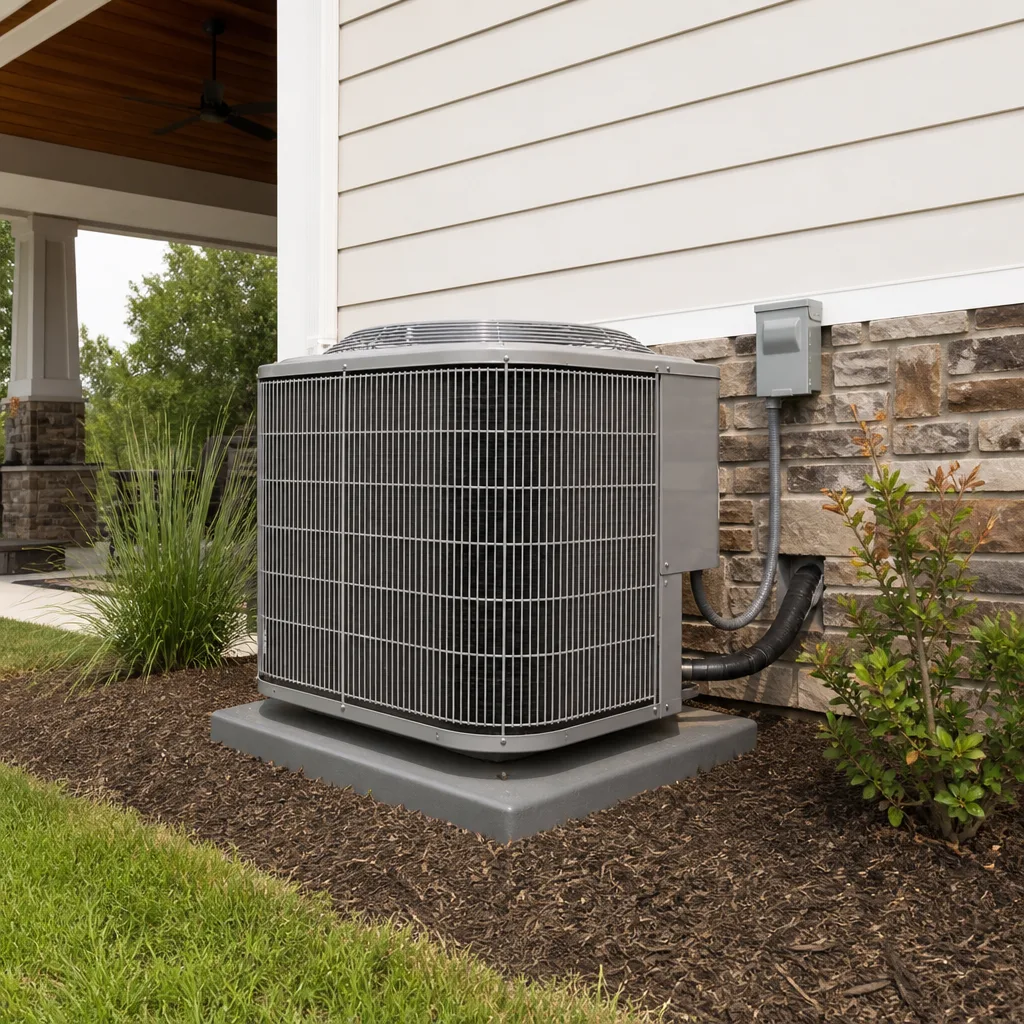 Carrier
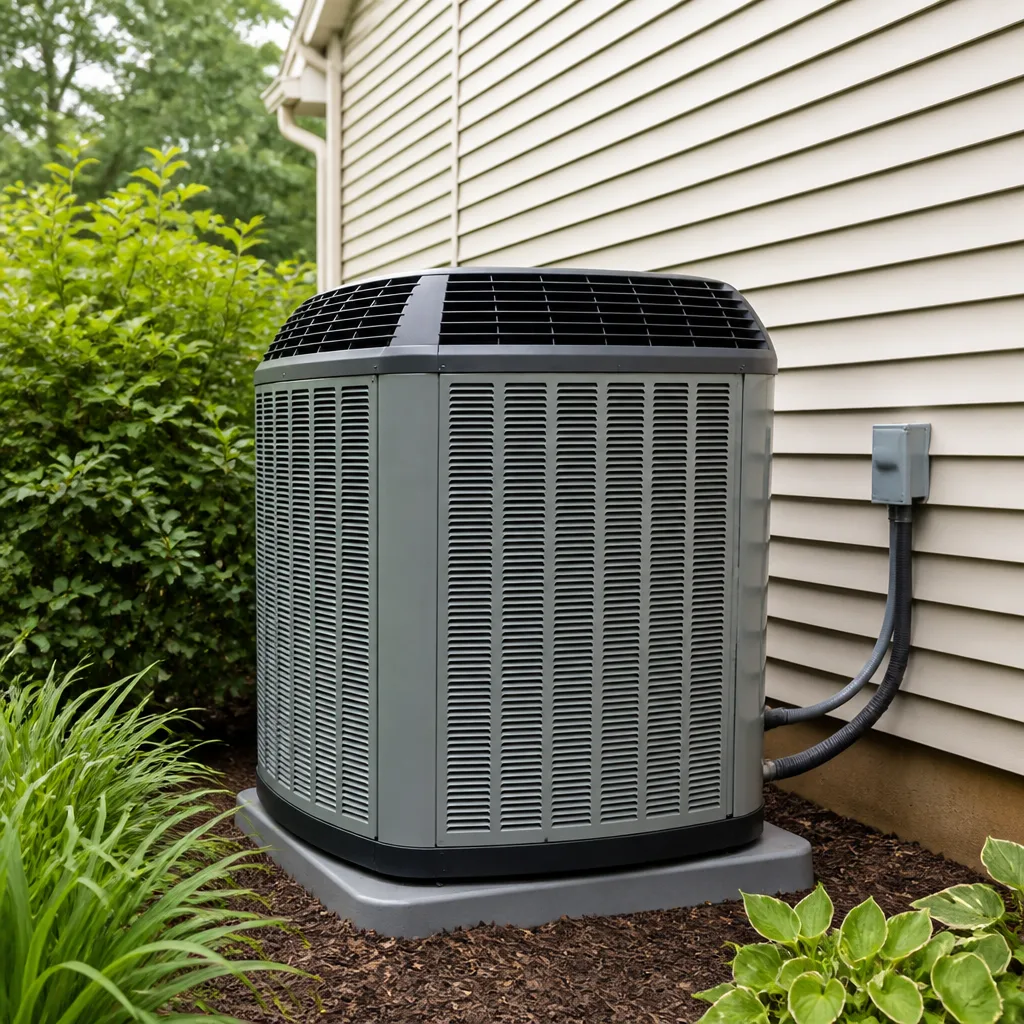 Trane
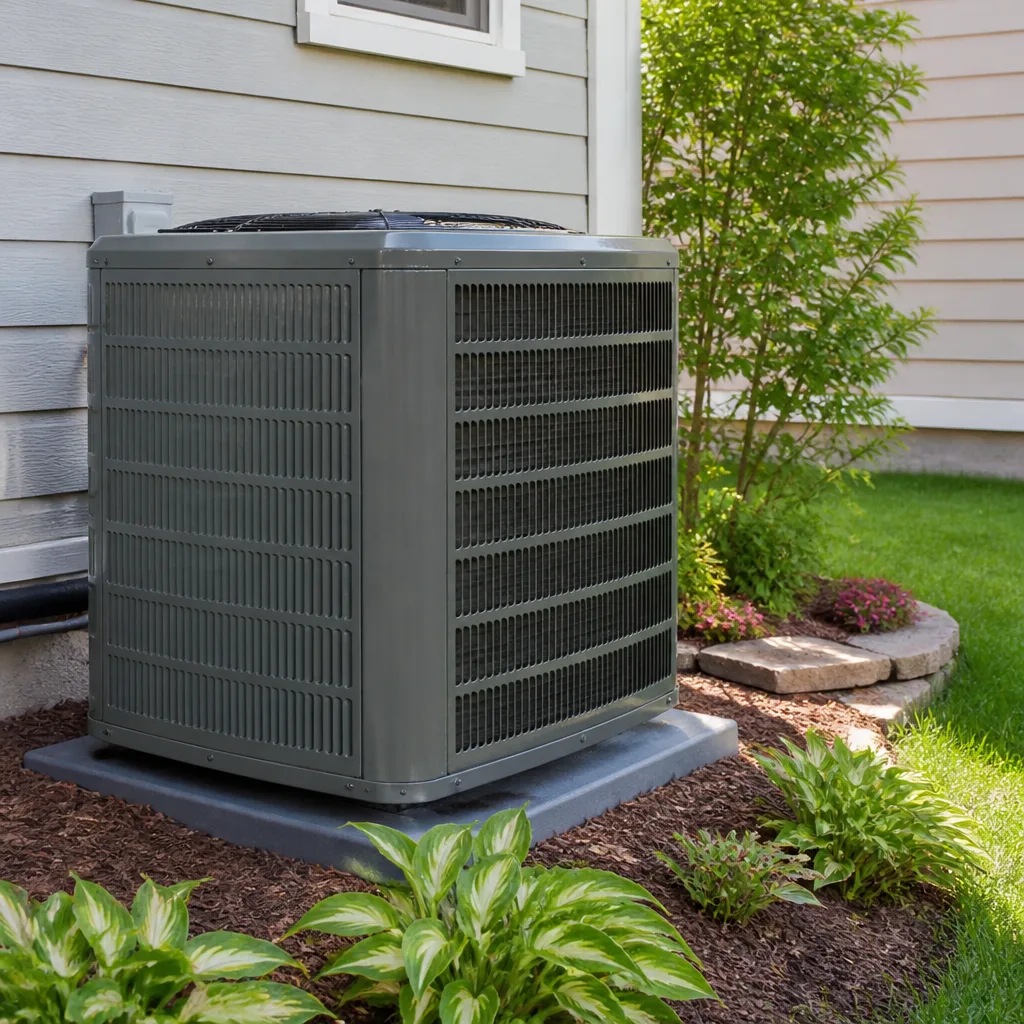 Goodman
Seasonal tune-up and full diagnostic on your Carrier, Trane, or Goodman system - readings shown to you before any repair is proposed
Diagnosis first, numbers second - you approve the repair price before a single part goes in.
Get your free estimateHVAC Permits, Codes & Inspections in Carrollton, TX: What You Need to Know
Most homeowners assume a permit is paperwork their contractor handles quietly in the background. In Carrollton, it’s the document that protects you when a compressor fails two summers later, when an insurance adjuster asks who installed your system, or when a buyer’s inspector starts asking questions during a resale. Here’s the part that surprises people: the line between a job that needs a permit and one that doesn’t is narrower than many contractors admit out loud. This guide walks through what triggers a permit in Carrollton, what inspectors actually check, how to verify your contractor pulled one, and what skipped permits cost you down the road.
Quick Answer
Yes, most HVAC work in Carrollton requires a City of Carrollton permit. Whole-system replacements, new installations, and any job that involves new or altered electrical circuits, gas line connections, or ductwork changes all need one. Straight repairs that swap a component in kind – a capacitor, a contactor, a blower motor – generally don’t. If you’re unsure which side of the line your job falls on, ask your contractor to show you the permit before any work begins; a licensed professional will know the answer without hesitation.
Styles & brands we work with
- AC repair
- Furnace & heating
- Heat pumps
- Ductless mini splits
- Carrier
- Trane
- Goodman
Table of Contents
- Which HVAC Jobs Need a Carrollton Permit – and Which Don’t
- How Current IRC and IMC Codes Affect Replacement Equipment in 2025-2026
- What Happens During a Carrollton HVAC Inspection
- How to Confirm Your Contractor Pulled the Permit
- Insurance Claims and Skipped Permits
- What Title Companies and Buyers Look For at Resale
- Why Carrollton’s Climate Makes Code Compliance Matter
Which HVAC Jobs Need a Carrollton Permit – and Which Don’t
This is the first place homeowners get misled. It’s not that contractors lie about the permit line – it’s that the line is specific, and a quick verbal answer over the phone doesn’t always match what the city actually requires. Here’s the dividing rule most permit officers use: if the job changes how the system is connected to the house’s electrical or gas infrastructure, or replaces the entire unit, it’s a permit job. If it restores a failed component to its original working condition, it usually isn’t.
Jobs that require a permit in Carrollton
- Full system replacement – outdoor condenser and indoor coil, or the whole air handler and AC unit combined
- New HVAC installation in new construction or a home addition
- Furnace replacement, including like-for-like swaps
- Changing the equipment type – for example, moving from a single-stage Carrier to a variable-speed American Standard
- Adding or significantly modifying ductwork
- Any new electrical disconnect or breaker dedicated to the HVAC equipment
- Gas line work connected to heating equipment
- Relocating an indoor or outdoor unit
Jobs that typically don’t require a permit
- Replacing a capacitor, contactor, or relay
- Swapping a blower motor
- Replacing a thermostat with a same-wiring replacement
- Clearing a condensate drain line
- Topping off refrigerant on a sealed system (though the technician should be EPA-certified)
Notice what’s not on either list: nothing about warranty status, nothing about cost. A $300 repair and a $9,000 replacement sit on different sides of the permit line because of what changes inside the wall and behind the disconnect, not because of the price tag. If your contractor tells you a like-for-like furnace replacement in a Carrollton home doesn’t need a permit, that’s a red flag worth probing. Most cities, Carrollton included, treat furnace swaps as permit-required work because of the gas connection and the venting assessment.
The practical takeaway: when in doubt, ask your contractor to give you a straight yes or no, then verify with the City of Carrollton directly. If you’re replacing a system, our AC installation team pulls permits as part of the project – it’s not something you should have to chase.
How Current IRC and IMC Codes Affect Replacement Equipment in 2025-2026
Carrollton, like most Texas municipalities, adopts International Code Council standards through the International Residential Code (IRC) for residential work and the International Mechanical Code (IMC) for mechanical systems. Recent IRC and IMC cycles have shifted what equipment can legally be installed as a replacement in existing single-family homes. The shift matters most in three areas: refrigerant transitions, equipment efficiency minimums, and how the system is sized relative to the home.
Refrigerant transition
Residential equipment is transitioning away from R-410A toward lower-GWP refrigerants. If you’re replacing equipment in 2025 or 2026 in Carrollton, the replacement system likely uses a refrigerant that didn’t exist when your old unit was installed. That change is not just a spec sheet detail – it affects line sizing, coil compatibility, and whether a technician can mix old and new components. Inspectors will check that the equipment nameplate matches what’s listed on the permit. A mismatched coil or an old refrigerant-only coil being reused on new equipment is a common inspection failure.
Equipment minimums
The IRC and IMC set minimum efficiency standards that vary by system type and region. Carrollton falls in a climate zone where heat pumps and air conditioners are held to specific SEER2 and HSPF2 minimums. When you replace a system today, you’re not required to match the old efficiency – you’re required to meet the current minimum. Most brand-name equipment from Daikin, Bryant, or American Standard at the entry tier already meets it, but the inspector checks the nameplate against the permit, so the paperwork has to line up. If you’re shopping a replacement and want to know what the current minimums mean for your home, that’s a conversation worth having before the equipment is ordered.
Load calculation and sizing
The IRC requires a load calculation (Manual J or equivalent) as the basis for equipment sizing on replacement systems. Contractors who skip this step and simply match the old tonnage are technically outside code, and inspectors can ask for the load calc. In practice, our Carrollton AC Repair technicians run a load calculation on every replacement so the new equipment is sized to the home, not copied from the old unit. That protects the homeowner twice – it’s good for comfort, and it’s good for passing the inspection.
What Happens During a Carrollton HVAC Inspection
The inspection is the step most homeowners never see. The contractor schedules it after completion and typically has a set window to get the work inspected. Here’s the sequence the inspector usually follows, based on what our technicians see on inspection days in Carrollton.
The inspection sequence
- Permit verification. The inspector checks the permit number against the address and confirms the licensed contractor on the application matches the installer.
- Exterior equipment. They look at the outdoor condenser pad, clearances, the electrical disconnect, and the nameplate to confirm the model matches what’s on the application.
- Electrical. They verify that the breaker size matches the nameplate requirements, inspect the whip and conduit, and confirm grounding.
- Refrigerant lines. Line sizing, insulation, and the type of refrigerant are confirmed against the equipment spec.
- Indoor equipment. Coil match, airflow clearance, condensate drain with a trap and a float switch or overflow protection.
- Ductwork. If ductwork was modified, they check for sealed connections and proper support.
- Gas and venting (furnace). On furnace replacements, they verify the gas connection, the flue or venting, and combustion air.
- Final sign-off or corrections. If everything passes, the inspector signs off. If not, they issue a correction list and a follow-up inspection is scheduled.
What typically fails an inspection
Most failures we hear about trace back to paperwork, not workmanship. Common ones: the model installed doesn’t match the model listed on the permit, the electrical breaker is undersized for the equipment nameplate, the condensate drain lacks secondary protection, or the load calculation was never done. A less common but serious failure is venting on a furnace that doesn’t meet clearance requirements to combustibles.
Timeline-wise, Carrollton inspections are usually scheduled within a reasonable window after the contractor requests one, but that window tightens during peak replacement season – typically late spring and early summer when AC replacements stack up. Plan on the inspection happening before you consider the job fully closed. The equipment should not be considered final until the inspector signs off.
How to Confirm Your Contractor Pulled the Permit
You don’t have to take anyone’s word for it. The City of Carrollton maintains a permit search through its online development portal. Here’s the check, step by step.
- Ask your contractor for the permit number in writing before work starts. A licensed contractor will have it when the work begins, not after.
- Open the City of Carrollton’s online permit search and enter your property address or the permit number.
- Confirm the permit type matches the work – mechanical permit for HVAC, with the correct scope (replacement, new installation, alteration).
- Check the contractor name on the permit. It should match the company doing the work, not a different business entity.
- Look at the status. “Issued” before work starts is correct. “Applied for” but not yet issued means the permit hasn’t gone through.
- After completion, confirm the inspection record. The portal should show the inspection request, the inspection result, and a final status.
If any of those steps is missing, ask questions. A contractor who resists giving you the permit number before starting work is telling you something. On the flip side, a professional will hand you the number and the address of the portal without being asked twice.
Insurance Claims and Skipped Permits
Here’s the part that hits hardest when something goes wrong: an insurance adjuster investigating a claim on your HVAC system will look at the same thing a home inspector looks at – the permit history. If a claim arises from an AC failure, a water leak from a clogged condensate line that was improperly installed, or a fire traced to electrical work on a compressor circuit, the adjuster’s first question is whether the installation or repair was permitted and inspected.
Unpermitted work doesn’t automatically void a claim, but it complicates it. The insurer may:
- Require proof that the work met code before paying for damage caused by the equipment
- Exclude damage from a component installed without a permit
- Deny a claim outright if the work was clearly non-compliant
- Raise your premium at renewal if the home’s records show non-compliant work
That last point is worth repeating: even if no claim is filed, an insurer running a routine review of your property can flag unpermitted HVAC work and price the risk accordingly. Permitted work, by contrast, comes with a paper trail – inspection record, contractor name, model numbers – that makes a claim straightforward to process. When we work with your insurer on covered work, our technicians document the install so the file is complete.
What Title Companies and Buyers Look For at Resale
During a home sale, HVAC permits surface in one of two ways. The buyer’s home inspector flags the equipment and checks the permit history through the city portal. Or the title company, reviewing the property record, notes a discrepancy between what was permitted and what’s installed.
Either path leads to the same negotiation: the seller has to either price the fix in, retroactively permit the work, or prove the work was already compliant. Retroactive permitting is possible in Carrollton, but it’s not automatic. The homeowner (or the buyer, if the sale has closed) has to apply, pay a fee, and get the work inspected. If the installation doesn’t meet current code – which it often doesn’t, because a code cycle has usually passed – the correction work falls on whoever owns the property. Sometimes the fix is minor. Sometimes the whole system needs to be redone.
What the buyer’s inspector wants to see
- A permit on file for the equipment’s installation date
- An inspection record showing a pass
- Equipment matching what was permitted
- A load calculation on file for recent replacements
- Electrical and gas connections properly documented
If any of that is missing, expect the buyer to ask for a price reduction, a credit, or a completed retroactive permit as a condition of closing. In our experience, the cost of retroactive permitting and any code corrections almost always exceeds what a permit would have cost at the time of installation in the first place. In Carrollton, the resale complication usually shows up at the worst possible moment – after the inspection report is out and the closing date is set.
Why Carrollton’s Climate Makes Code Compliance Matter
Carrollton’s summers push HVAC systems hard. Days over 100°F aren’t unusual, and systems run long cycles that stress every connection – electrical, refrigerant, ductwork. That’s exactly the environment where code compliance pays off in durability, not just paperwork. A properly sized system, correctly wired to code, and installed with a load calculation will run more efficiently and last longer through the summer than a system that was upsized and wired to whatever breaker happened to be there.
Winters, by contrast, are mild. Furnaces here run fewer hours than in northern climates, and that can lull homeowners into assuming a furnace replacement is a low-stakes job. It isn’t – the gas connection and venting work are the same safety-critical elements whether the unit runs 200 hours a year or 2,000. Code compliance on furnace work matters as much here as anywhere. Our furnace repair technicians pull permits on replacements for that reason.
One other Carrollton-specific note: the city’s older residential neighborhoods, particularly around the downtown square and older pockets of south Carrollton, have homes with ductwork and electrical panels that were sized to equipment from an earlier era. A permit and inspection on a replacement in those homes catches problems – undersized breakers, undersized return ductwork – that a quick in-and-out swap would miss.
Common Mistakes to Avoid
- Assuming “like-for-like” means no permit. A furnace swap is usually a permit job even if the equipment size and brand match exactly. Ask before work begins.
- Not getting the permit number in writing. A verbal “we’ll take care of it” isn’t verification. Get the number before the crew arrives.
- Letting a contractor skip the load calculation. The IRC requires one on replacements, and inspectors can ask. Matching the old tonnage isn’t the same as running a Manual J.
- Closing the job without the inspection record. If the portal never shows a passed inspection, the job isn’t done – even if the equipment is running.
- Buying a replacement from a contractor whose permit record reads as “another company name.” The permit has to be under the business doing the work. Any mismatch is a red flag.
- Ignoring permit history before listing a Carrollton home. Pull the records yourself before the buyer’s inspector does. It’s cheaper to fix on your own timeline.
- Assuming an insurer won’t check. Adjusters ask for permits on damage claims tied to HVAC equipment. No permit, no clean claim.
See the difference
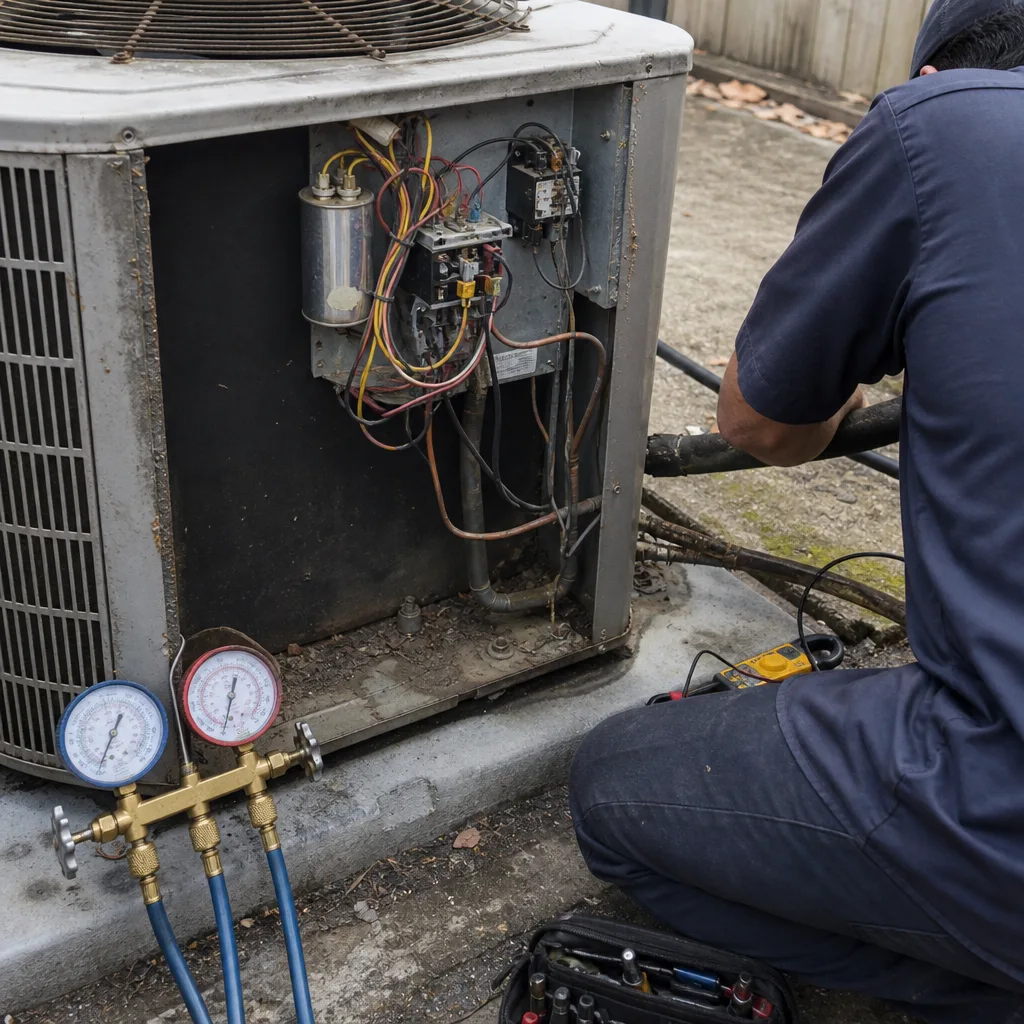 Before
 After
 Before
 After
 Before
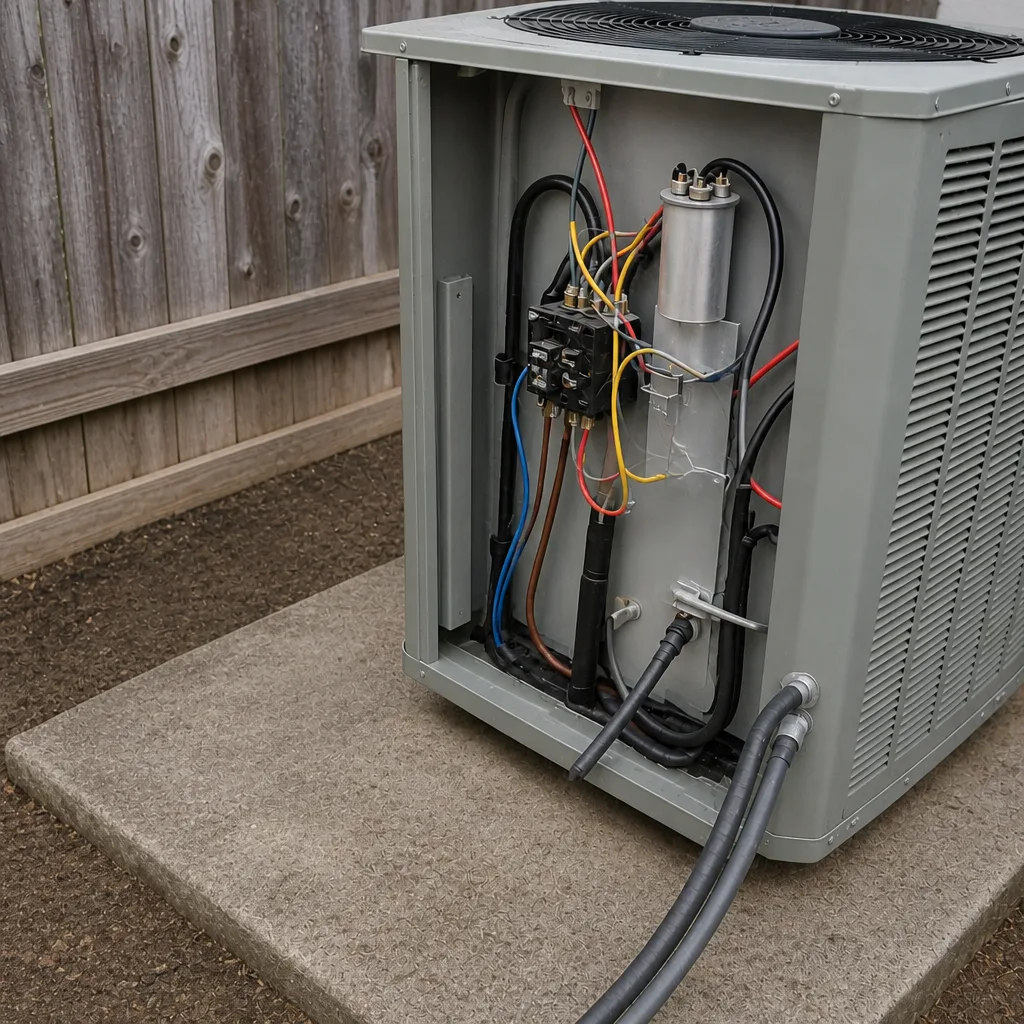 After
When to Call a Professional
If your system is failing and you’re not sure whether the fix is a permit job, that question alone is worth a call. Our technicians answer it directly and help you understand what the work involves before you commit to anything. Same goes for a homeowner facing a resale, a claim, or a contractor quote that seems too good to be true – we can look at what was installed, what was permitted, and what’s likely to get flagged. Carrollton AC Repair offers free estimates in Carrollton – call (855) 759-1429. We answer 24/7. Fast dispatch from 7am to 7pm, Sunday through Friday. Our technicians have up to experience with replacement work and permit documentation, and we handle equipment from Carrier, Trane, Lennox, Goodman, Rheem, York, Daikin, Bryant, and American Standard. Call (855) 759-1429 for an exact quote.
Frequently Asked Questions
Yes. A full AC replacement in Carrollton requires a mechanical permit. The permit covers the electrical and refrigerant connections and ensures the equipment is inspected before the job is closed. If your contractor tells you a full replacement doesn’t need a permit, ask them to put that in writing – then call the city to confirm. Call (855) 759-1429 for a free estimate on a permitted replacement.
The buyer’s inspector will likely flag it, and the deal will either get renegotiated or require a retroactive permit as a condition of closing. Retroactive permitting requires applying, paying the current fee, and passing an inspection against current code – which may include corrections the original install missed. It’s almost always more expensive than pulling the permit at install time. Call (855) 759-1429 to get an honest read on what your setup needs.
Use the City of Carrollton’s online permit search portal. Look up your property address or the permit number, confirm the permit type matches the work, and verify the contractor name on the permit matches the company you hired. If anything doesn’t line up, ask questions before work starts. Call (855) 759-1429 if you want a second opinion on what should be on the permit.
The inspection itself is usually scheduled within a reasonable window after the contractor requests one, and the inspector is on site for a short period to review the equipment, electrical, refrigerant, and ductwork. Peak replacement season in Carrollton – late spring through midsummer – tightens the scheduling window, so plan on getting the inspection done before you consider the job complete. Call (855) 759-1429 if you’re heading into a replacement and want realistic timeline expectations.
An unpermitted installation can complicate a claim, and in some cases it can reduce or eliminate coverage for damage tied to the equipment. The adjuster’s first step on a damage claim is checking the permit and inspection history. Permitted work doesn’t just protect you legally – it keeps claims straightforward. Call (855) 759-1429 to make sure your installation is documented properly.
We handle Carrier, Trane, Lennox, Goodman, Rheem, York, Daikin, Bryant, and American Standard – nine of the most-installed brands in Carrollton homes. Because we’re not tied to a single manufacturer, the recommendation is based on what your system needs, not which brand pays best. Call (855) 759-1429 for a free estimate; we’ll walk through the permit requirements for your specific equipment. If you want broader background on the area, our Carrollton page covers the local service picture.
The Bottom Line
In Carrollton, an HVAC permit is your proof that the work was done to code, by a licensed contractor, with the equipment properly sized and installed. It protects you in an insurance claim, in a home sale, and in the everyday durability of the system through Carrollton’s long, hot summers. The permit itself isn’t the hard part – knowing which jobs require one, verifying it was actually pulled, and getting the inspection record closed is. A straight-talking, brand-neutral contractor will walk you through all of it. That’s the standard we hold ourselves to: we work on your system, we pull the permit, and we make sure the inspection passes before we call the job done.
Call (855) 759-1429 for a free estimate. We answer 24/7. Fast dispatch from 7am to 7pm, Sunday through Friday. Estimates are free, and the price is set per job by the written estimate before any work begins.
Written by the team at Carrollton AC Repair.