
Last updated November 15, 2026
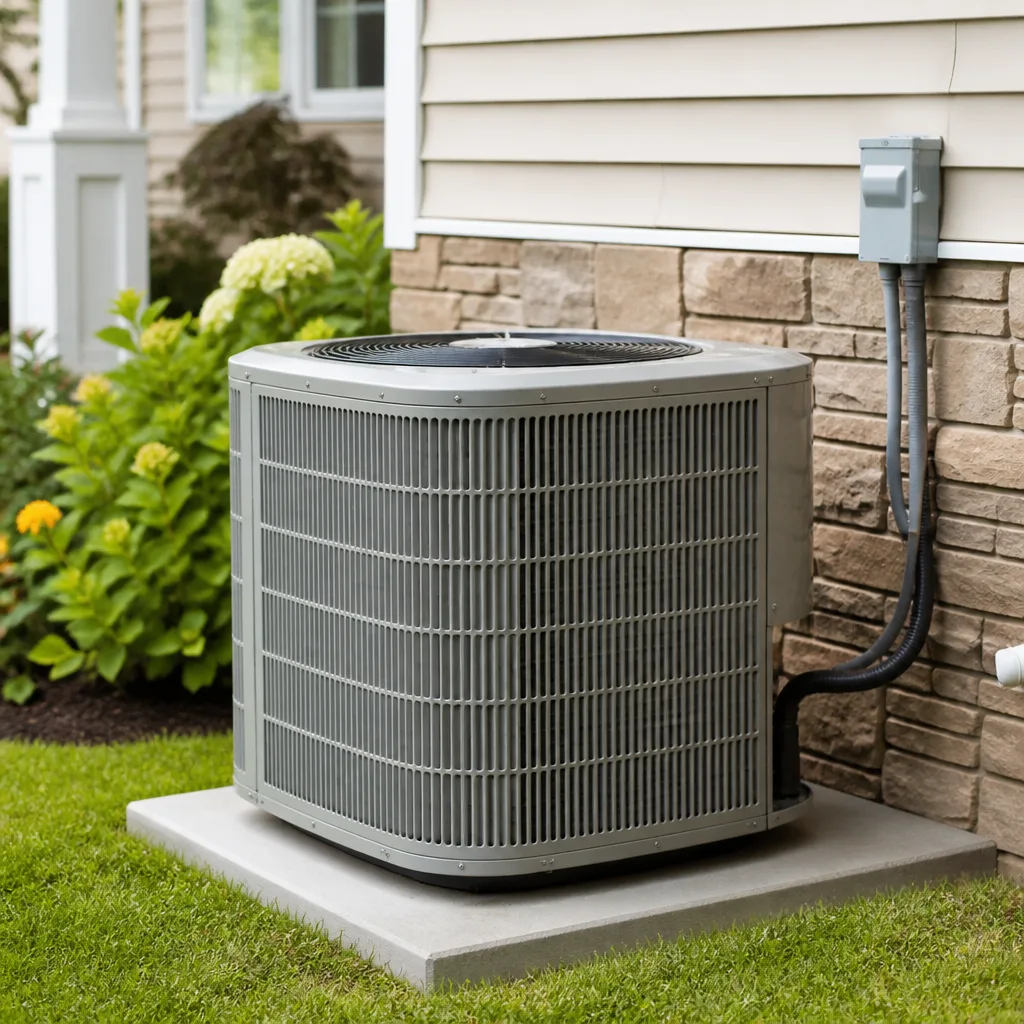 AC repair
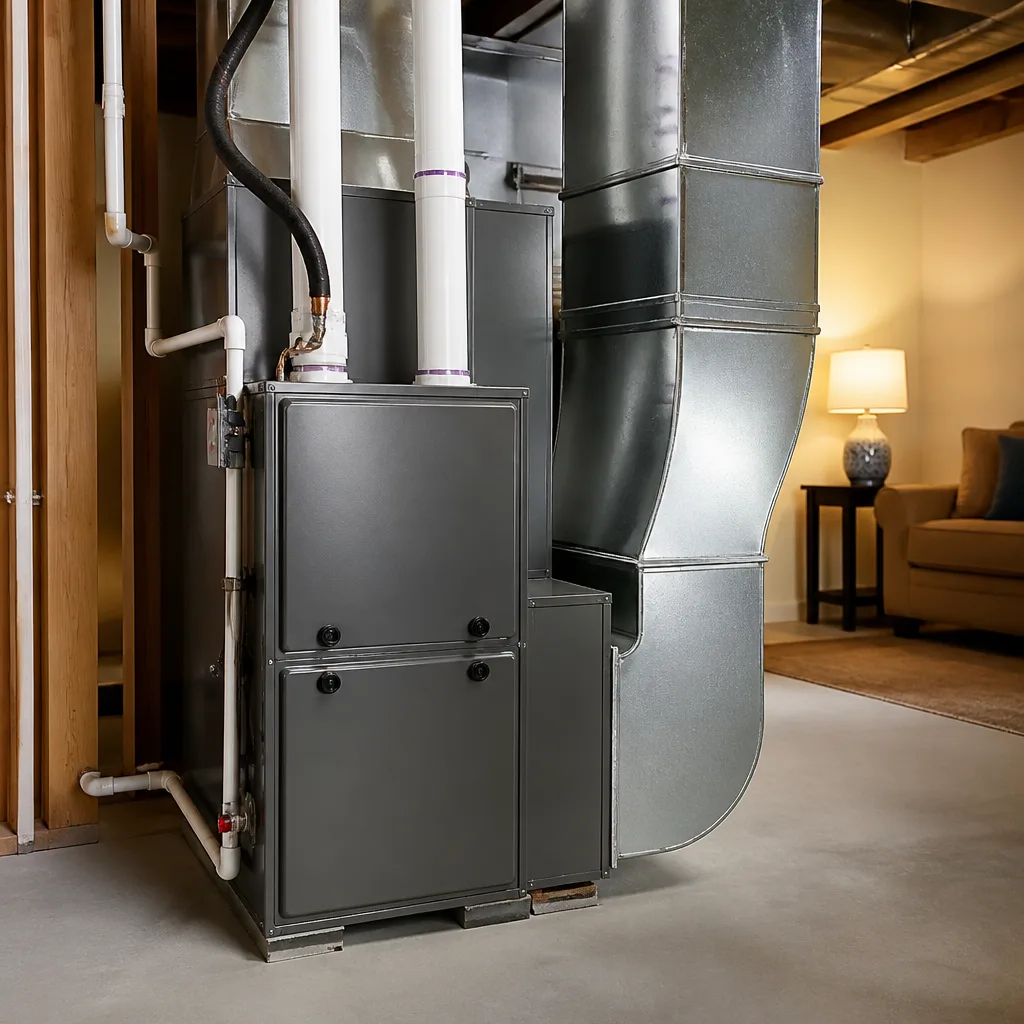 Furnace & heating
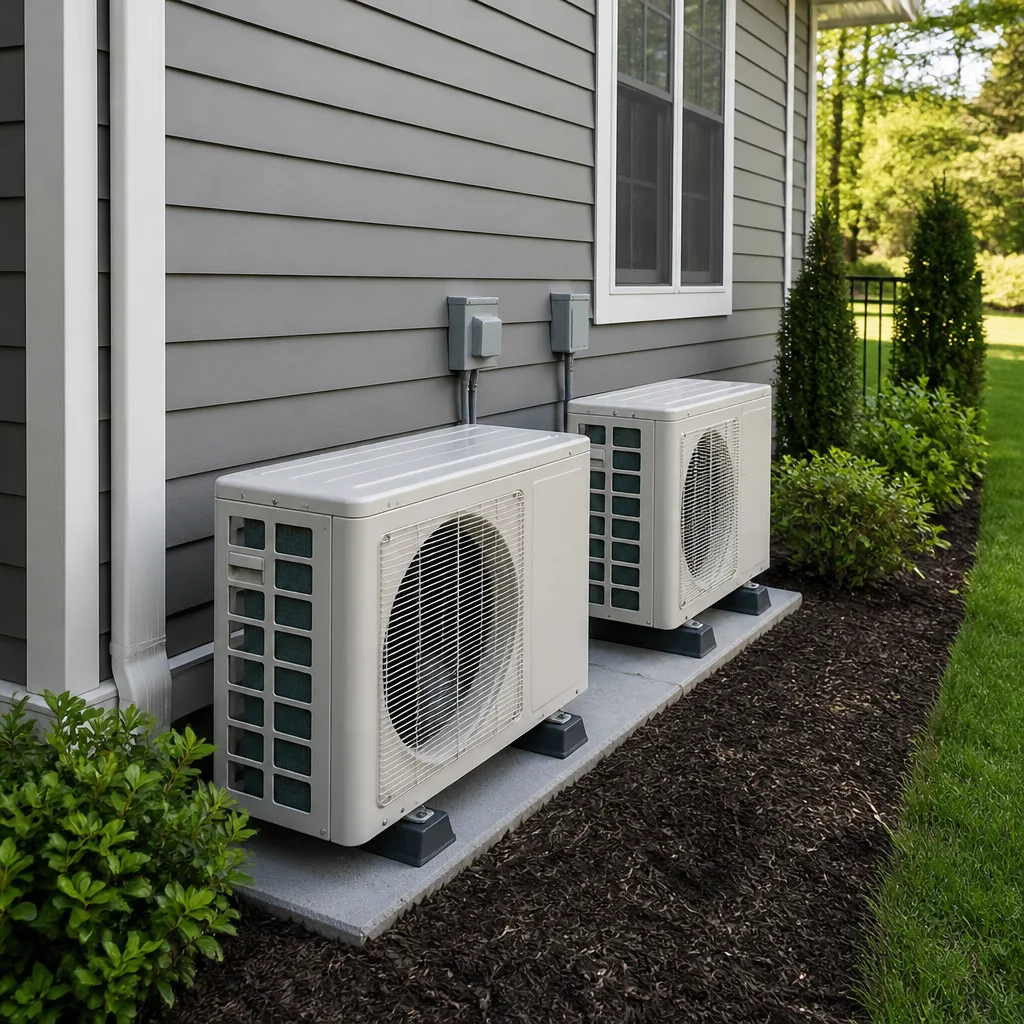 Heat pumps
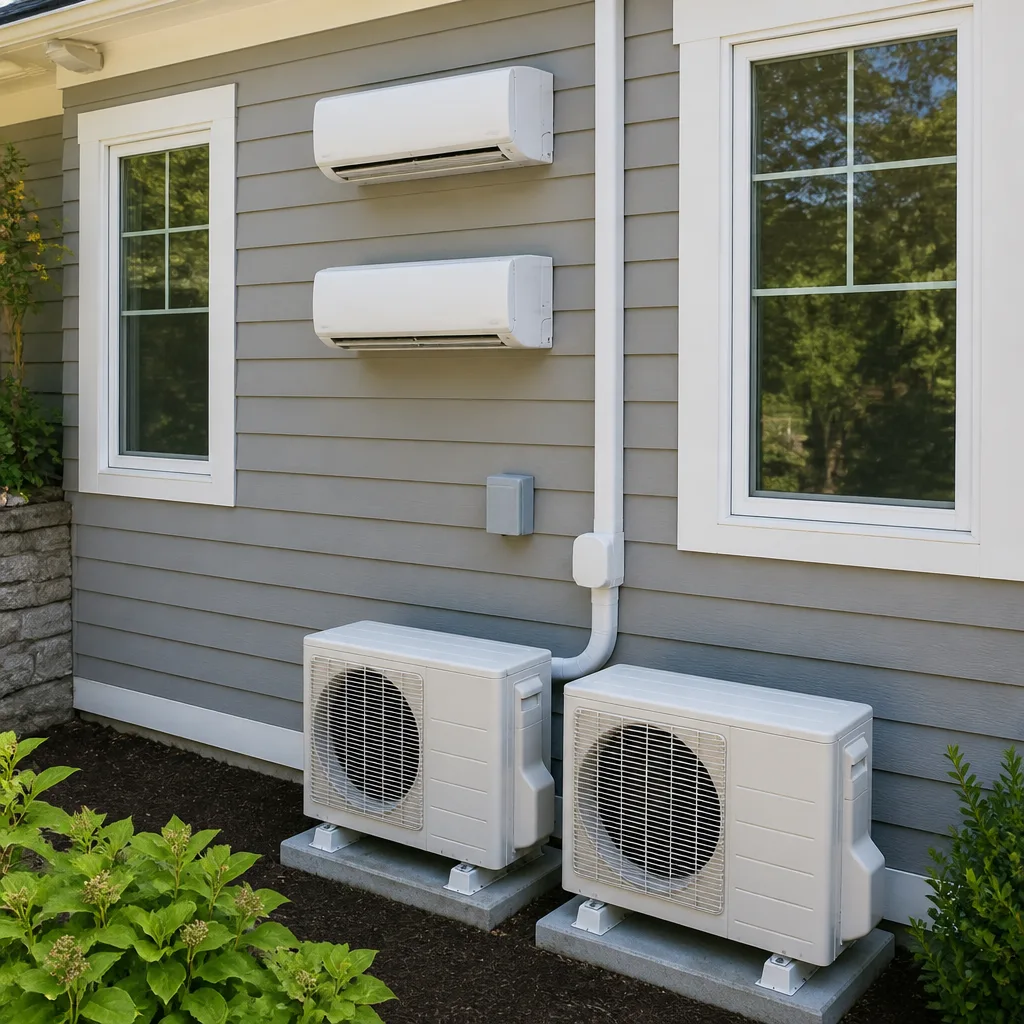 Ductless mini splits
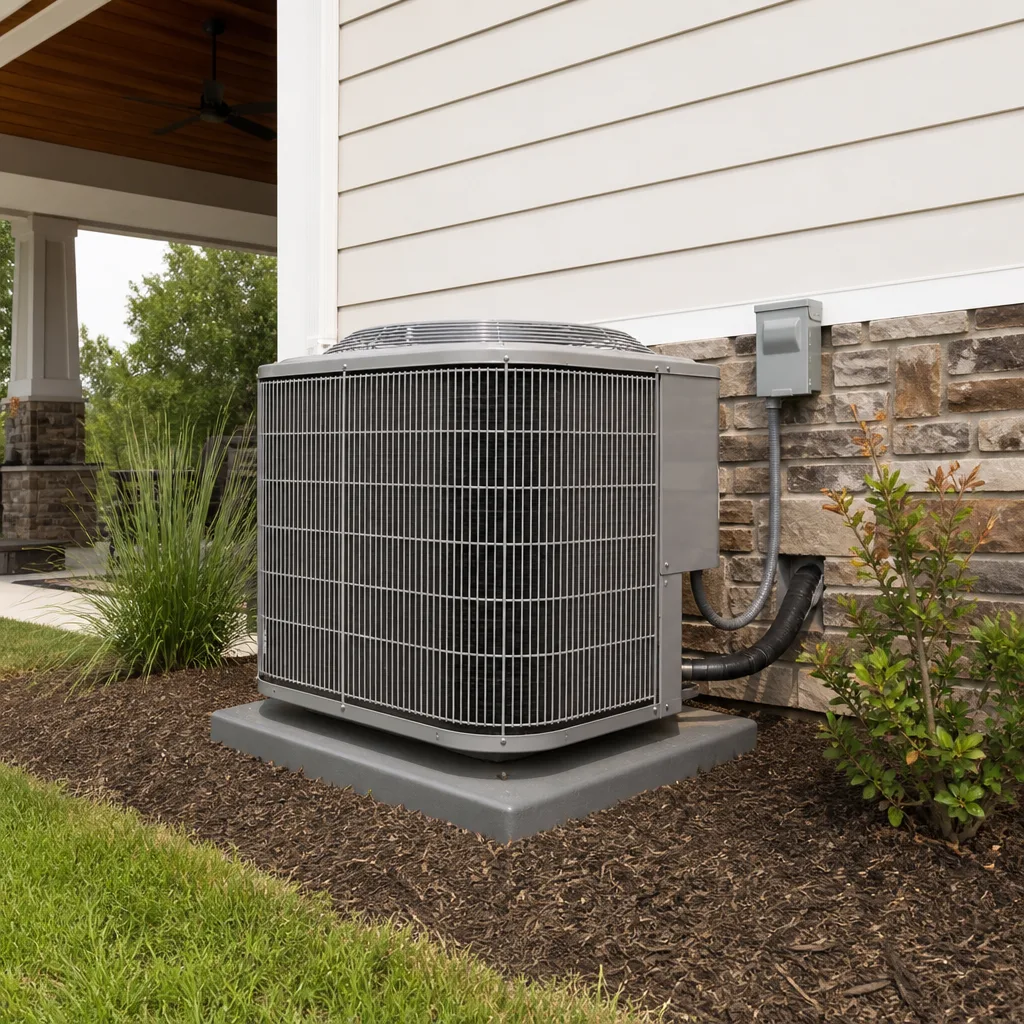 Carrier
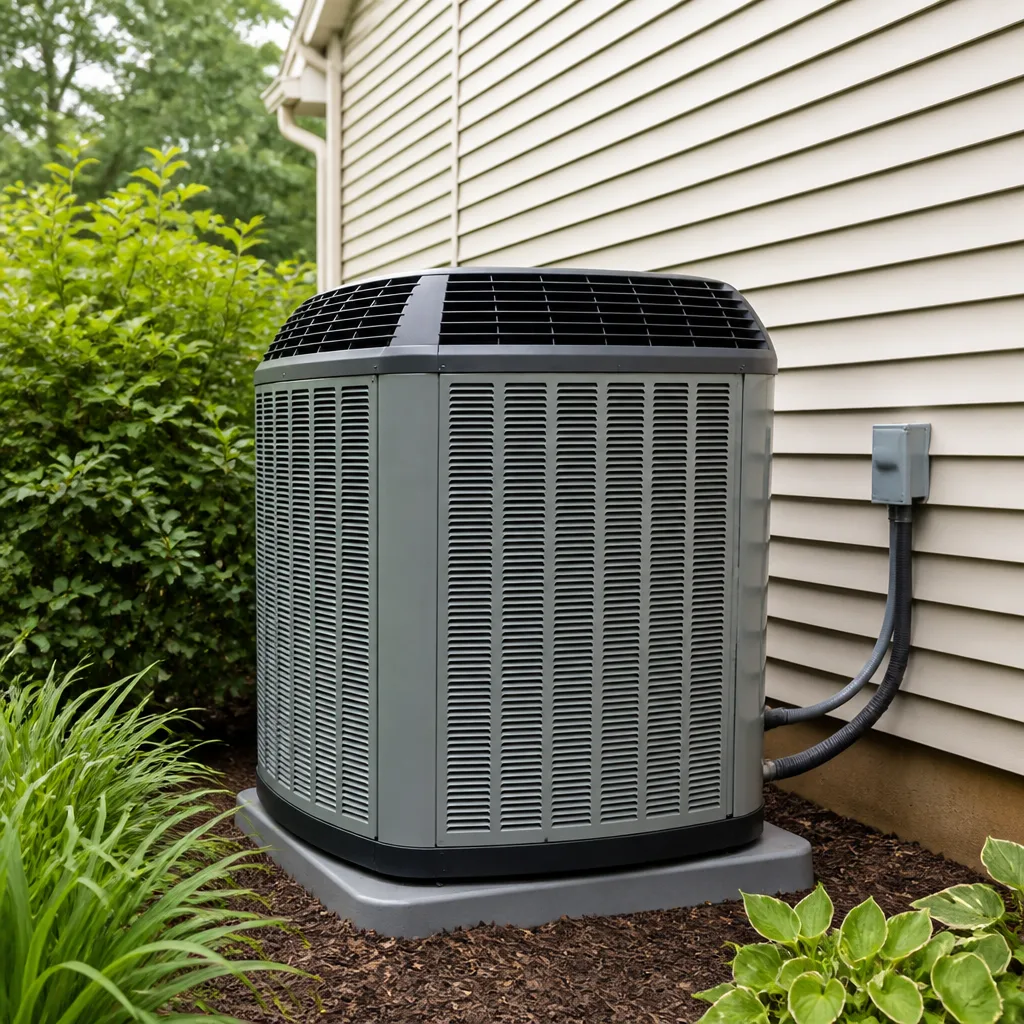 Trane
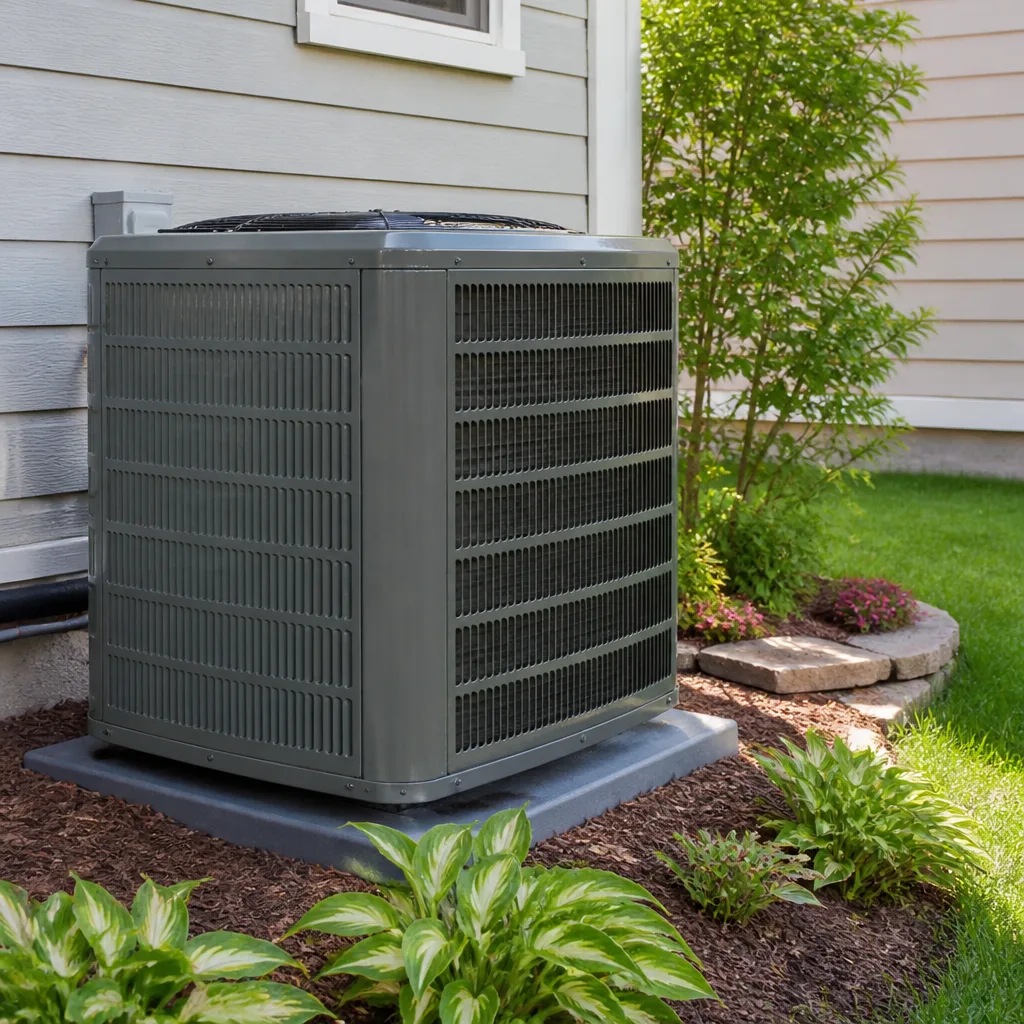 Goodman
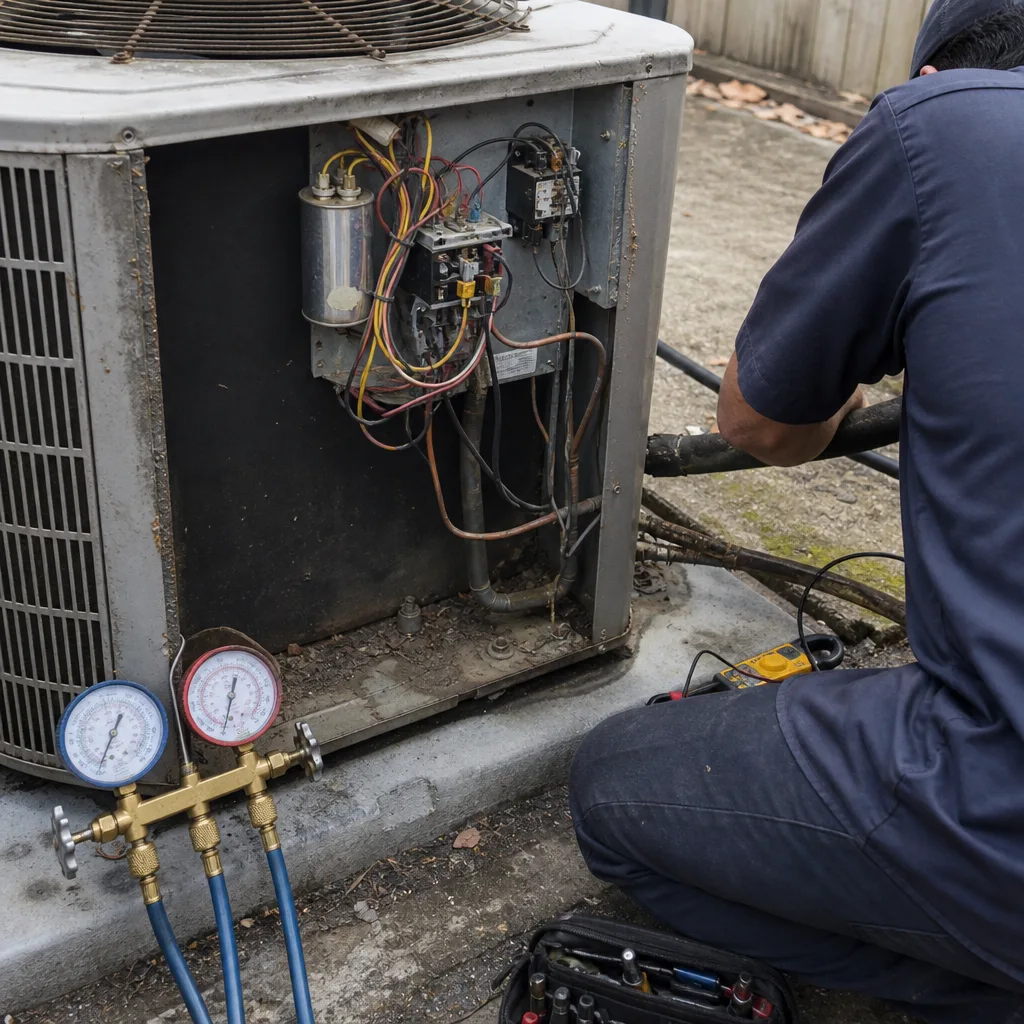
Seasonal tune-up and full diagnostic on your Carrier, Trane, or Goodman system - readings shown to you before any repair is proposed
Diagnosis first, numbers second - you approve the repair price before a single part goes in.
Get your free estimateThe Complete AC Installation Guide for Carrollton Homeowners
Most air conditioners that fail early weren’t installed badly. They were sized badly. In Carrollton’s climate, an oversized unit is almost as damaging as no unit at all: it cools the house too quickly, shuts off before it pulls the humidity out of the air, and spends its life short-cycling itself toward an early grave. Square-footage rules of thumb are the usual cause. This guide treats AC installation as a system decision – load calculation, ductwork, equipment tier, permits, and install-day quality – rather than a shopping decision. You’ll learn what actually happens on a Carrollton install, from Manual J to city sign-off, so you can ask better questions before the first truck pulls up.
Quick Answer
A successful AC installation in Carrollton starts with a room-by-room Manual J load calculation, not a square-footage guess. The equipment is then matched to your home’s construction era and existing ductwork, sized in tons and SEER2 rating for North Texas summers, and installed under a city permit with inspection. The written estimate you sign should name the exact model, the tonnage, the SEER2 rating, and the permit – if any of those are missing, the quote isn’t finished.
Styles & brands we work with
- AC repair
- Furnace & heating
- Heat pumps
- Ductless mini splits
- Carrier
- Trane
- Goodman
Table of Contents
- Why Manual J Load Calculations Beat Square-Footage Rules of Thumb
- How Carrollton’s Housing Stock Changes Your Equipment and Duct Needs
- What SEER2 Ratings Actually Mean for Your Summer Bill
- Brand-Agnostic Equipment Tiers: Carrier, Trane, Lennox, American Standard
- The Carrollton Permit and Inspection Process, Step by Step
- What Happens on Installation Day
- Red Flags to Watch for During Installation
- Repair or Replace: The Honest Framework
Why Manual J Load Calculations Beat Square-Footage Rules of Thumb
Manual J is the industry-standard method for calculating exactly how much cooling a home needs, room by room, based on window area, insulation, orientation, infiltration, and local design temperatures. Carrollton sits squarely in a hot-humid summer zone, which means the calculation has to account for latent load – the moisture in the air – not just sensible heat. A contractor who skips Manual J and sizes by square footage is guessing, and in this climate that guess tends to run large.
Here’s why oversizing hurts. An oversized unit blasts cold air, drops the thermostat to setpoint in minutes, and shuts off. The air never gets a long enough pass across the evaporator coil to condense out moisture. The house feels cold but clammy. Then the unit cycles back on shortly after, wearing out the compressor and the contactor faster than a correctly sized system would. In our experience, short run times and a sticky feeling indoors six months after a new install are the fingerprints of a load calculation that never happened.
What a proper load calculation includes:
- Room-by-room measurements, including ceiling height and window dimensions
- Window orientation (west-facing glass loads a Carrollton house heavily in late afternoon)
- Attic and wall insulation values, plus duct location
- Construction tightness and door/window infiltration
- Design conditions for the local climate zone, not a national average
- Appliance and occupant load, since kitchens generate real heat
The output is a tonnage figure – often 0.5-ton increments – that you should see referenced in the estimate. If nobody measured your windows or asked about insulation, the number came from a table, not your house.
How Carrollton’s Housing Stock Changes Your Equipment and Duct Needs
Carrollton has a wide spread of home ages, and each era has its own installation quirks. Knowing which one you live in helps you understand what the technician will be evaluating.
1980s brick ranches typically have original flex duct in the attic, R-values from an older era of insulation, and single-pane or early double-pane windows. The ducts are often undersized for a modern high-efficiency unit, which means a straight equipment swap without a duct review can leave the new unit starved for airflow. Builders in that era also favored slab foundations with ducts in the attic rather than the slab, so duct leakage is a common finding.
1990s and 2000s two-stories bring a different challenge: the upstairs gets hit harder by attic heat gain, and a single-zone system has to balance two very different loads. A load calculation that treats the whole house as one box will usually leave the upstairs hot in July and the downstairs cold in January.
2010s construction is tighter, often with spray foam or high-performance insulation, which means the equipment can be smaller than a same-square-footage 1980s home. Installers who use the old rule of thumb will oversize these houses badly.
Ductwork condition matters as much as the box outside. Attic ducts in a North Texas summer can lose a meaningful share of their cooling before the air ever reaches a vent. If the ducts are crushed, disconnected at a boot, or leaking at every joint, a new unit will underperform the day it’s commissioned. A good install includes a duct inspection and a conversation about what needs to be repaired or replaced before the new system goes in.
If you’re weighing a full swap across multiple homes in the family or just your own, our Carrollton AC Repair team can walk through the specifics of your floor plan.
What SEER2 Ratings Actually Mean for Your Summer Bill
SEER2 is the current efficiency rating for central air conditioners, and it’s a measure of how much cooling you get per unit of electricity over a full season. A higher SEER2 means a more efficient system, but the dollar difference on your bill depends on how many cooling hours your home actually runs – and in Carrollton, that’s a lot of hours.
The practical way to think about it:
- Lower-tier units are the entry point. They meet code, they cool the house, and they cost less up front. For a homeowner planning to move in a few years, this can be the right call.
- Mid-tier units add efficiency and often a better compressor and controls. This is the common zone for homeowners staying put for a decade or more.
- Higher-tier units bring variable-speed or two-stage compressors, quieter operation, and better humidity control. They cost more and pay back over a longer horizon, and they’re especially worth considering if the house has had humidity complaints or hot rooms.
Two things most quotes never explain: the SEER2 number is a rating, not a guarantee of your bill, and the actual installed efficiency depends on the indoor coil, the refrigerant line set, and the duct system. A high-SEER2 outdoor unit bolted to a leaking duct system won’t deliver the rating it prints. Match the equipment tier to how long you plan to stay and whether humidity is a problem, not to the biggest number on the box.
Brand-Agnostic Equipment Tiers: Carrier, Trane, Lennox, American Standard
The brand on the box matters less than the installation behind it, but brand familiarity matters for the technician standing in front of your system. That’s the case for working with a company that services many makes rather than one. When the same team handles AC installation across Carrier, Trane, Lennox, American Standard, Goodman, Rheem, York, Daikin, and Bryant equipment, the conversation is about your house’s needs, not about which manufacturer pays the best dealer margin.
A few practical points on the big names:
Carrier and Bryant share engineering lineage, so parts and service knowledge carry across. Trane and American Standard are built on the same platform with different trim levels, which means a technician familiar with one is fluent in the other. Lennox systems often use their own coil and control conventions, so factory familiarity saves diagnostic time. Goodman and Rheem are common in value-focused installs and have their own part numbering and service quirks.
What you should ask any contractor:
- Which of my existing brands will the new equipment match or replace, and will the indoor coil and line set be compatible?
- Which brand tiers does the installer actually install most often, and why?
- Does the quote list the exact model number of outdoor unit and indoor coil?
- What warranty coverage comes from the manufacturer versus the installer?
We’re impartial on brand. If a Trane fits your house and budget, that’s the recommendation. If a Goodman gets you the same comfort for less on a home you’ll sell in five years, we’ll say so.
The Carrollton Permit and Inspection Process, Step by Step
AC replacement and new installation require a permit from the City of Carrollton, and the work is inspected before the system is signed off. The permit protects you: it means a city inspector has looked at the equipment sizing, the electrical connections, and the refrigerant handling. It also matters at resale, when a buyer’s inspector asks to see the paperwork.
Here’s the general sequence:
- Contractor pulls the permit. This happens before installation day. If your contractor asks you to pull the permit as a homeowner, that’s a red flag – the licensed professional should be on the permit.
- Equipment is installed per the approved plan, including the outdoor unit, indoor coil, line set, electrical, and thermostat.
- Rough-in or final inspection is scheduled based on the scope. Replacement jobs typically need a final inspection; larger work may need a rough-in look before the system is energized.
- Inspector verifies the equipment nameplate ratings, clearances, electrical disconnects, and condensate drainage against code.
- Sign-off is recorded and the permit is closed. Keep a copy.
Timelines vary with city workload, so ask your contractor to state the expected inspection window in writing. A contractor who installs without a permit may save you a step now and create a problem at resale or during a warranty claim later. If you’re also planning heating work, our furnace repair team handles that side of the same permit conversation.
What Happens on Installation Day
Installation day has a rhythm, and knowing it helps you ask the right questions at the right moment. The crew arrives with the outdoor unit, indoor coil, line set, thermostat, and any duct modifications agreed on in the estimate.
A typical sequence:
- Protection and disconnect. Drop cloths go down at the indoor unit and the electrical disconnect is pulled before any work starts.
- Recovery of old refrigerant. A licensed technician recovers the charge from the old system – it isn’t vented.
- Remove the old equipment. The outdoor condenser and indoor coil are hauled out.
- Install the new indoor coil and air handler with correct drain pan and condensate line routing.
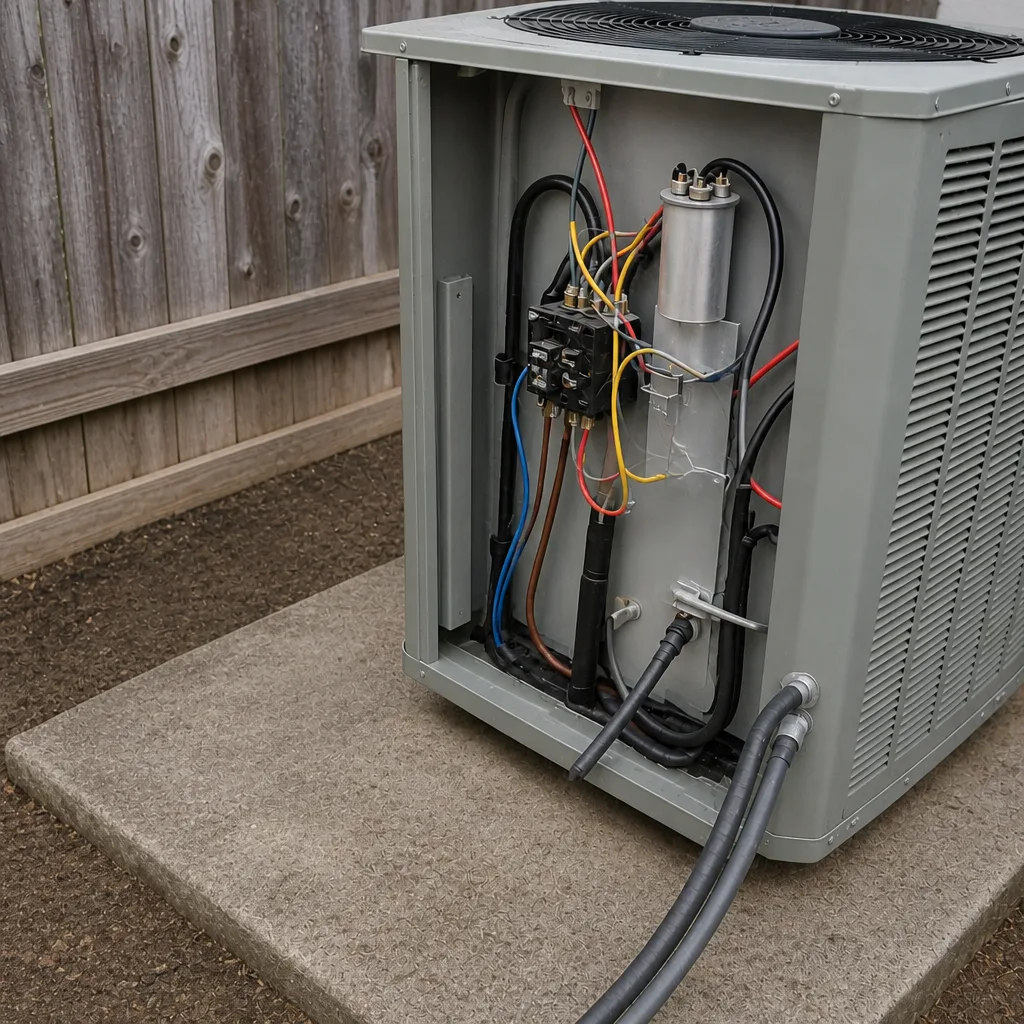
- Set the outdoor unit on a pad with the proper clearance to the wall and to any fence, then connect the line set and electrical.
- Evacuate and charge the system. The line set is vacuumed to remove moisture and non-condensable gas, then charged to the manufacturer’s specification.
- Set the thermostat, verify airflow at each register, and check the temperature split between return and supply air.
- Clean up and walk through. You should get a short explanation of the thermostat, filter location, and expected operation.
Ask the crew what the temperature split measured at final check. A working split is a quick sanity check that the unit is performing as it should be on the first day, not in week three.
Red Flags to Watch for During Installation
You don’t need HVAC knowledge to spot an installation that’s going wrong. You need to know what to look for and when to ask a question.
- No load calculation shown before the quote. If the estimate lists tonnage but the contractor never measured windows or insulation, the number is a guess.
- No permit. A reputable installer pulls the permit before work begins. No permit, no inspection, no documentation.
- Old line set reused without a flush or inspection. If the existing line set stays, the technician should confirm it’s compatible with the new refrigerant and not compromised.
- Vacuum pulled for a few minutes. Proper evacuation takes time. A crew in a hurry to charge the system hasn’t done the evacuation step properly.
- Outdoor unit too close to a wall or fence. Manufacturer clearance is a real number, and suffocating the condenser will cost you capacity and efficiency.
- Ductwork left untouched when it’s clearly compromised. Crushed or disconnected ducts should show up in the estimate if they’re a problem.
- No written model numbers. The final invoice should list the exact outdoor unit and indoor coil installed, matching the quote.
Ask politely. A good crew will answer without hesitation, and a weak crew will get defensive. That reaction tells you what the invoice won’t.
Repair or Replace: The Honest Framework
The repair-or-replace decision is where brand-agnostic advice earns its keep. A dealer tied to one manufacturer has a reason to steer you toward replacement; a technician who services nine brands has the same reason to steer you either way – what the system actually needs.
A practical framework we use:
- Age and refrigerant type. Older systems running discontinued refrigerant face rising service costs and limited parts long-term. Replacement may make more sense than a repair that kicks the problem down the road.
- Repair cost relative to replacement. A single repair that costs a significant portion of a new system is usually a signal, especially on an older unit with other wear.
- Frequency of breakdowns. One failure is a repair. Three in two summers is a pattern.
- Efficiency gap. An old low-efficiency unit running hard in Carrollton heat has a different operating cost than a current SEER2 system.
- Comfort complaints. Hot rooms, humidity, noise – these are signs the system wasn’t matched to the house, and a like-for-like repair won’t fix them.
If the answer is replace, the same team that diagnosed the problem can do the swap, including the load calculation and the permit. Full-picture guidance means the person who tells you it’s time to replace is also accountable for the install. When your furnace ages out on the same timeline, the same logic applies, and our team covers furnace replacement alongside AC work so you’re not juggling two contractors.
Common Mistakes to Avoid
- Sizing by square footage alone. In a Carrollton summer, an oversized unit short-cycles and leaves the house clammy. Insist on a Manual J calculation, not a rule of thumb.
- Choosing the cheapest quote without reading the model numbers. Two quotes for the same “3-ton system” can be different tiers of equipment. Compare exact model numbers and SEER2 ratings side by side.
- Skipping the duct inspection. New equipment on tired ducts is a money pit. Ask what the ducts’ condition is before the quote is finalized.
- Letting a contractor install without a permit. It’s a shortcut that shows up at inspection, resale, or warranty time. The permit is part of a complete job.
- Ignoring humidity. Carrollton’s climate puts real latent load on the system. If you’re always adjusting the thermostat to feel right, the equipment or duct sizing is the problem, not the thermostat.
- Picking a brand from a commercial instead of a repair history. Brand familiarity on the service side matters more than ad spend. Ask how many of that brand the company works on weekly.
- Not saving the paperwork. Model numbers, permit documents, and warranty registration should live in a folder. Future-you and a future buyer will need them.
See the difference
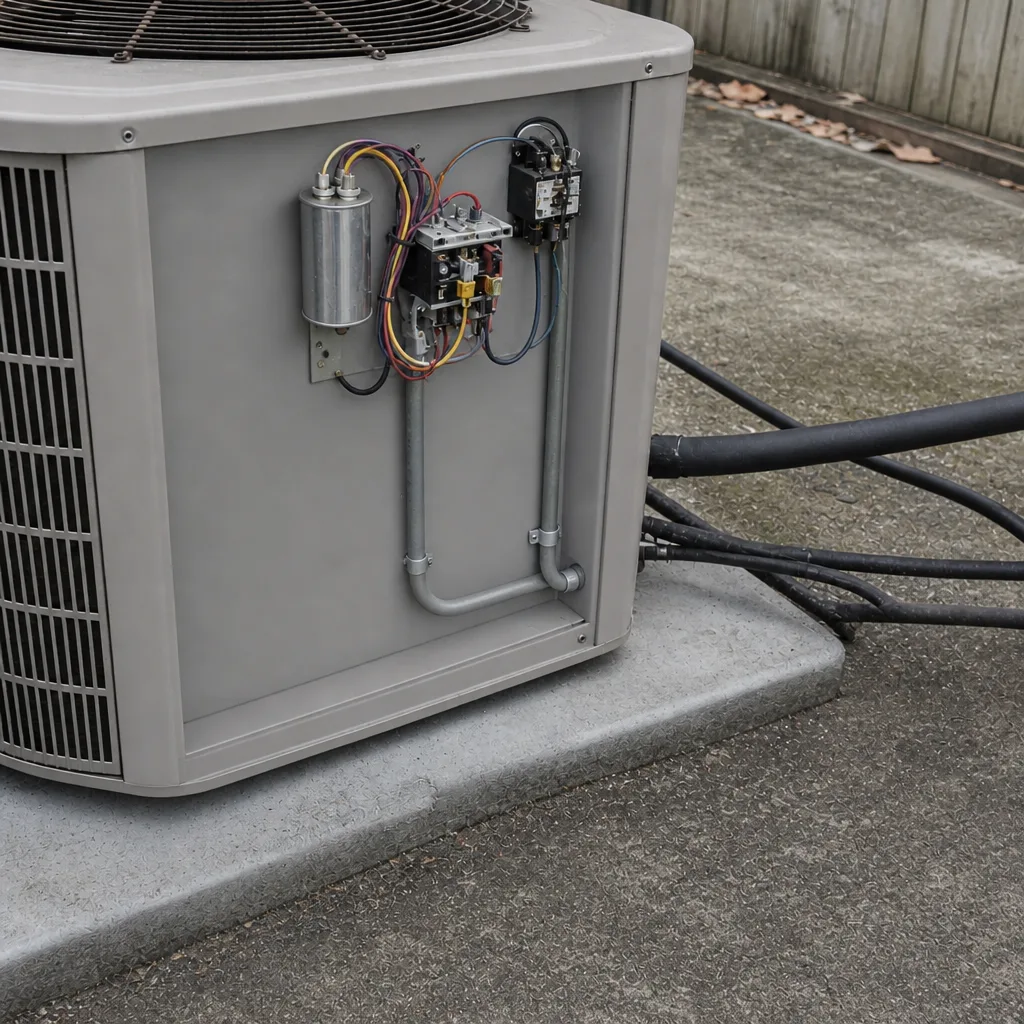
 Before
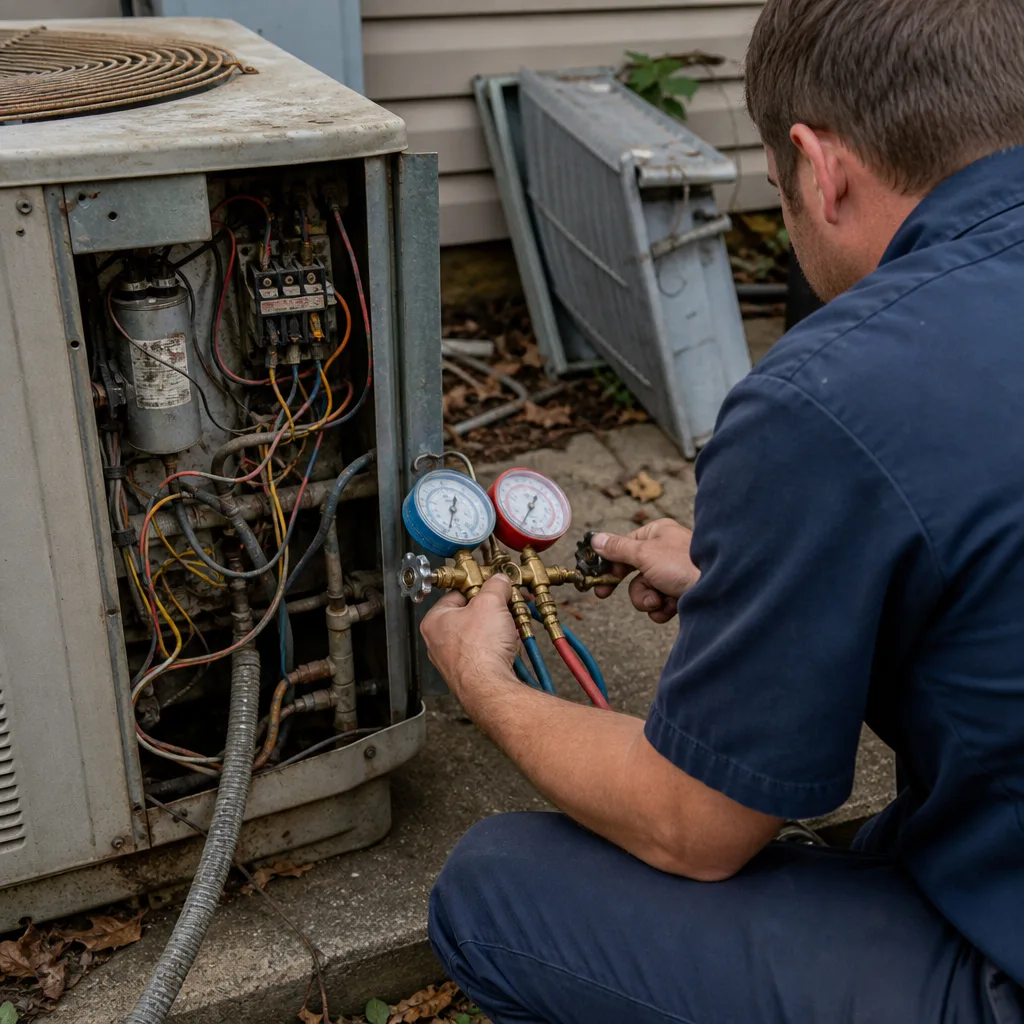
 After
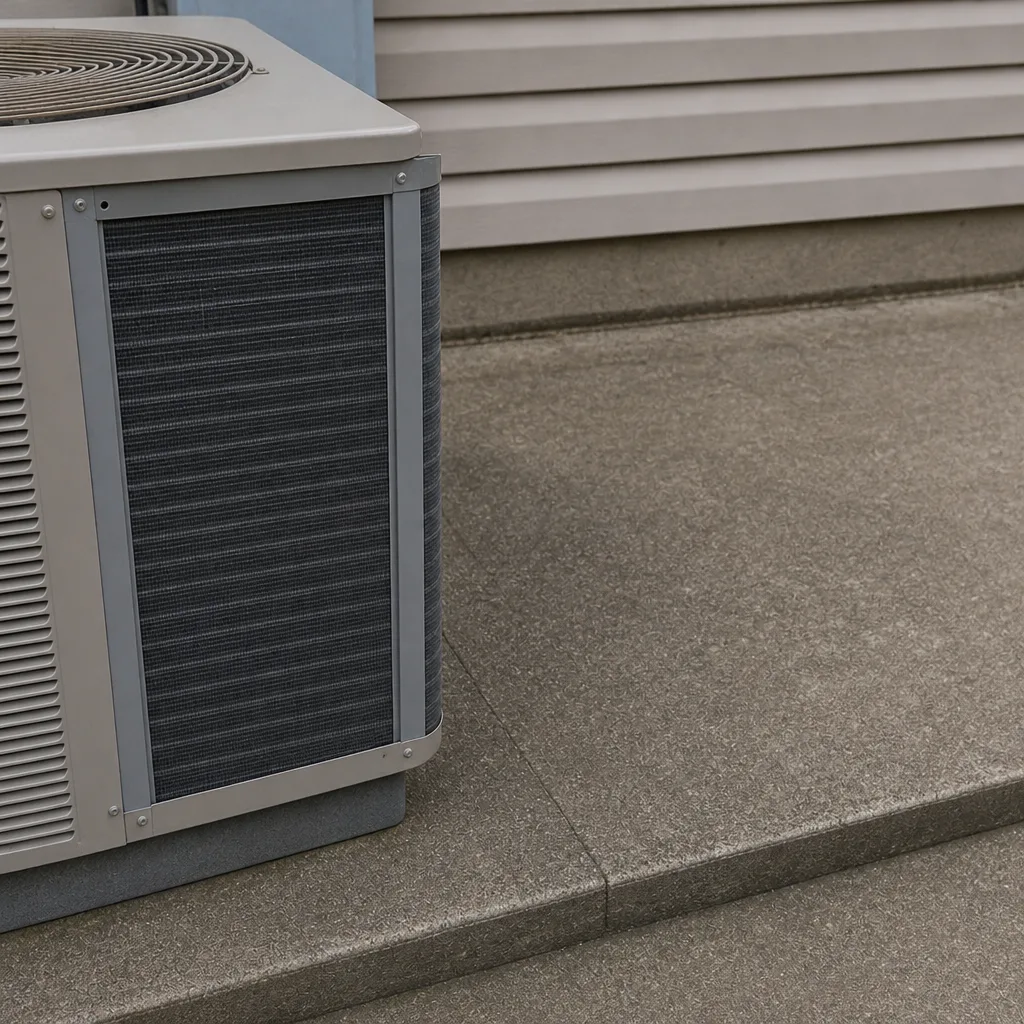
 Before
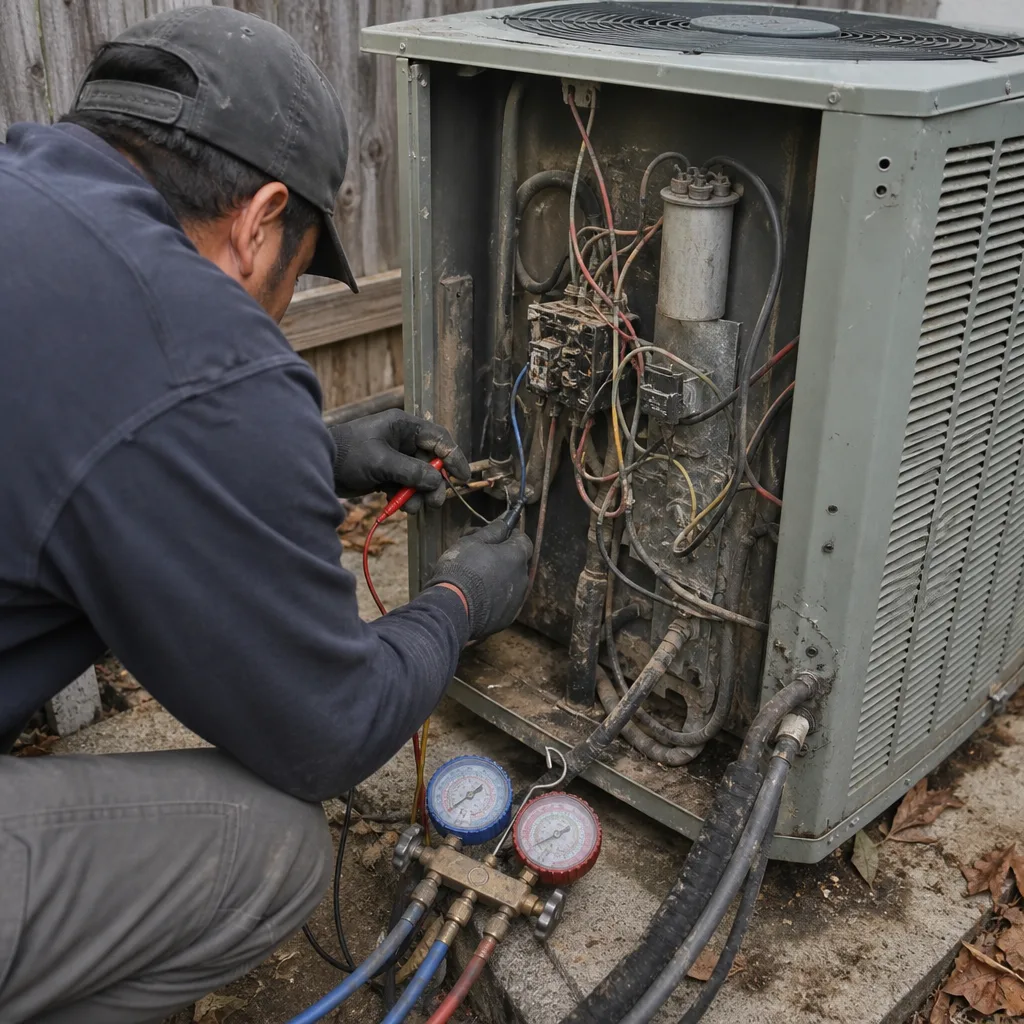
 After
 Before
 After
When to Call a Professional
Call a professional before your system fails completely, not after. If your current unit is over a decade old and needing repeated repairs, if rooms upstairs are consistently hotter than downstairs, if your electric bill has climbed without a change in habits, or if you’re facing a replacement, an assessment now is cheaper than an emergency later. The same goes for the heating side: a furnace that’s short-cycling or failing to ignite needs a trained eye, not a YouTube tutorial. Carrollton AC Repair offers free estimates in Carrollton – call (855) 759-1429. We answer 24/7. Fast dispatch from 7am to 7pm, Sunday through Friday. Our technicians have up to experience, and we work on Carrier, Trane, Lennox, Goodman, Rheem, York, Daikin, Bryant, and American Standard equipment. For more on local service, see our Carrollton page.
Frequently Asked Questions
A standard residential AC replacement in Carrollton typically takes one full day once the permit is in hand. Larger jobs that include duct modifications, electrical upgrades, or a multi-zone configuration can take two days. The permit timeline is separate and depends on the city’s inspection schedule, so ask the contractor to state the expected window in writing before you sign.
Yes. AC replacement and new installation in Carrollton require a permit from the City of Carrollton, and the work is inspected afterward. The licensed contractor should pull the permit – if you’re asked to pull it as a homeowner, that’s a reason to ask questions. Keep a copy of the permit number and inspection sign-off for your records.
The right size comes from a Manual J load calculation, not a square-footage rule. A proper calculation weighs window area, insulation, home orientation, duct condition, and design temperatures for this climate. Two homes of the same square footage on the same street can land at different tonnage. Ask to see the calculation before you commit.
Not always. Higher SEER2 equipment makes the most financial sense for homeowners staying in the house long-term, especially where humidity or hot rooms are a problem. If you plan to move within a few years, a mid-tier system with a solid installation can be the better value. The installation quality and duct condition affect real-world efficiency as much as the rating does.
We service and install Carrier, Trane, Lennox, Goodman, Rheem, York, Daikin, Bryant, and American Standard equipment. Multi-brand coverage means the recommendation can follow what your house and budget actually need, not a dealer agreement. Call (855) 759-1429 and we can talk through which tiers make sense for your situation.
Yes, and the way we do it is straightforward: we assess the age, refrigerant type, repair cost relative to replacement, repair frequency, and any comfort issues in the house. If replacement is the right call, the same team that diagnosed the problem handles the swap, including the load calculation and permit. Call (855) 759-1429 for a free estimate.
The Bottom Line
AC installation in Carrollton is a system decision. The load calculation comes first, the equipment and ductwork get matched to the house, the permit gets pulled, and the install-day steps get verified at the end. Brand matters less than the familiarity of the technician and the honesty of the recommendation. If you’re facing a replacement, ask for the Manual J, the exact model numbers, and the permit before you sign anything. Then let a team that services nine major brands give you the full picture instead of a brand pitch. Call (855) 759-1429 for a free estimate. We answer 24/7. Fast dispatch from 7am to 7pm, Sunday through Friday.
Written by the team at Carrollton AC Repair.