
Last updated November 15, 2026
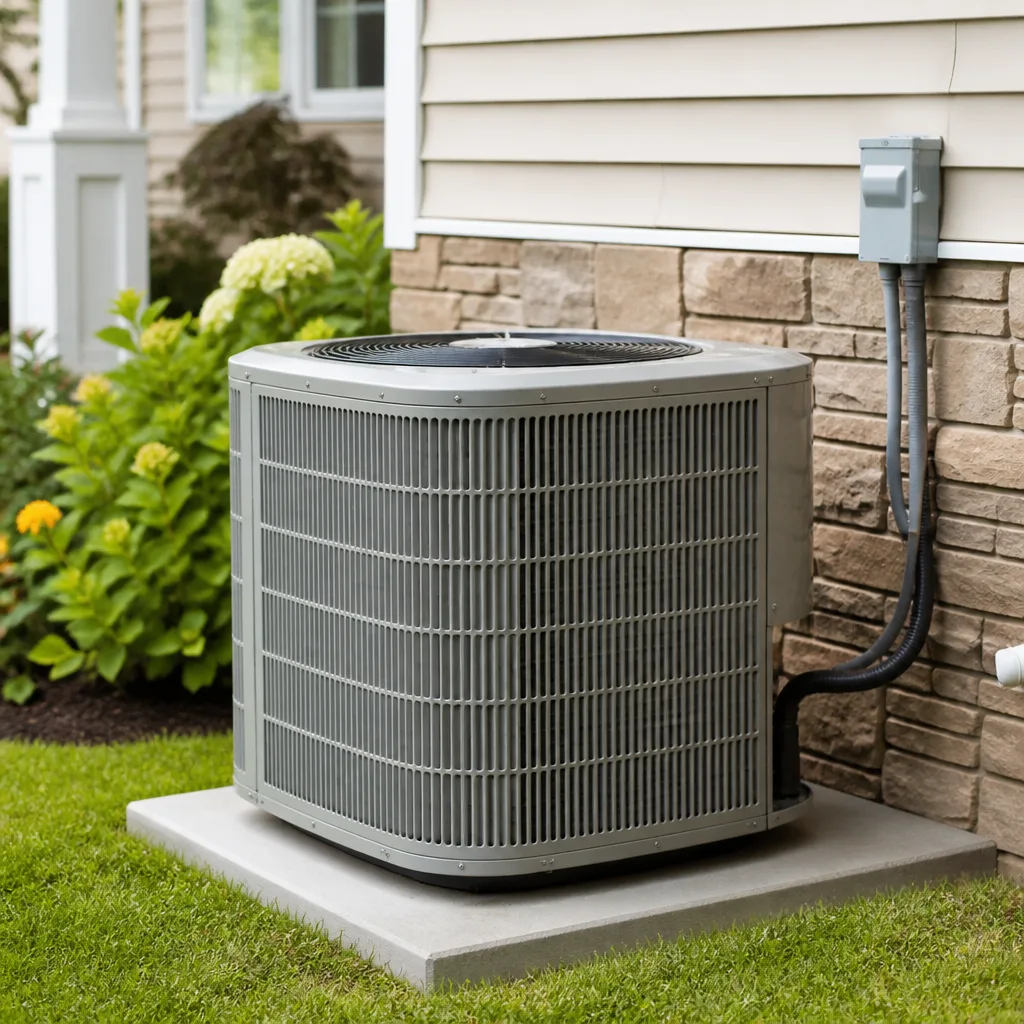 AC repair
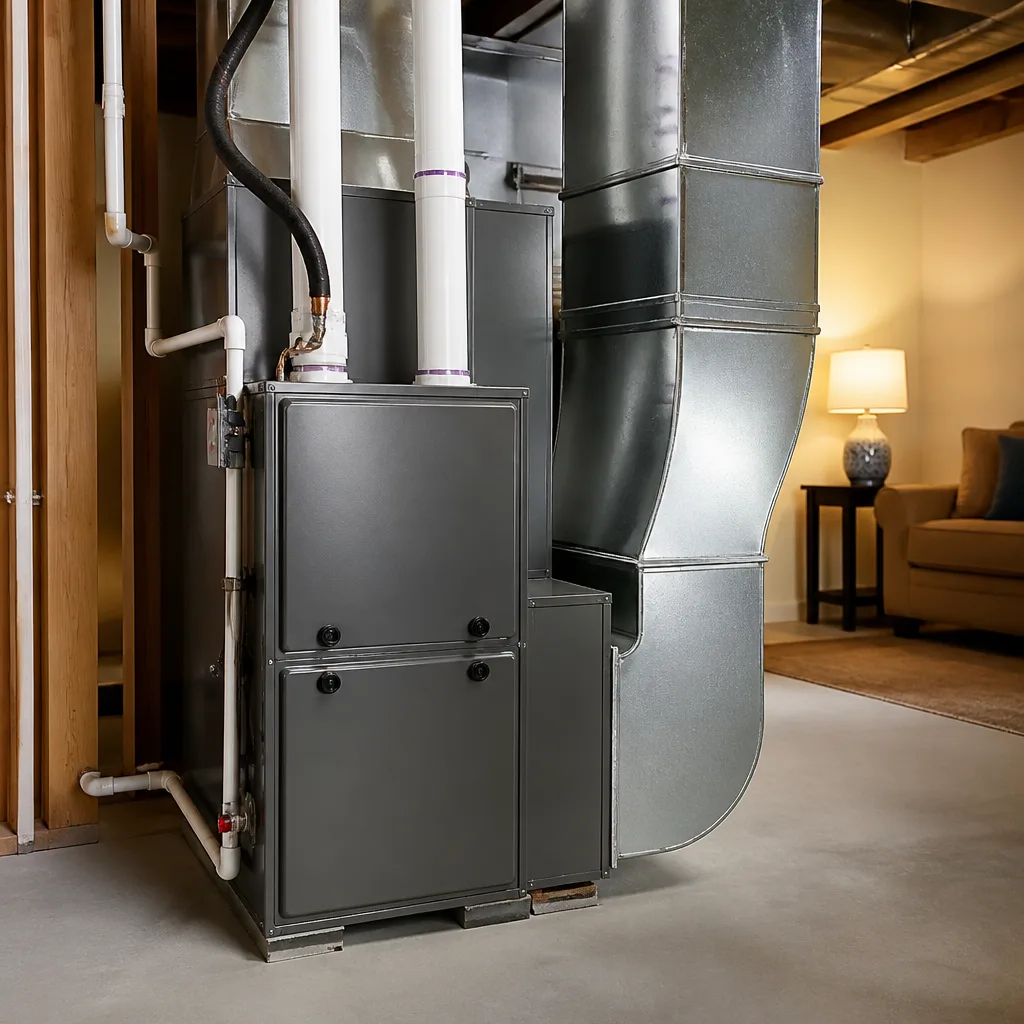 Furnace & heating
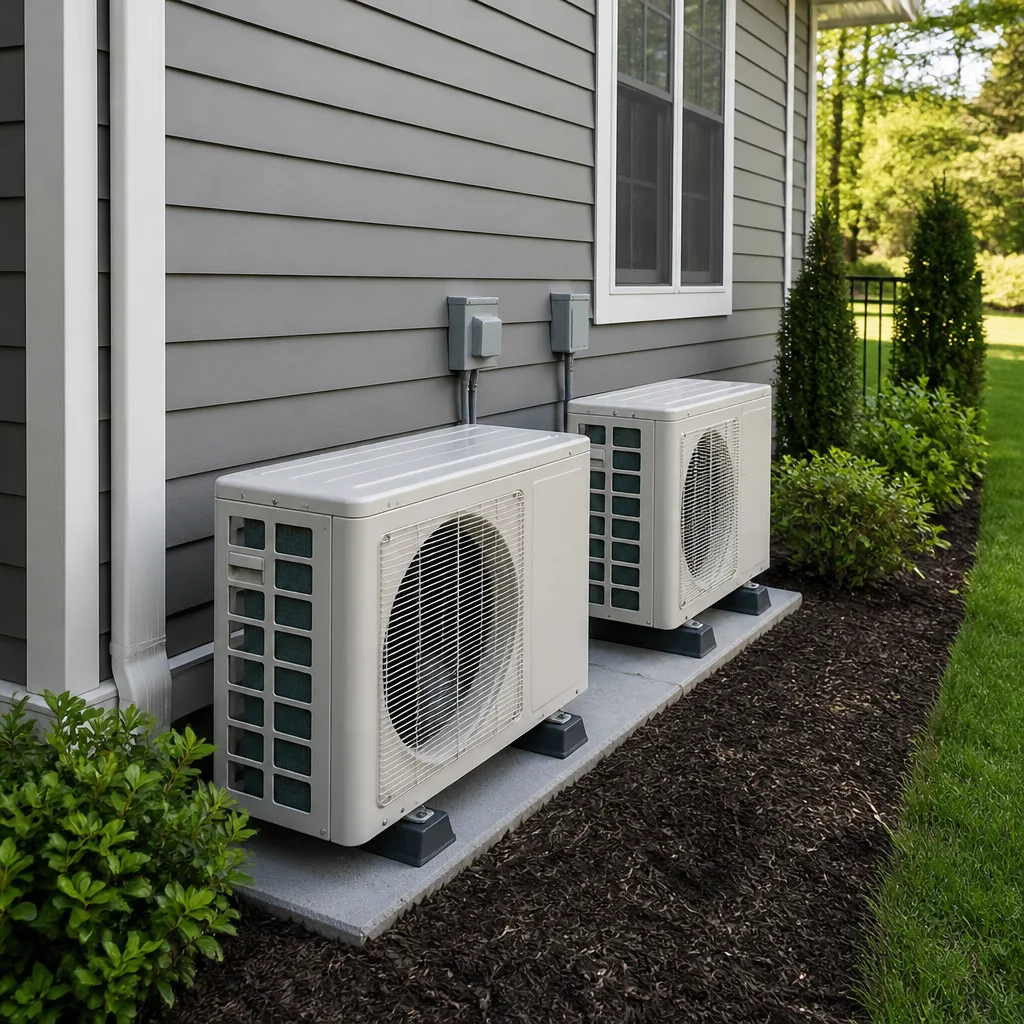 Heat pumps
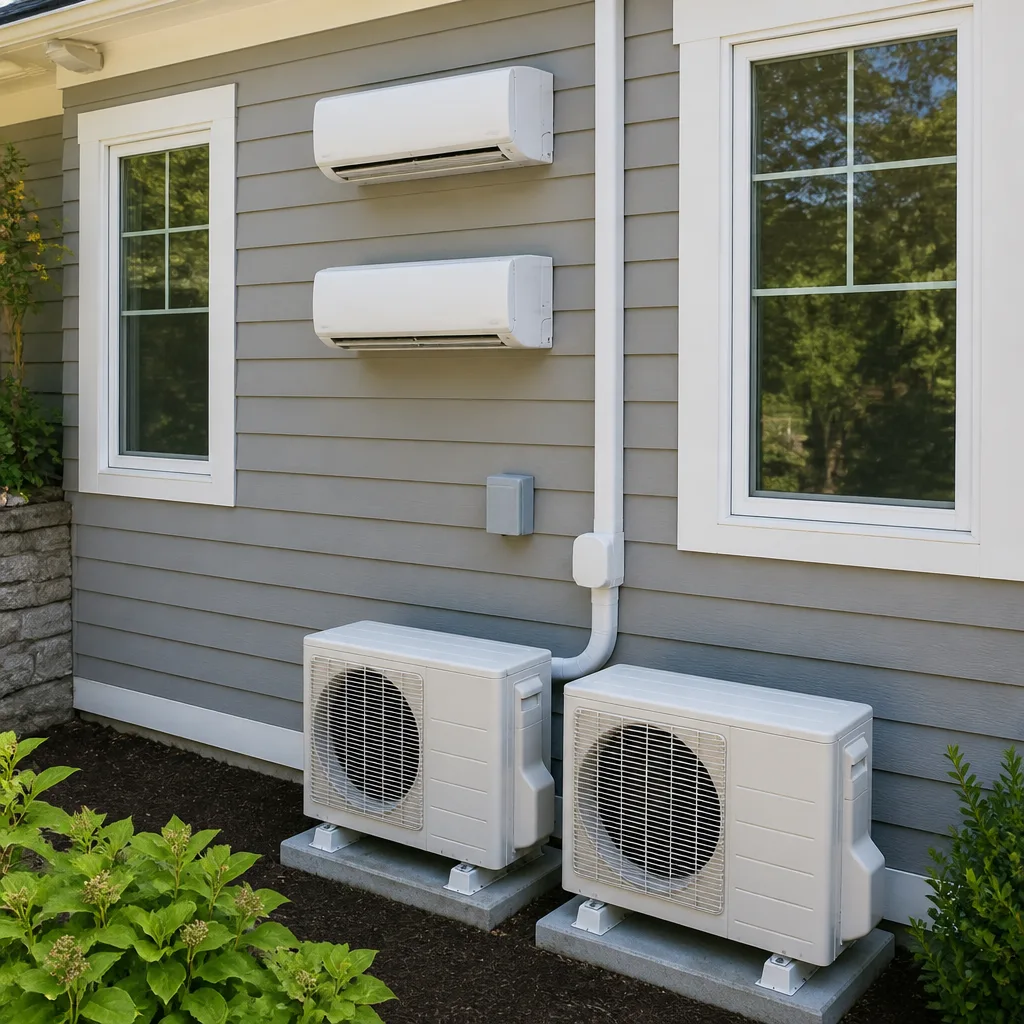 Ductless mini splits
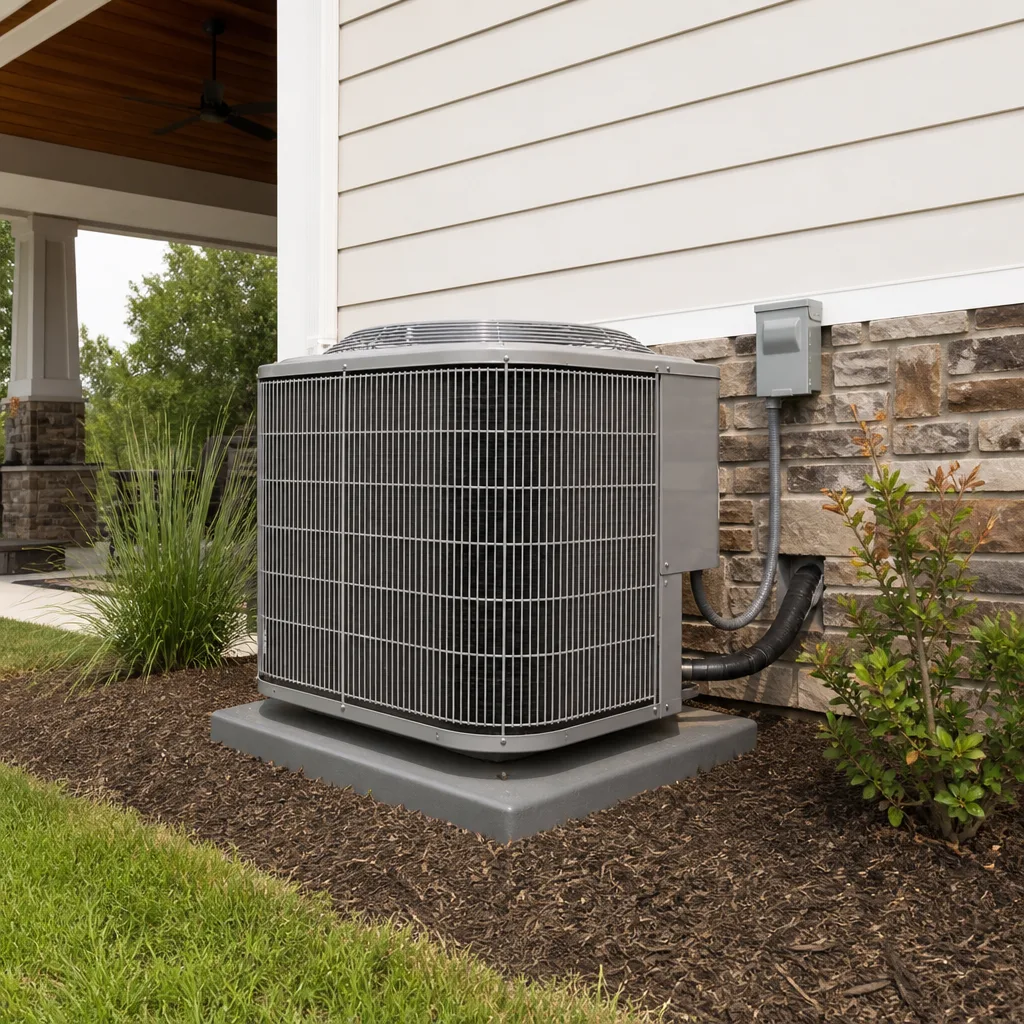 Carrier
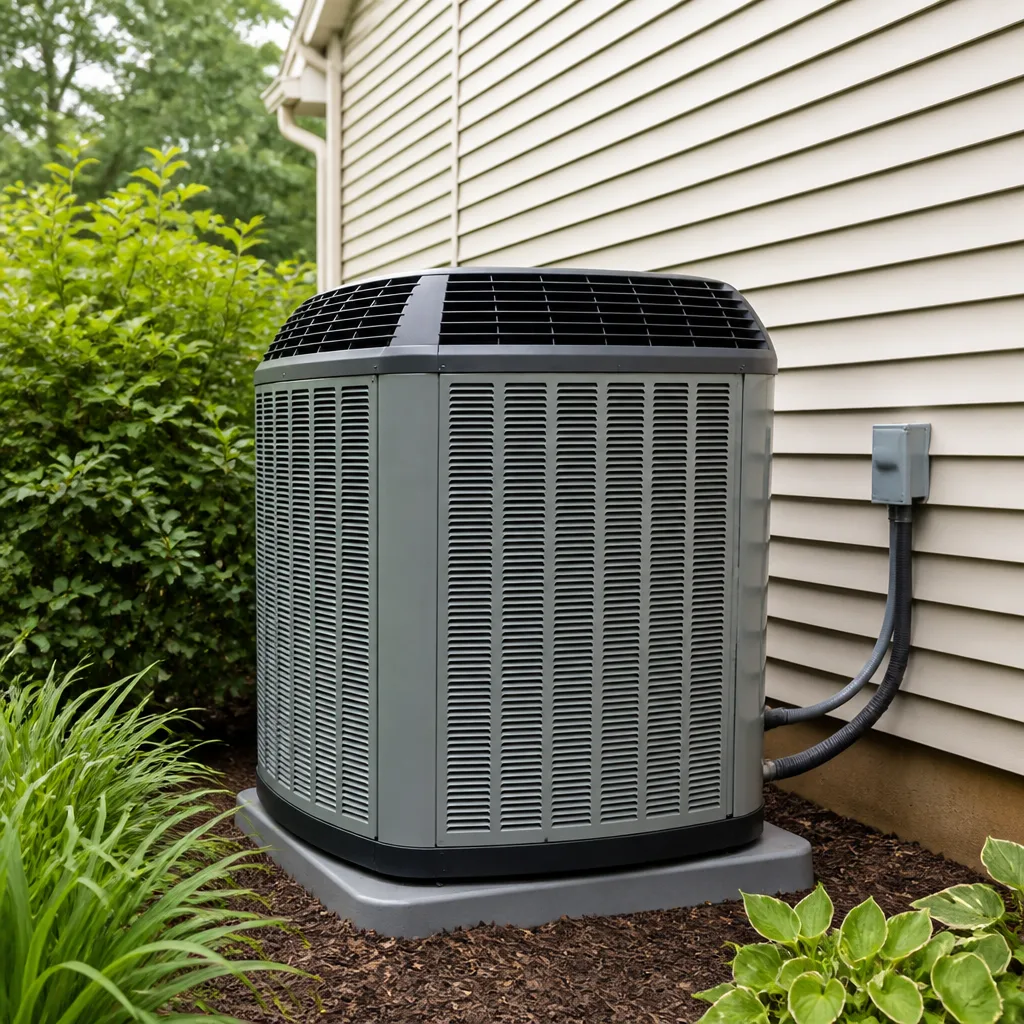 Trane
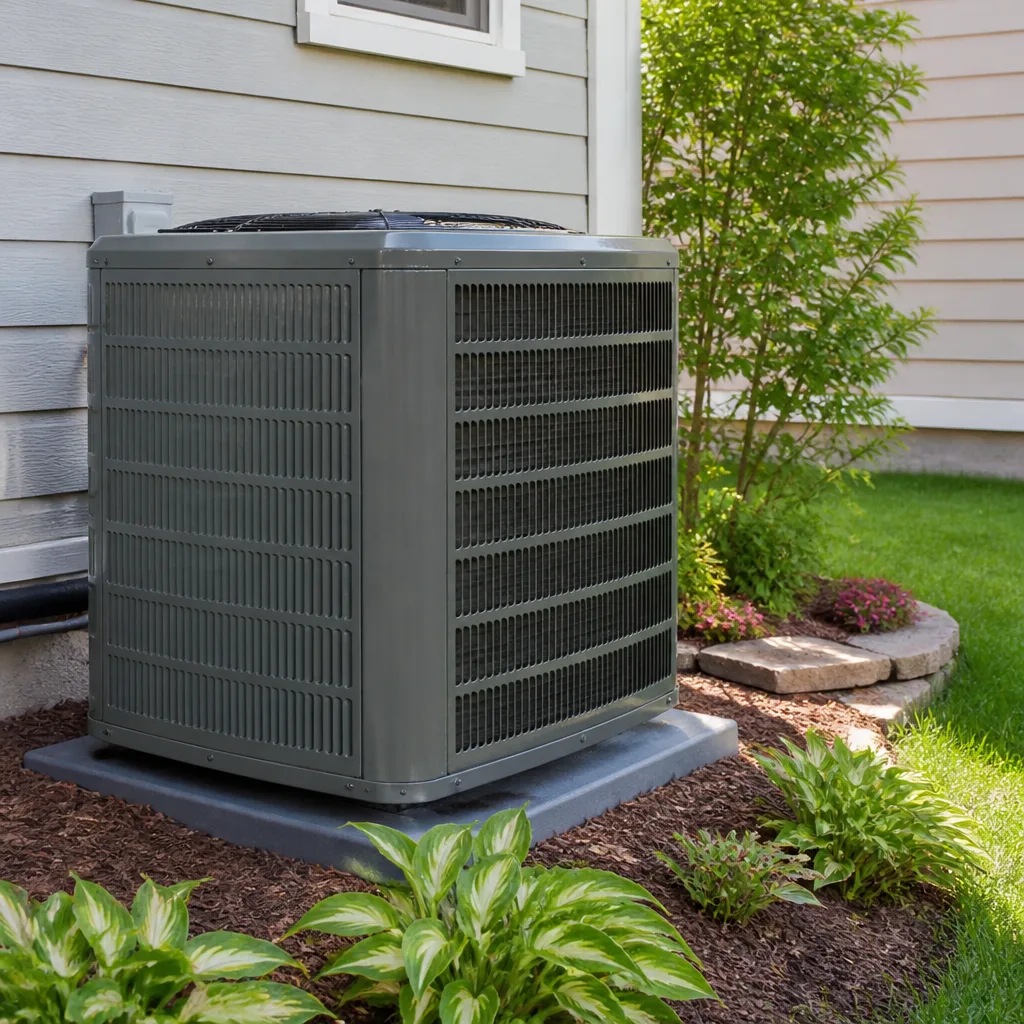 Goodman
Seasonal tune-up and full diagnostic on your Carrier, Trane, or Goodman system - readings shown to you before any repair is proposed
Diagnosis first, numbers second - you approve the repair price before a single part goes in.
Get your free estimateDIY vs Professional HVAC: The Carrollton Homeowner’s Decision Guide
Most homeowners frame the DIY-versus-professional question as a money question. Can I save a few hundred dollars by watching a video and handling it myself? That framing gets people into trouble, because HVAC work isn’t one category of task with one difficulty level. It’s a wide spectrum, and some parts of that spectrum are genuinely yours to handle while others are fenced off by federal law. In Texas, handling refrigerant without EPA Section 608 certification isn’t a suggestion or an industry preference; it’s a federal violation. That single fact wipes out a large share of the “DIY HVAC repair” tutorials floating around online. This guide draws the lines clearly so you know which jobs are yours, which look easy but aren’t, and how to work with a technician if you’ve already tried a repair. We’ll walk through the tasks that are genuinely homeowner-appropriate in Carrollton, the ones that carry hidden risk, the warranty and licensing boundaries, and the cost math for the borderline cases.
Styles & brands we work with
- AC repair
- Furnace & heating
- Heat pumps
- Ductless mini splits
- Carrier
- Trane
- Goodman
Quick Answer
In Carrollton, homeowners can safely and legally handle air filter changes, thermostat swaps, condensate drain line clearing, and gentle outdoor coil rinsing. Everything involving refrigerant, electrical components inside the unit, gas lines, or the sealed refrigeration circuit requires a licensed professional. Capacitor replacement, contactor cleaning, and refrigerant top-offs look DIY-friendly but carry real risk of shock, equipment damage, or legal exposure. When in doubt, a free estimate from a professional costs nothing and prevents expensive mistakes.
Table of Contents
- Which HVAC tasks are genuinely homeowner-appropriate in Carrollton?
- Which tasks look DIY-friendly but carry hidden failure risk?
- What are the legal and warranty boundaries in Texas?
- When does professional service actually cost less than DIY?
- How do Carrollton conditions change the DIY calculus?
- How do you work with a technician after attempting a repair?
- Does brand knowledge matter for Carrollton systems?
- Common Mistakes to Avoid
- When to Call a Professional
- Frequently Asked Questions
- The Bottom Line
Which HVAC tasks are genuinely homeowner-appropriate in Carrollton?
There’s a real list here, and it’s longer than most people expect. These are the jobs where the risk of damage is low, the tools are inexpensive, and the work genuinely helps your system run better. We’d rather you did these yourself and saved the money for the repairs that actually need a technician.
1. Air filter changes
This is the single most valuable thing a homeowner can do, and it takes five minutes. In Carrollton, where summers push the system hard from May through September, a clogged filter strains the blower and drives up energy use. Check the filter monthly during cooling season. Standard 1-inch filters should be swapped every 30 to 90 days depending on pets and dust. If you have a thicker 4-inch or 5-inch media filter, those typically last six to twelve months. Write the date on the filter frame with a marker so you never lose track.
2. Thermostat swaps
Replacing a thermostat is a legitimate DIY job, and modern smart thermostats come with clear wiring diagrams. The critical first step is to photograph the existing wiring before you disconnect anything, and to kill power at the breaker first. Label each wire with the terminal letter it came from. If your system has a heat pump or a two-stage setup, the wire count goes up and the job gets more particular, so check the thermostat’s compatibility guide before buying. When the wiring doesn’t match the guide exactly, that’s the moment to stop.
3. Condensate drain line clearing
In North Texas humidity, the condensate drain clogs regularly. A clogged drain trips the float switch and shuts the system down, which is one of the most common no-cooling calls we see. You can clear a drain yourself with a wet/dry shop vac on the exterior drain stub, or by flushing the line with a vinegar and water mix. Do this once at the start of cooling season as prevention rather than waiting for a shutdown.
4. Outdoor coil rinsing
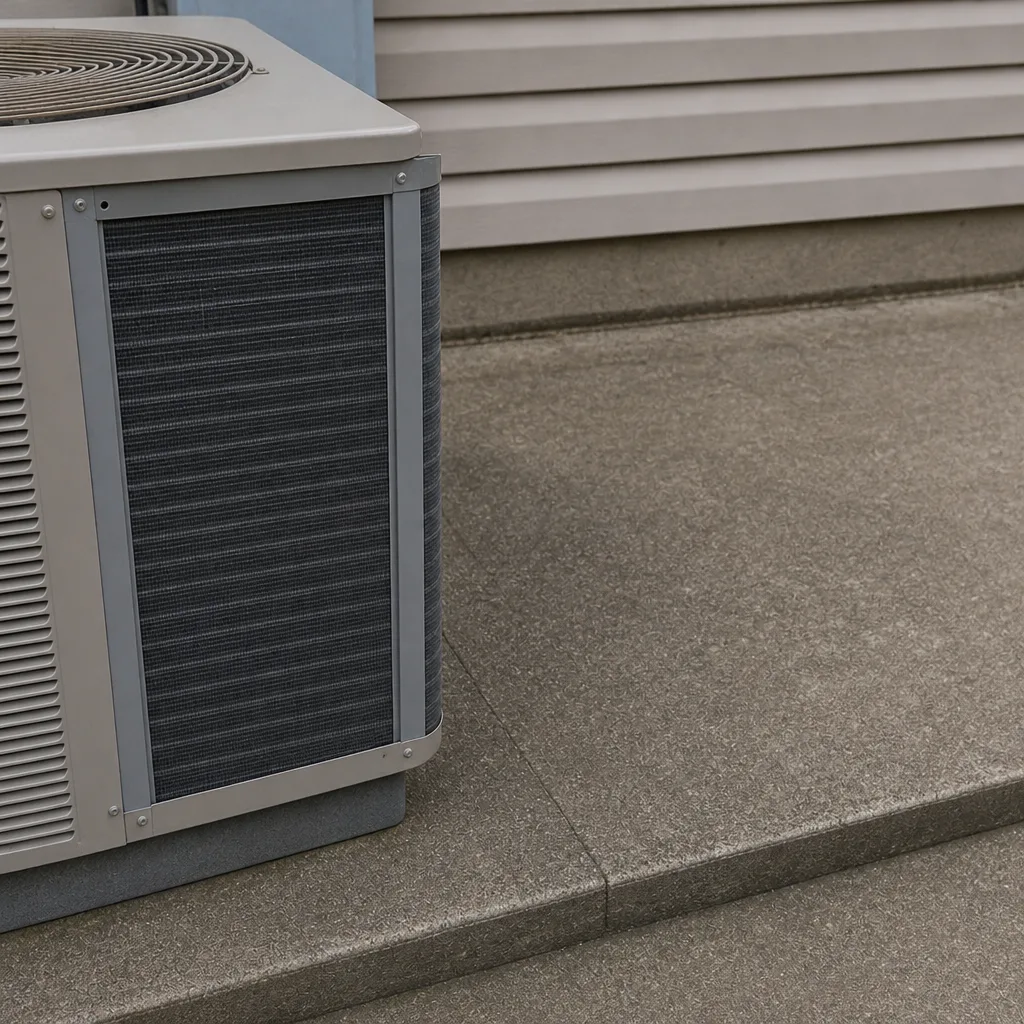
Gently rinsing the outdoor condenser coil with a garden hose from the inside out removes dust and cottonwood fluff. Keep the water pressure low so you don’t bend the fins. Never use a pressure washer on a coil. Straighten bent fins with a fin comb if you see them crushed. This is safe, useful, and takes about fifteen minutes.
5. Keeping the outdoor unit clear
Trim vegetation back at least two feet from the condenser and clear any debris from the top grille. In Carrollton neighborhoods, live oak leaves and spring pollen collect fast on top of the unit. A clear condenser breathes better and runs cooler.
That list is the whole of it for most homeowners. Everything above is genuinely useful, and none of it requires a license or a special tool. Beyond that list, the calculus changes quickly.
Which tasks look DIY-friendly but carry hidden failure risk?
Three jobs show up constantly in online tutorials as fifteen-minute fixes. In our experience across Carrollton homes, each one carries a specific kind of risk that the tutorial rarely mentions.
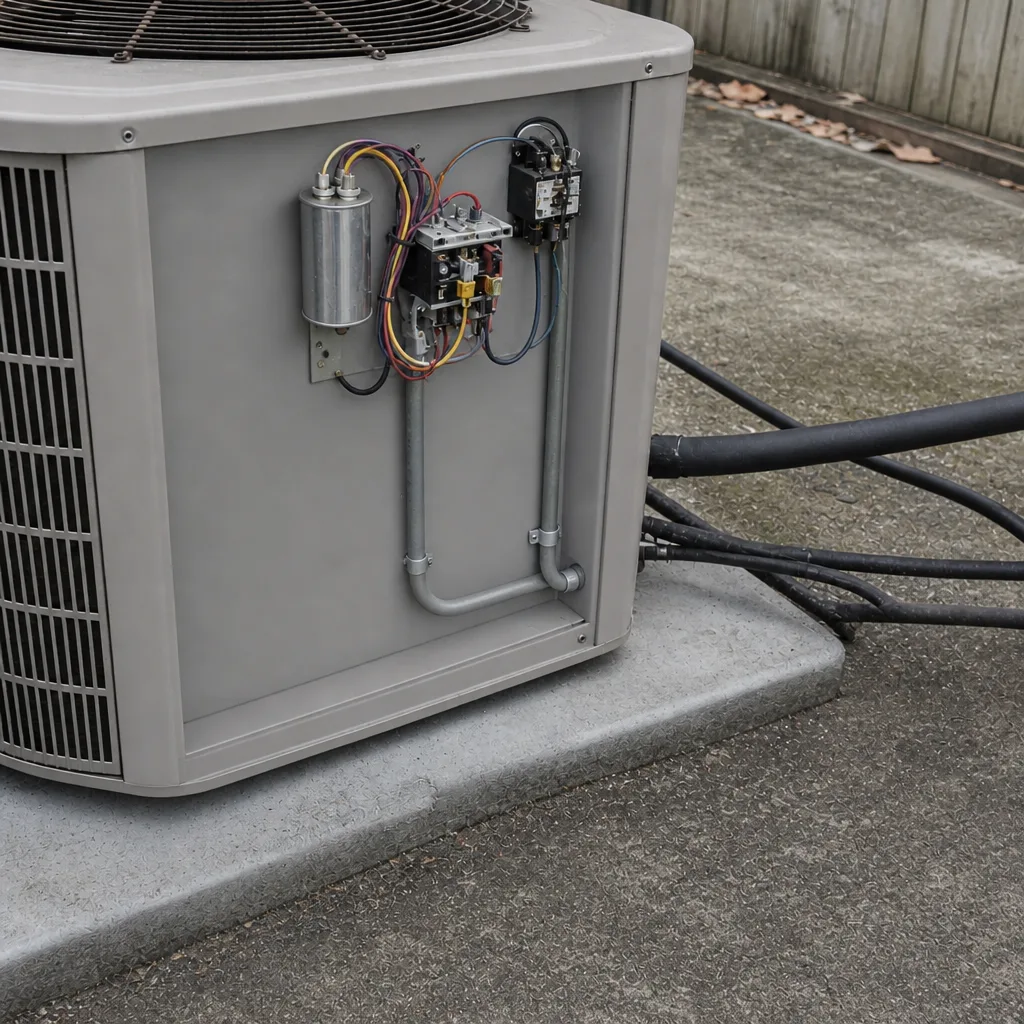
Capacitor replacement
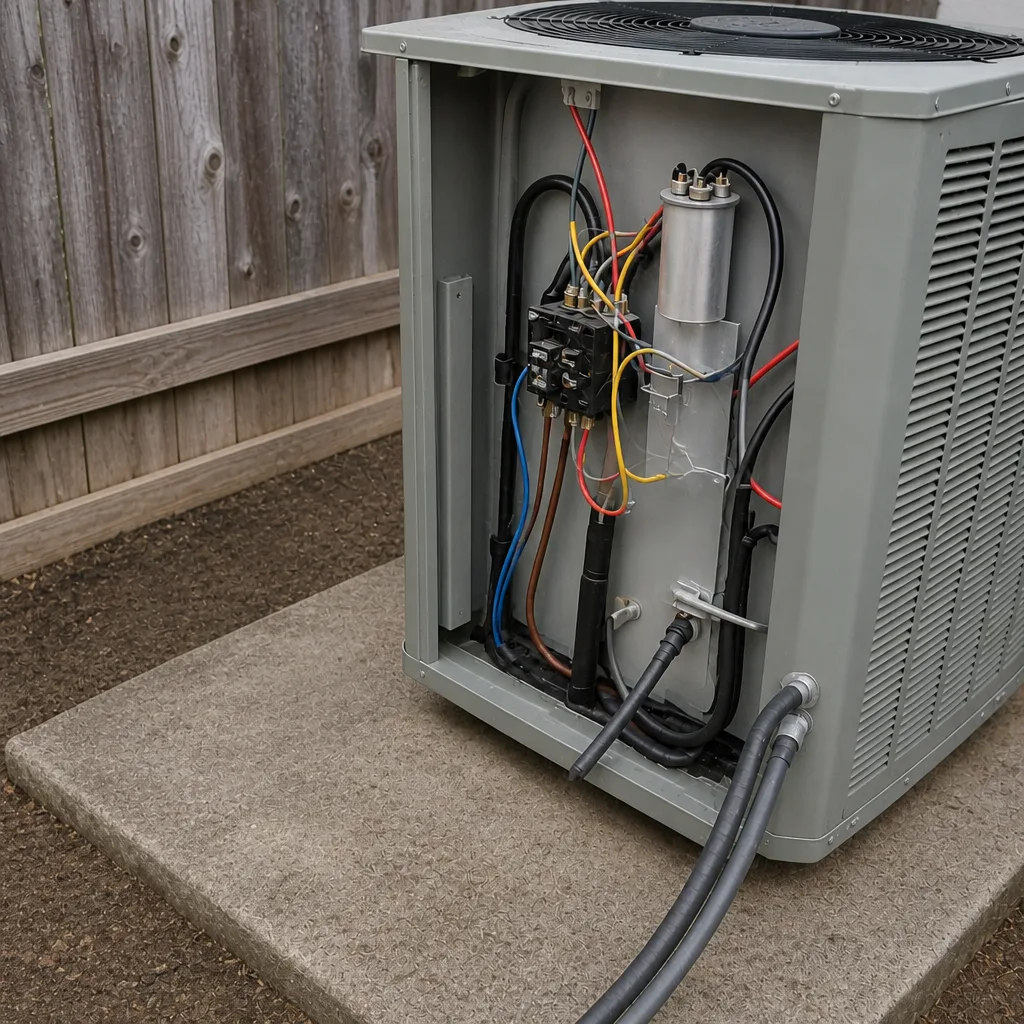
Replacing a run capacitor looks simple. Pull the disconnect, swap the part, done. The hidden problems are threefold. First, capacitors hold a charge even after power is removed, and the terminals can deliver a jolt. Second, matching the capacitance and voltage rating exactly matters; a wrong-value capacitor can overheat a compressor. Third, most capacitor failures are symptoms, not causes. A weak capacitor often fails because the compressor is drawing too much current or the condenser is running hot. Replacing the capacitor without diagnosing the underlying problem means the new part fails too. Technicians measure capacitance and test the compressor’s amp draw to know the difference.
Contactor cleaning
The contactor is the relay that engages the compressor and condenser fan. Pitted or corroded contacts cause intermittent no-cooling calls. Some guides suggest filing the contacts or cleaning them with sandpaper. That’s tempting and dangerous. The contactor sits on the line-voltage side of the system, and the contact points are not meant to be serviced. A cleaned contactor often welds shut weeks later, which can leave the compressor running continuously and fail it. Replacing the contactor is cheap and correct; cleaning it is neither.
Refrigerant “top-offs”
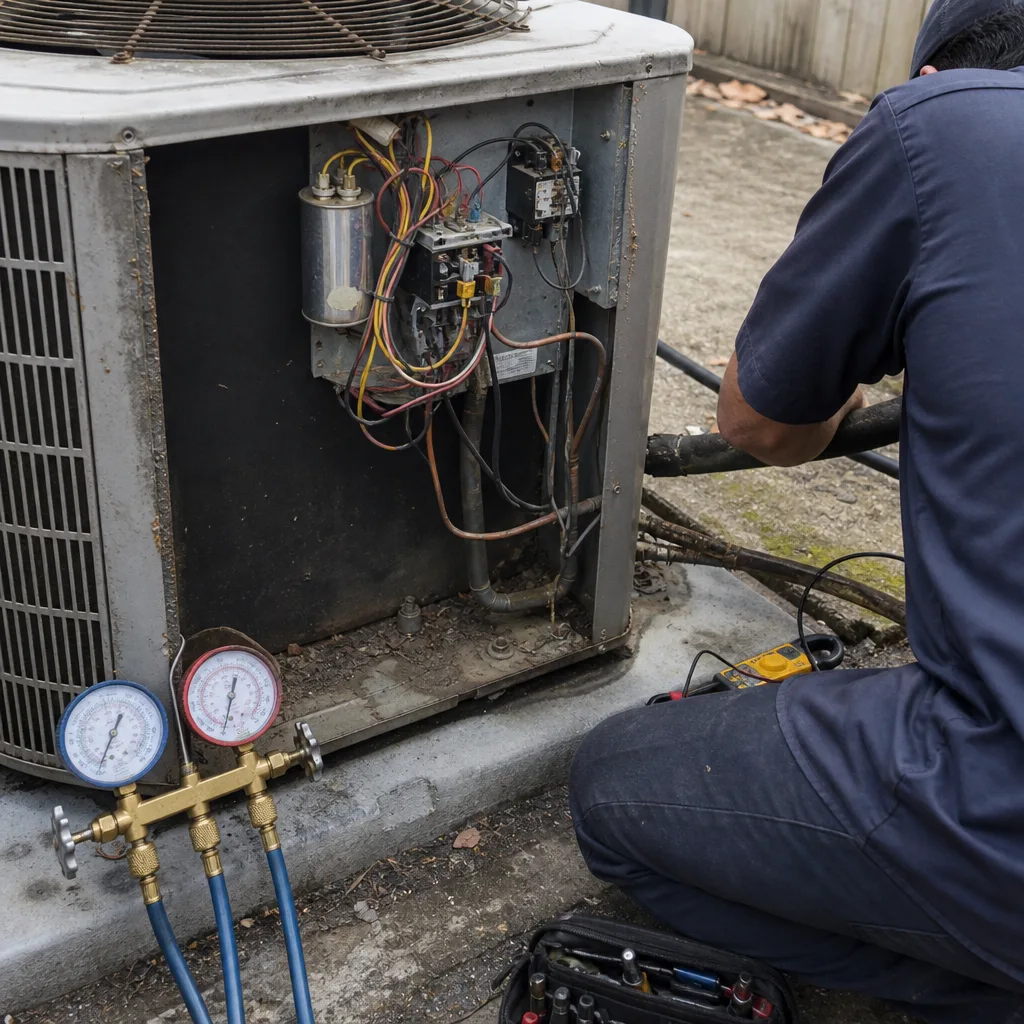
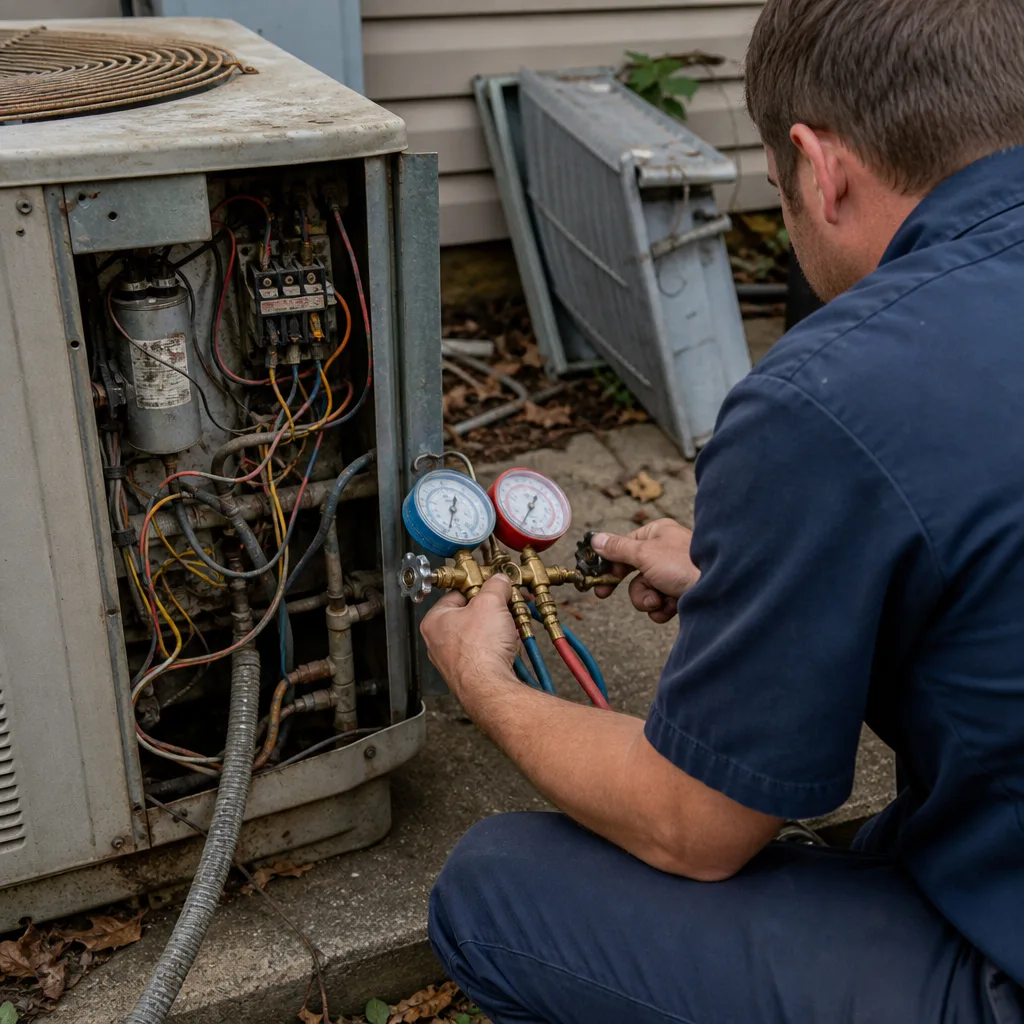
This is the one that matters most legally. Refrigerant work requires EPA Section 608 certification. Under federal rules, knowingly venting refrigerant is prohibited, and anyone handling it must be certified. Buying refrigerant online and adding it to your system isn’t a gray area; it’s a violation. Beyond the legal issue, a system that’s low on refrigerant has a leak. Adding refrigerant without finding the leak just delays the same failure and risks overcharging the system, which can destroy the compressor. Professional diagnosis finds the leak, repairs it, and recharges to the manufacturer’s specified weight.
We work on Rheem, York, Daikin, Bryant, and five other major brands, and the pattern holds across all of them. These three tasks cause more follow-on damage than any others.
What are the legal and warranty boundaries in Texas?
This is the section most homeowners have never had spelled out. The boundaries fall into two categories: federal law and manufacturer warranty terms.
The federal boundary: EPA Section 608
Refrigerant handling is regulated by the EPA under Section 608 of the Clean Air Act. Anyone who maintains, services, repairs, or disposes of equipment that contains refrigerant must be certified. That includes adding refrigerant, recovering it, and repairing leaks in the refrigerant circuit. There is no homeowner exemption for a system you own. This is the single clearest line in HVAC: refrigerant stays with the professional.
The Texas boundary: TDLR licensing
Texas regulates air conditioning and refrigeration contracting through the Texas Department of Licensing and Regulation. Contractors who perform work for compensation must be licensed at the company level and their technicians registered. A homeowner doing their own maintenance on their own home isn’t holding themselves out as a contractor, so routine maintenance is fine. But hiring an unlicensed “technician” to do refrigerant work, electrical work inside the unit, or a system replacement is a real risk. Unlicensed work often leaves you with no recourse if the system fails and can complicate a home sale. Ask for the license before hiring, and don’t accept a verbal “we’re licensed” without seeing it.
The warranty boundary
Manufacturer warranties typically cover parts for a set period, but they have conditions. The most common condition that trips homeowners up: work performed by an unlicensed or uncertified party can void coverage for the affected repairs. If you replace a compressor-related component yourself and the compressor later fails, the manufacturer can decline the claim. The same applies to improper refrigerant charging. The warranty doesn’t usually prohibit you from changing your filter; it prohibits unqualified repairs. Before you tackle anything beyond the homeowner-appropriate list, check your equipment documentation.
The permit boundary
Most cities require a permit for a full system replacement, and the installer pulls it. Ask the city’s building department what applies to your address before scheduling a replacement. Permit rules vary, so getting the answer directly is better than a guess.
When does professional service actually cost less than DIY?
The money math is where DIY wins and loses. For filters, thermostats, and drain lines, DIY almost always wins. For anything involving specialized tools or real chance of damage, the math flips.
Here’s the rubric we’d use if we were sitting at your kitchen table:
- Tool cost exceeds the service call cost. A manifold gauge set, vacuum pump, and recovery equipment together cost several hundred dollars. Buying them to do one refrigerant job almost never pencils out, and you still need the EPA certification to use them legally.
- Risk of catastrophic failure is real. A miswired thermostat can blow a low-voltage transformer in a few seconds. A wrong capacitor can fail a compressor. The damage from a failed compressor is many times the cost of the original repair.
- Diagnosis earns its money. A significant share of no-cooling calls are simple, cheap fixes: a clogged drain, a tripped float switch, a failed capacitor. The technician’s value isn’t only the repair; it’s correctly identifying which of a dozen causes is the actual one. Replacing parts by guesswork gets expensive fast.
- You have to buy the diagnostic knowledge anyway. If you attempt a repair, can’t fix it, then call a professional, you’ve paid for the parts plus the service call. The story ends the same way, only with a bigger bill.
Where the math reliably favors a technician: anything electrical inside the unit, anything involving refrigerant, anything involving gas, and any repair on a system still under a manufacturer parts warranty. A free estimate costs nothing. The written estimate sets the final price per job, so you know exactly what you’re paying before any work starts.
How do Carrollton conditions change the DIY calculus?
Carrollton sits in the middle of the Dallas-Fort Worth metroplex, and that shapes how HVAC systems age here. The cooling season is long. From May through September, systems often run daily, and the outdoor condenser sits in whatever shade and airflow the lot allows. In older Carrollton neighborhoods near the downtown square, mature trees drop leaves and pollen on outdoor units, and the clay soil means homeowners need to watch the condensate drain more often than in sandier soil areas. When the drain clogs, the float switch shuts down the system; this is one of the calls we get most often in summer.
The flip side is the heating season. Winters here are mild, and furnaces don’t see the stress that cooling equipment does. That means the mileage is very uneven. An aging air conditioner in a Carrollton home often wears out years before the furnace does. Homeowners sometimes confuse the two and think the whole system is failing when only the AC side is at the end of its life. A technician can tell you which side of the system is actually tired.
What that means for DIY: homeowner-appropriate maintenance matters more here than in milder climates. A clogged filter or drain on a heavily-loaded summer system causes more damage faster. The homeowner-appropriate list is the highest-leverage work you can do. Meanwhile, the specialized repairs carry more consequence because the system is running harder. There’s less margin for a wrong capacitor or an overcharged system in a house where the AC runs daily for five months.
Our Carrollton focus also means we see the whole range of local housing: newer construction with high-efficiency variable-speed equipment that has tight requirements, and older homes with straightforward single-stage systems that are more forgiving. The rules in this guide apply equally.
How do you work with a technician after attempting a repair?
If you’ve already tried a fix and it didn’t work, tell the technician honestly and specifically. That single habit saves time and money and gets your system back faster.
Here’s the disclosure list we’d ask for:
- What you replaced and with what. Part number, brand, and rating all help. If you installed a capacitor, tell the technician the microfarad value on the new one. A mismatched value explains a follow-on failure.
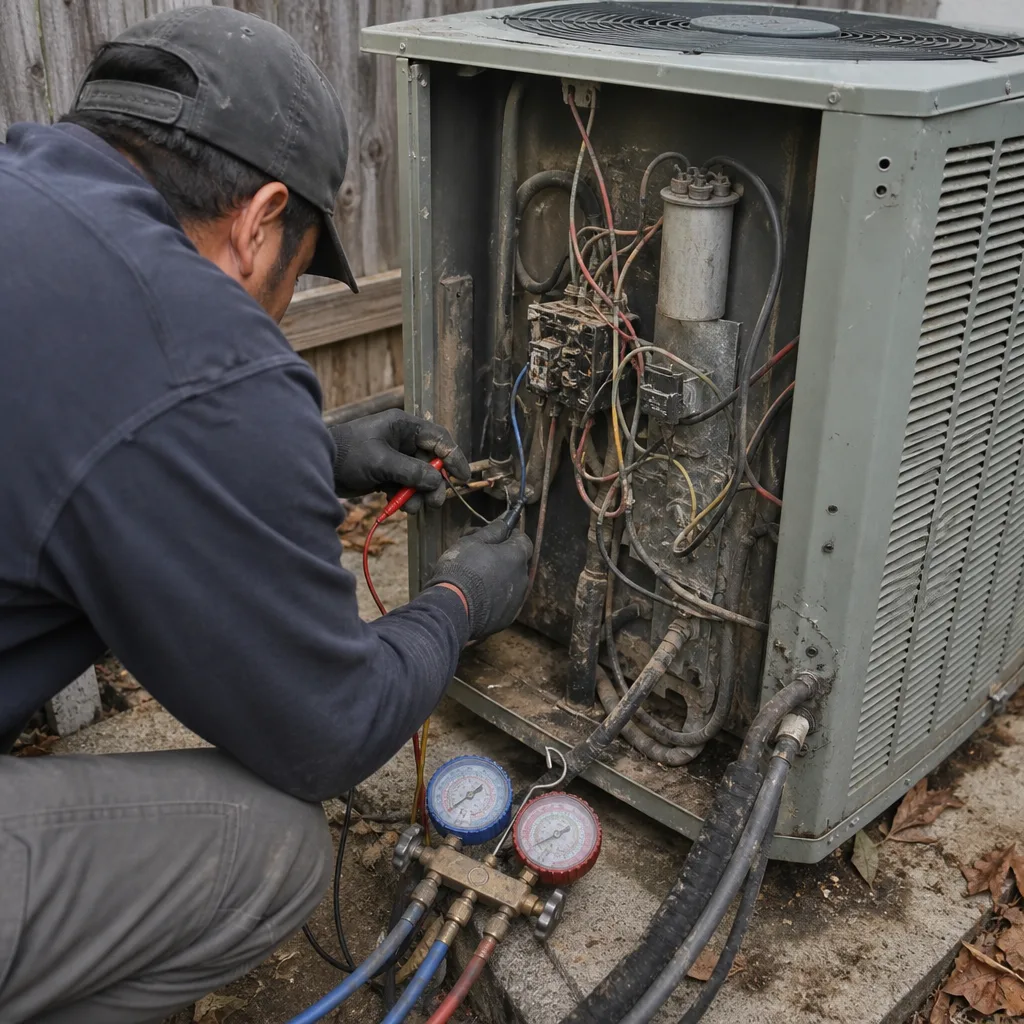
- What you tested and how. If you tested the compressor with a multimeter, tell the technician what readings you got. If you suspected a particular part based on a video, say so.
- Which wires you touched. Even if it seems obvious, say it. Reversed low-voltage wires are a common source of “it worked yesterday, now it doesn’t.”
- Whether the system has run since. If it ran, how long, and what it sounded or smelled like.
- How long the problem has been happening. If the AC was trailing off for weeks before you touched it, that’s a different diagnostic path than a system that failed suddenly after your repair attempt.
Why this speeds diagnosis: a technician’s first job is to figure out what’s normal and what’s not. Without knowing what you changed, the technician has to test every measurable part of the system. With that knowledge, the technician can rule out whole categories and get straight to the likely cause. Undisclosed repair attempts regularly turn a one-visit job into two. Honest disclosure, in our experience, usually brings the diagnosis down to a straightforward sequence.
One more thing: don’t be embarrassed about trying. A homeowner who changed their own filter and cleared their own drain saved money. A homeowner who attempted a capacitor and couldn’t get it started lost a few hours, not a relationship. The important part is that the technician knows what happened.
Does brand knowledge matter for Carrollton systems?
It matters more than homeowners sometimes expect, especially on modern equipment. A technician who’s already fluent in a brand’s control boards, error codes, and part availability moves faster and diagnoses more accurately. That’s why we focus on nine of the industry’s most-installed brands: Carrier, Trane, Lennox, Goodman, Rheem, York, Daikin, Bryant, and American Standard.
What multi-brand coverage actually buys you on a service call: When a Bryant system throws a fault code, the technician recognizes the pattern because it shares architecture with Carrier. When a Daikin ducted system needs parts, we know how its component layout differs from a Rheem. When a Goodman or York unit needs a replacement decision recommendation, the technician already knows the typical failure modes and repair economics for that equipment. A brand-specific dealer can do all of this for their one brand. A generalist handyman who splits time across plumbing, electrical, and roofing can’t do it for any brand. The reason our team focuses exclusively on HVAC is that the depth matters more than the breadth.
For replacement and AC installation, multi-brand familiarity means recommendations come from what your system and home actually need, not from which brand offers the best dealer margin. That’s what we mean when we say we’re built around your system, not a brand deal. On the heating side, furnace repair follows the same principle: the technician’s read on what’s worth repairing on a mild Carrollton winter furnace versus what’s worth replacing comes from having worked on all of them.
If you’re in the market for a new system, our team handles the full swap. Our technicians have up to experience, and because the same team handles repair and replacement, patch-it or replace-it advice comes from one source rather than two contractors with different incentives. You can read more about how we work at Carrollton AC Repair.
Common Mistakes to Avoid
- Adding refrigerant without finding the leak. Anyone can buy refrigerant, but venting it is illegal and topping off without leak detection guarantees you’ll do it again within the season. A system that’s low is losing refrigerant somewhere; the leak is the problem.
- Cleaning contactor contacts with sandpaper. Filing electrical contacts looks like a five-dollar fix and regularly leads to welded contacts and a failed compressor. Replacing the contactor is cheap and correct.
- Buying a capacitor by “looks close.” Capacitors must match the microfarad rating exactly. A mismatched value can fail the compressor. If you’re unsure, read the label on the old part and match it exactly; if it’s unreadable, call a technician.
- Washing the outdoor coil with a pressure washer. The coil fins bend easily and once they’re crushed, the coil needs professional straightening or replacement. Low-pressure rinsing from the inside out is fine; pressure washing is not.
- Doing a “quick” electrical repair with the disconnect still in. The disconnect switch must be pulled at the unit and confirmed with a non-contact voltage tester before you touch anything. Locking out is always the right first step.
- Pulling the thermostat off the wall without a photo. Modern thermostats have as many as seven or eight low-voltage wires, and the terminal letters matter. Photograph before disconnecting, every time.
- Hiring an unlicensed “technician” who quotes low and works fast. In Carrollton and across the DFW metroplex, unlicensed work leaves you with no recourse if the system fails, and can void manufacturer warranty coverage on the repair. Always ask for the license before work begins.
When to Call a Professional
Call a professional whenever the task involves refrigerant, electrical components inside the unit, gas lines, or a complete system replacement. Call also when you’ve attempted a repair and the system still doesn’t work, when a float switch keeps tripping after you’ve cleared the drain, when you hear a compressor short-cycling, or when the outdoor unit trips a breaker. For the border cases, particularly capacitor replacement on an aging system, professional diagnosis often costs less than buying the wrong part plus the follow-on damage.
Our team handles the full range: air conditioning installation, furnace repair, and furnace replacement on all nine major brands. The estimate is free, and the price is set per job by the written estimate. If the system is beyond repair, our team completes the full swap without subcontracting. Carrollton AC Repair offers free estimates in Carrollton, call (855) 759-1429. We answer 24/7. Fast dispatch from 7am to 7pm, Sunday through Friday.
Frequently Asked Questions
It depends on the task. A homeowner doing routine maintenance (filters, thermostats, drain lines, coil rinsing) on their own home doesn’t need a license. However, any refrigerant work requires EPA Section 608 certification with no homeowner exemption, and hiring anyone else to do the work requires that they hold the proper Texas TDLR license. When in doubt about a task, call us at (855) 759-1429.
Not for home AC systems. Under EPA Section 608, anyone handling refrigerant in stationary equipment must be certified, including the homeowner. There’s no exemption for residential systems. If your home system is low on refrigerant, call us; we handle the diagnosis, leak repair, and recharge legally. Our phone is (855) 759-1429.
It can, depending on the repair. Manufacturer warranties typically cover parts, but unlicensed or uncertified work that causes a component failure can void coverage for the affected repair. Changing a filter almost never voids anything; replacing a compressor component yourself often does. Check your equipment documentation before starting any repair beyond routine maintenance. Call (855) 759-1429 to talk through what your warranty covers.
Technically you can, but the risk is real. Capacitors hold a dangerous charge, matching the microfarad rating exactly matters, and a failed capacitor is frequently a symptom of a deeper problem like a struggling compressor. Replacing it without checking the underlying cause often leads to a repeat failure. Call (855) 759-1429 for an exact estimate; estimates are free.
The clearest line is whether the task involves refrigerant, line-voltage electricity inside the unit, or gas. Anything in those categories belongs to a licensed professional. Tasks that don’t touch those systems, like filter changes and drain clearing, are yours. Capacitor replacement and contactor cleaning look like middle-ground tasks but sit firmly on the professional side because of the electrical risk and the diagnostic context they require. Call (855) 759-1429 if you’re unsure which side a job falls on.
Tell the technician exactly what you did: which parts you replaced, what you tested, which wires you touched, and how the system has behaved since. Undisclosed repair attempts turn single-visit diagnostics into two-visit jobs. Honest disclosure usually shortens the diagnosis substantially. Call (855) 759-1429 and tell the dispatcher upfront what you’ve attempted.
The Bottom Line
The DIY-versus-professional question is a scope question, not a money question. Filters, thermostats, drain lines, and outdoor coil rinsing are genuinely yours to handle, and handling them well saves real money. Refrigerant work is federally regulated and not yours under any circumstance. Capacitor replacement, contactor cleaning, and refrigerant top-offs look simple online but carry electrical, equipment, and legal risk that makes them a professional’s job. The Texas licensing rules are clear, and the manufacturer warranty terms are unforgiving on unlicensed repairs. When a task is genuinely in the gray zone, a free estimate from a technician costs nothing and prevents the kind of failure that costs much more than the repair. Our team covers all nine major brands across Carrollton, so the technician arrives already familiar with your system.
Call (855) 759-1429 for a free estimate. We answer 24/7. Fast dispatch from 7am to 7pm, Sunday through Friday.
Written by the team at Carrollton AC Repair.
See the difference
 Before
 After
 Before
 After
 Before
 After